
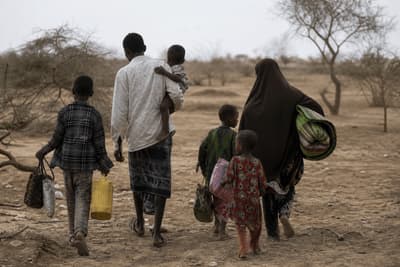
Armed Groups Force Somali Family Off Land, Exposing War’s Grip on Global Food Security
A Somali farming family with four children has been forced to abandon its land after armed groups arrived and demanded payments in exchange for the right to continue cultivating the soil, UN News reported. The incident spotlights a pattern that aid agencies say is accelerating across conflict zones: farmland is becoming a target, farmers are being displaced, and the foundations of local food production are being ripped away just when they are needed most.
The family’s departure is not an isolated tragedy. In Somalia, years of insecurity, drought, and economic shocks have already pushed millions to the brink of famine. The direct targeting of rural livelihoods by armed groups adds a brutal new layer of pressure. When a household walks away from its fields, the loss cascades: no planting, no harvest, no surplus to sell at market, and no income to buy what cannot be grown.
Conflict Turning Farmland into a Battleground
Security experts and humanitarian agencies have long warned that modern warfare often weaponizes food. By forcing farmers off their land or extorting them, armed groups can control territory and populations, while simultaneously choking off the supply of fresh food to local markets. In Somalia, this tactic is now unfolding in rural areas where agriculture is the backbone of survival.
The case echoes a wider global trend. From the Sahel to Myanmar, and from Ukraine to Sudan, wars are disrupting planting cycles, destroying storage facilities, and severing transport routes. The Food and Agriculture Organization (FAO) consistently highlights that conflict is a primary driver of acute hunger, often alongside climate extremes and economic instability. Somalia itself is a stark example of how these three factors converge: recurrent drought deepens vulnerability, while insecurity blocks the humanitarian access that could provide a lifeline.
Compounding Pressures on the Global Food System
The Somali family’s story is a microcosm of a global food system under enormous strain. When one producing community goes silent, the ripple effects reach beyond local borders, especially in regions already dependent on imports or aid. The World Food Programme (WFP) has sounded the alarm that conflict-driven displacement is pushing millions into deeper hunger, making emergency food assistance an unsustainable crutch rather than a short-term fix.
For the four children whose family left the farm, the immediate future holds profound uncertainty. Their parents have lost not only an income but an identity tied to the land. In the longer term, reduced local production means communities will lean even more heavily on imported food and aid, a dependency that is precarious when conflicts disrupt borders and drive up prices. As wars continue to spread, the international community faces a stark reality: protecting farmers and their fields is no longer just a local issue—it is a critical line of defence for global food security.


