
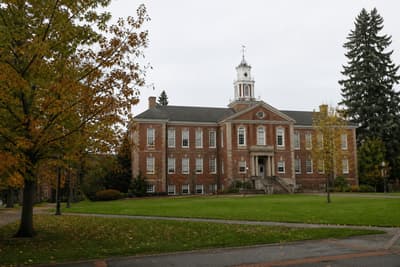
Willamette University Joins National Ranks in U.S. News & World Report Classification Shift
Willamette University Joins National Ranks in U.S. News & World Report Classification Shift
Willamette University, the historic liberal arts institution in Salem, Oregon, is set to appear in a new category this fall when U.S. News & World Report releases its annual college rankings. For the first time, the university will be classified as a National University, a significant shift that places it among institutions offering a full range of undergraduate majors, master’s, and doctoral programs.
Understanding the U.S. News Classification System
The U.S. News & World Report rankings rely heavily on the Carnegie Classification of Institutions of Higher Education to group schools into categories. The move from a Regional or National Liberal Arts College designation to the National University category is a technical but symbolically powerful change. According to the publication’s methodology, National Universities are defined as institutions that offer a full spectrum of undergraduate majors alongside master’s and doctoral degrees, and that emphasize faculty research or award professional practice doctorates.
This distinction matters significantly for prospective students and families who use these rankings to compare institutions. By moving into the National University category, Willamette will now be benchmarked against larger, research-intensive universities rather than smaller, primarily undergraduate-focused liberal arts colleges.
Institutional Evolution and Degree Offerings
Willamette’s new classification reflects its broader academic footprint. While the university has long been celebrated for its rigorous undergraduate liberal arts curriculum, it also houses the renowned Willamette University College of Law and the Atkinson Graduate School of Management. These professional graduate programs, combined with a growing research profile, align the institution with the criteria U.S. News uses to define National Universities.
The university confirmed the upcoming change ahead of the rankings’ fall release, emphasizing that the reclassification is a result of its continued institutional growth and commitment to comprehensive education rather than a fundamental shift in its core mission.
Leadership Reaction and Strategic Implications
University leadership framed the new classification as a pivotal moment for visibility and recruitment. The designation is expected to elevate Willamette’s profile on a national and international scale, potentially attracting a wider pool of applicants who may not have previously considered the institution in a regional or liberal arts context.
“This new classification places Willamette where it belongs: among the nation’s top-tier universities that provide an exceptional education grounded in both the liberal arts and professional graduate studies,” a university spokesperson stated, highlighting the strategic importance of the move.
What Changes for Students?
While the methodology behind the rankings has not changed, the peer group Willamette will be compared against has. This could influence the university’s numerical ranking position, as it will be evaluated on a different scale, factoring in research expenditures and doctoral degree production more heavily than in previous years. However, the university is leveraging the moment to underscore its unique value proposition: a small, personalized university experience with the resources and academic breadth of a national institution.
Prospective students can verify the institution’s detailed academic offerings and enrollment data through official sources. The National Center for Education Statistics provides a comprehensive profile through its College Navigator tool, cataloging details from graduation rates to degree fields, which illustrates the multi-faceted nature of Willamette’s programs.
The Broader Ranking Landscape
The reclassification comes at a time of heightened scrutiny regarding college rankings. Many institutions are navigating changes in how data is reported and how categories are defined. For Willamette, the shift is not a reactive measure but a reflection of a long-established institutional reality finally captured by the ranking methodology. The university will now share a category with institutions that have significant graduate research programs, changing the narrative of how it presents itself to the world.


