At Least 75 Dead, Hundreds Missing as Catastrophic Flash Floods Devastate Nepal-China Border
At Least 75 Dead, Hundreds Missing as Catastrophic Flash Floods Devastate Nepal-China Border
Rescuers are scrambling to reach remote Himalayan villages and trekking routes after massive flash floods ripped through a high-altitude border region between Nepal and China on Wednesday, leaving at least 75 people dead and hundreds more missing. The disaster has triggered a complex cross-border emergency, with authorities in both nations struggling against washed-out roads, severed communications, and treacherous terrain to account for tourists, workers, and local communities caught in the deluge.
Rising Toll and the Missing
The confirmed death toll climbed steadily throughout the day as search-and-rescue teams reached isolated areas, but officials warn the number is almost certain to rise significantly. Hundreds of individuals remain unaccounted for, a list that includes foreign trekkers drawn to the scenic border region, local guides and porters, construction workers on infrastructure projects, and residents of remote mountain settlements.
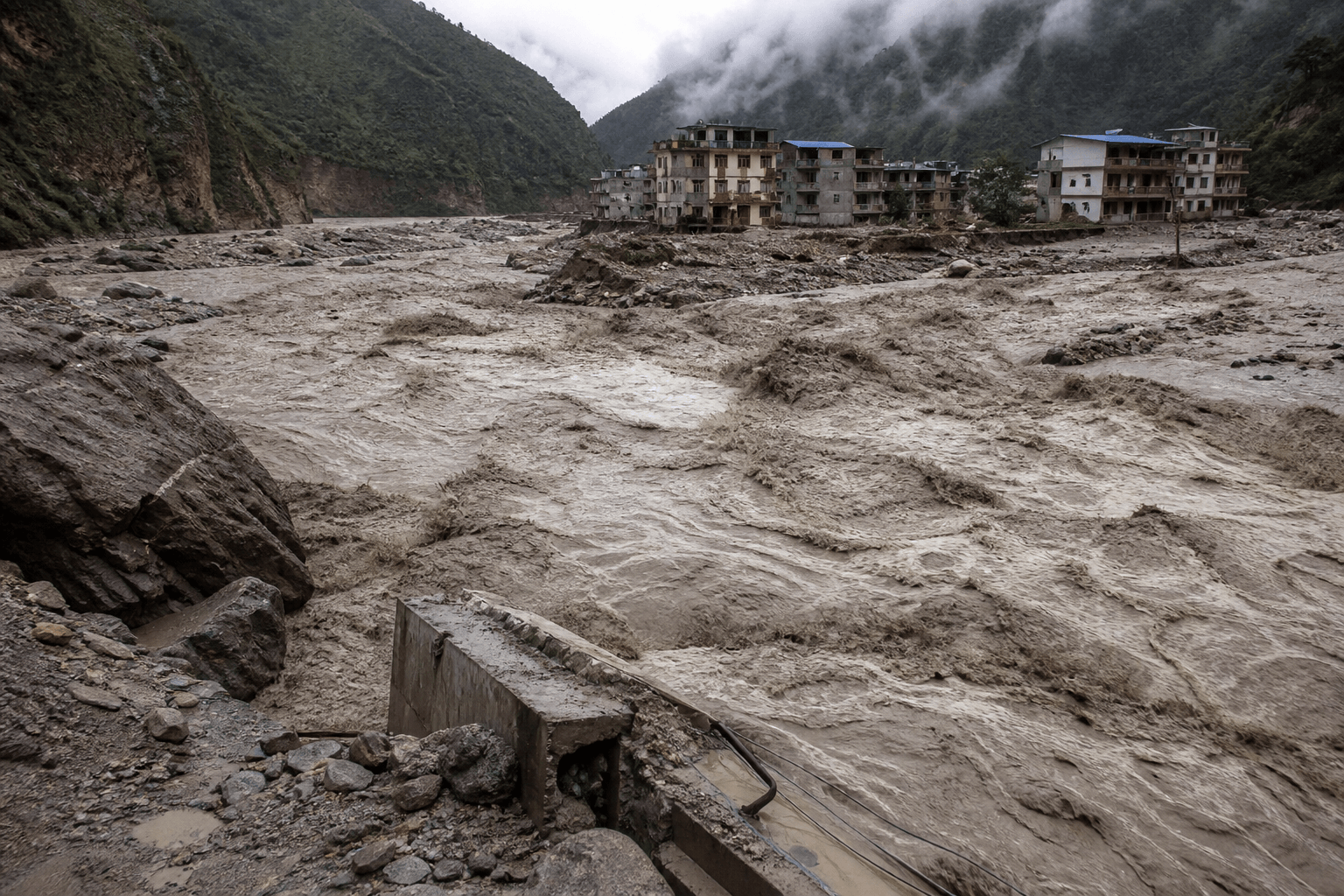
The floodwaters struck with little warning, sweeping through river valleys and triggering landslides that buried trails and roads under meters of mud and debris. Many of the missing were in areas popular for adventure tourism and cross-border trade, where cellular and internet connectivity has been completely destroyed, making rapid communications nearly impossible.
Cross-Border Emergency Response
The disaster zone straddles a sensitive and logistically challenging international frontier. Nepalese authorities and Chinese regional officials have activated disaster response protocols, deploying search-and-rescue teams equipped for alpine conditions. Helicopters have been deployed where weather permits, but monsoon cloud cover and continuing rain are severely limiting air operations.
In Nepal, the National Disaster Risk Reduction and Management Authority (NDRRMA) is coordinating the deployment of army and police personnel to the affected districts. On the Chinese side, local government agencies are mobilizing resources to search downstream areas where bodies and debris may have been carried. The cross-border nature of the crisis has necessitated direct channels between the two governments to share information on missing persons and coordinate river rescue efforts along the waterway that marks the international boundary.
Terrain and Weather Hamper Rescue Efforts
The remote, mountainous geography presents a formidable obstacle to the emergency response. Narrow mountain roads have been obliterated by landslides, footbridges have collapsed, and entire sections of trail networks have been scoured away. Rescue teams are being forced to trek on foot for hours, carrying medical supplies and extraction equipment through unstable terrain where afterslides remain a constant threat.
The flooding was triggered by a combination of intense monsoon rainfall and rapid snow and ice melt from higher elevations, which caused rivers and tributaries to burst their banks with overwhelming force. Hydrologists point to the increasing frequency of such cascading events in the Himalayan region as climate patterns shift, exposing communities to hazards that were previously rare. The swollen rivers transformed into walls of water, mud, and rock, leaving little time for those in the path to reach higher ground.
Tourists and Workers in Harm’s Way
The area is a magnet for adventure tourists during the trekking season, with visitors drawn to trails offering panoramic views of the world’s highest peaks. Additionally, seasonal workers are commonly present, engaged in road construction, hydropower projects, and cross-border trade. Officials are now working to compare arrival records, trekking permits, and employment registries to determine the full scope of the missing.
Authorities have urged relatives and tour operators to report anyone who may have been in the flood zone. Evacuation alerts remain in effect for downstream communities on both sides of the border, with forecasts calling for continued heavy precipitation in the coming days that could trigger additional landslides and complicate recovery operations.
“The scale of this disaster is still unfolding. Access is the biggest challenge right now, and our teams are doing everything possible to reach those who are stranded and to recover the deceased,” a spokesperson for Nepal’s disaster management body said in a statement.
As the search intensifies, the urgent focus remains on locating survivors in the critical first days after the flood. However, with vast swaths of the disaster zone still inaccessible, the full picture of loss is only beginning to emerge from one of the most catastrophic flash flood events to hit the Himalayas in recent years.