
US Warns Iran Naval Blockade Could Last Indefinitely as Global Oil Shortfall Worsens
US Warns Iran Naval Blockade Could Last Indefinitely as Global Oil Shortfall Worsens
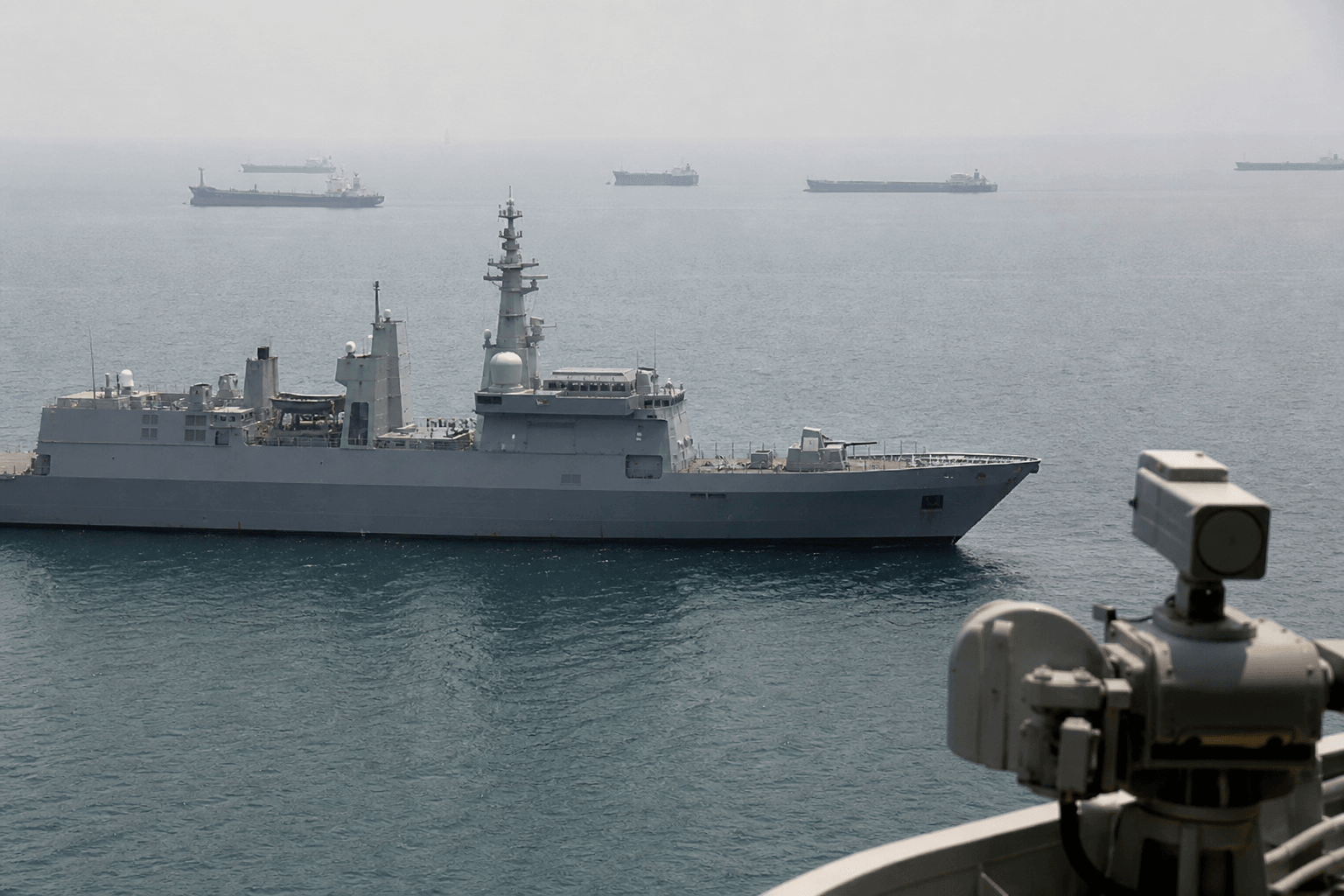
PANAMA CITY – The United States on Thursday threatened to maintain a naval blockade of Iran indefinitely, a move that immediately rattled energy markets already grappling with a deepening supply shortfall. The stark warning, reported by Reuters journalists Phil Stewart and Idrees Ali, signals Washington’s readiness to sustain unprecedented military and economic pressure on Tehran for the long haul.
A Maritime Stranglehold with No End Date
Unlike previous enforcement actions that carried implicit or explicit timelines, the latest posture removes any expiration date. Defense analysts describe the blockade as a layered operation encompassing maritime interdiction, shipping restrictions, and broader enforcement at sea. The U.S. Navy, operating under the umbrella of U.S. Central Command, is positioned to inspect, divert, or seize vessels suspected of transporting Iranian crude or sanctioned petroleum products through critical Gulf chokepoints.
The operational details remain classified, but the intent is clear: choke off the remaining revenue streams that Tehran uses to fund proxy militias and nuclear ambitions while oil markets are exceptionally tight. A prolonged disruption comes at a moment when the International Energy Agency has repeatedly warned about historically low spare capacity among major producers.
Oil Markets React to a Prolonged Supply Shock Scenario
The oil supply shortfall that forms the backdrop to this escalation is not a theoretical risk. Import-dependent economies across Asia and Europe are already contending with elevated crude prices, and the indefinite blockade removes any near-term prospect of sanctioned Iranian barrels legally returning to market. Energy strategists caution that even the threat of sustained interdiction inflates shipping insurance premiums and forces tanker operators to reconsider Gulf voyages.
“An indefinite naval blockade is functionally a declaration of a semi-permanent supply exclusion zone. Markets can absorb a short disruption; they cannot easily price in a structural removal of Iranian flows without a clear off-ramp,” an oil market analyst told Reuters, speaking on condition of anonymity due to the sensitivity of the subject.
Tehran’s Retaliation Pathways and Regional Fallout
Iran has long signaled that any attempt to sever its maritime lifelines would be met with a forceful response. The most immediate risks involve asymmetric retaliation in the Strait of Hormuz and adjacent shipping lanes, where Tehran has previously deployed fast-attack craft, naval mines, and drone swarms. Any escalation there would instantly threaten a fifth of the world’s daily oil transit.
U.S. officials are weighing those risks against the strategic calculus that Iran, facing domestic economic strain, may have fewer escalation options than in previous standoffs. Still, miscalculation remains a live concern. The Pentagon has moved additional naval assets into the region in recent weeks, underscoring the seriousness with which Washington is treating potential Iranian countermeasures.
Diplomatic Fallout Among Allies and Consumer Nations
The indefinite blockade posture also poses a diplomatic test. Major oil consumers including India, Japan, and South Korea have historically sought waivers to import Iranian crude, and European allies are liable to bristle at a military-enforced supply restriction without a clear United Nations mandate. Gulf states, meanwhile, find themselves in a delicate position: publicly supportive of countering Iranian influence, yet acutely aware that any kinetic conflict in shared waterways would jeopardize their own export infrastructure.
The Reuters report by Stewart and Ali makes clear that the Biden administration views the blockade not merely as a sanctions enforcement tool but as a centerpiece of its Iran containment doctrine. Whether the indefinite timeframe is a negotiating tactic or an operational reality will become apparent in the coming weeks as tanker tracking data reveals whether Iranian cargoes are able to find willing buyers and safe transit routes.
Global Energy Security Hangs in the Balance
The intersection of military pressure and energy security has rarely been starker. With the U.S. Department of Defense declining to provide specific rules of engagement, shipping insurers and charterers are left parsing ambiguous threat assessments that could rapidly alter the viability of key routes.
For now, the message from Panama City is unambiguous: the United States is prepared to keep its naval grip on Iran’s oil exports in place without a defined endpoint, betting that strategic patience—and superior naval power—can reshape the geopolitical order in the Gulf at a time when every barrel counts.


