Thousands Trek to Baidoa as Somalia’s Relentless Drought Pushes Families to the Brink
A Mother’s Grueling Journey
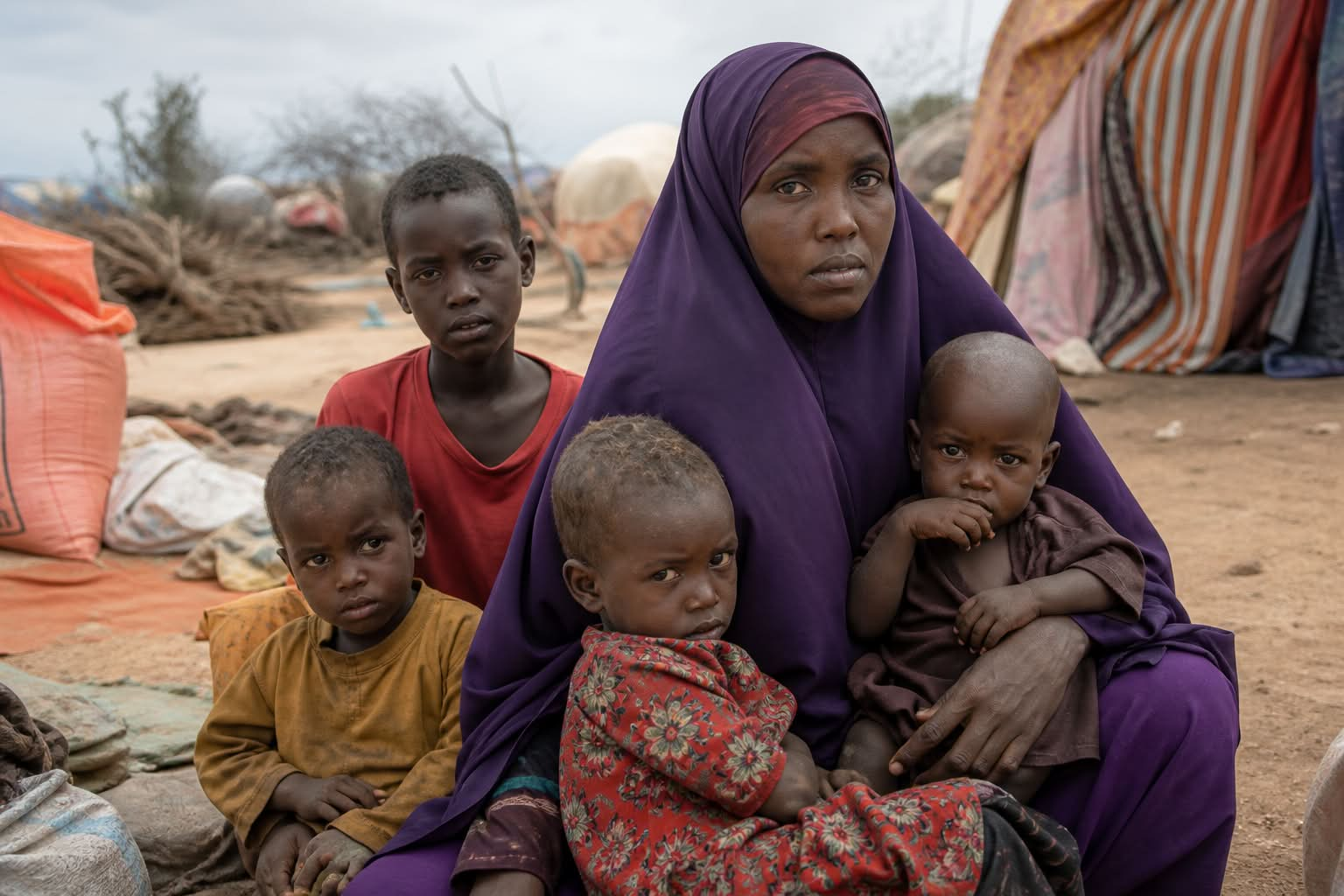
After nearly two weeks of walking under a scorching sun with her five children in tow, Luul Mohamed finally stumbled into the dusty outskirts of Baidoa, the southwestern Somali city that has become a reluctant sanctuary for the country’s newest wave of displaced. Her rural home, once a patchwork of grazing land and subsistence farms, had turned to powder after seasons of failed rains. The family’s livestock—their savings account and food source—perished. With nothing left, Mohamed joined the thousands now moving along the parched roads in a desperate search for water, food, and survival.
“We had no choice,” she told aid workers upon arrival, her voice hollow from exhaustion. Her story is not unique; it is being repeated in makeshift camps sprouting across Baidoa’s periphery, where families arrive with little more than the clothes on their backs.
Drought Chokes Rural Livelihoods
Somalia is enduring its longest and most severe drought in four decades. Five consecutive failed rainy seasons have decimated crops, evaporated water points, and killed millions of animals on which pastoralist communities depend. For families like Mohamed’s, the collapse of rural livelihoods triggers a life-or-death calculus: stay and starve, or move toward urban centers in hopes of aid. Baidoa, once a small trading hub, now hosts hundreds of thousands of internally displaced people, and the influx is accelerating as the dry season tightens its grip.
Climate scientists and humanitarian agencies alike point to a recurring pattern: Somalia’s climate-driven emergencies are becoming more frequent and intense, leaving less time for recovery between shocks. The current drought is the third major episode in a decade, following the famine of 2011 and the near-famine of 2017. Each cycle erodes resilience, particularly among the rural poor.
Hunger Deepens as Aid Shrinks
Inside Baidoa’s overcrowded displacement camps, hunger is sharpening. New arrivals like Mohamed often have no food reserves and depend entirely on handouts. Yet the aid architecture meant to catch them is unraveling. International humanitarian budgets are stretched across multiple global crises, and funding for Somalia’s drought response has fallen dangerously short. The World Food Programme has been forced to slash monthly food rations to displaced populations here and in other hotspots. A WFP Somalia spokesperson recently warned that without immediate new funding, life-saving assistance could stop altogether in some areas.
The United Nations Office for the Coordination of Humanitarian Affairs has documented a dramatic rise in severe malnutrition among children arriving at camps in Baidoa, with many screening at acutely malnourished levels. “We are seeing families who have been walking for weeks, yet when they arrive, the soup kitchen has no beans, no oil,” one aid worker said on condition of anonymity. UNICEF Somalia therapeutic feeding centers are overwhelmed, treating tens of thousands of children but turning away many more due to capacity constraints.
Baidoa Strains Under Pressure
The city, already one of the country’s largest displacement hubs, is buckling. Makeshift shelters of twigs and tarpaulins spread for miles, with little sanitation, scant water, and the constant threat of disease outbreaks. Local authorities and humanitarian partners scramble to register new arrivals, but the pace of displacement outstrips the ability to respond. In some sectors, one latrine serves more than one hundred people, raising fears of cholera and acute watery diarrhoea as the rains eventually return.
Baidoa’s host community, itself struggling with erratic rainfall and soaring food prices, is feeling the strain. Market prices for basics like sorghum and cooking oil have spiked, partly due to disrupted supply lines and partly due to the surge in demand from displaced populations. Tensions occasionally flare over access to scarce resources, though traditional elders and local officials push for calm and shared solutions.
A Broader Climate and Humanitarian Emergency
“Displacement is not a choice; it is a last resort for people who have run out of all other options. These families are survivors of a disaster they did nothing to create.”
The situation in Baidoa is a microcosm of a larger crisis. Across Somalia, drought has displaced more than 1.3 million people since 2021, according to the UN. Those numbers are likely to rise as the next rainy season, already forecast to be below-average, looms. Aid agencies, operating from sites like the UN OCHA Somalia coordination hub, warn that without a massive scale-up, Somalia could again face famine conditions in parts of the country this year. The lessons of 2011, when a delayed international response led to 260,000 deaths, weigh heavily. Early action is critical, yet funding appeals remain woefully under-capitalized.
Life in Limbo
For Luul Mohamed and her children, the immediate question is survival. They are assigned a small plot in a camp, where an aid group provides water and a weekly ration card, at least for now. Her children are already registered for malnutrition screening, a grim milestone in a young life. “I just want them to eat and be safe,” she says. But uncertainty clouds that simple wish. As global attention wavers and resources dwindle, Baidoa’s displaced families slip further into a limbo defined by dependence and despair.
The city’s fate—and Somalia’s—illustrates the collision of climate change, poverty, and conflict. A solution will require not only immediate food and cash assistance but also long-term investments in water infrastructure, climate-resilient agriculture, and governance that can break the cycle of recurring catastrophe. Until then, mothers like Luul Mohamed will keep walking.