Montana Moves to Implement Indigenous Education Statewide in National First
A Constitutional Promise Meets the Classroom
Nearly half a century after Montana became the first and only state to enshrine Indigenous education in its constitution, officials are now undertaking the complex work of translating that legal commitment into daily classroom practice. The statewide implementation effort is being closely watched as a potential national test case, with advocates calling it a “gold standard” for culturally grounded instruction.
The Montana Constitution uniquely directs the state to recognize the distinct and unique cultural heritage of American Indians and to be committed in its educational goals to the preservation of their cultural integrity. For years, however, the practical application of that mandate varied wildly from district to district, leaving many students with inconsistent or shallow exposure to tribal histories and contemporary Indigenous perspectives.
From Legal Mandate to Statewide Rollout
The renewed push focuses on building a cohesive framework that school districts across the vast, rural state can adopt. The Montana Office of Public Instruction has been working to develop standards, curricula, and teacher-preparation programs that move beyond symbolic recognition toward substantive, accurate instruction about Indigenous peoples and history.
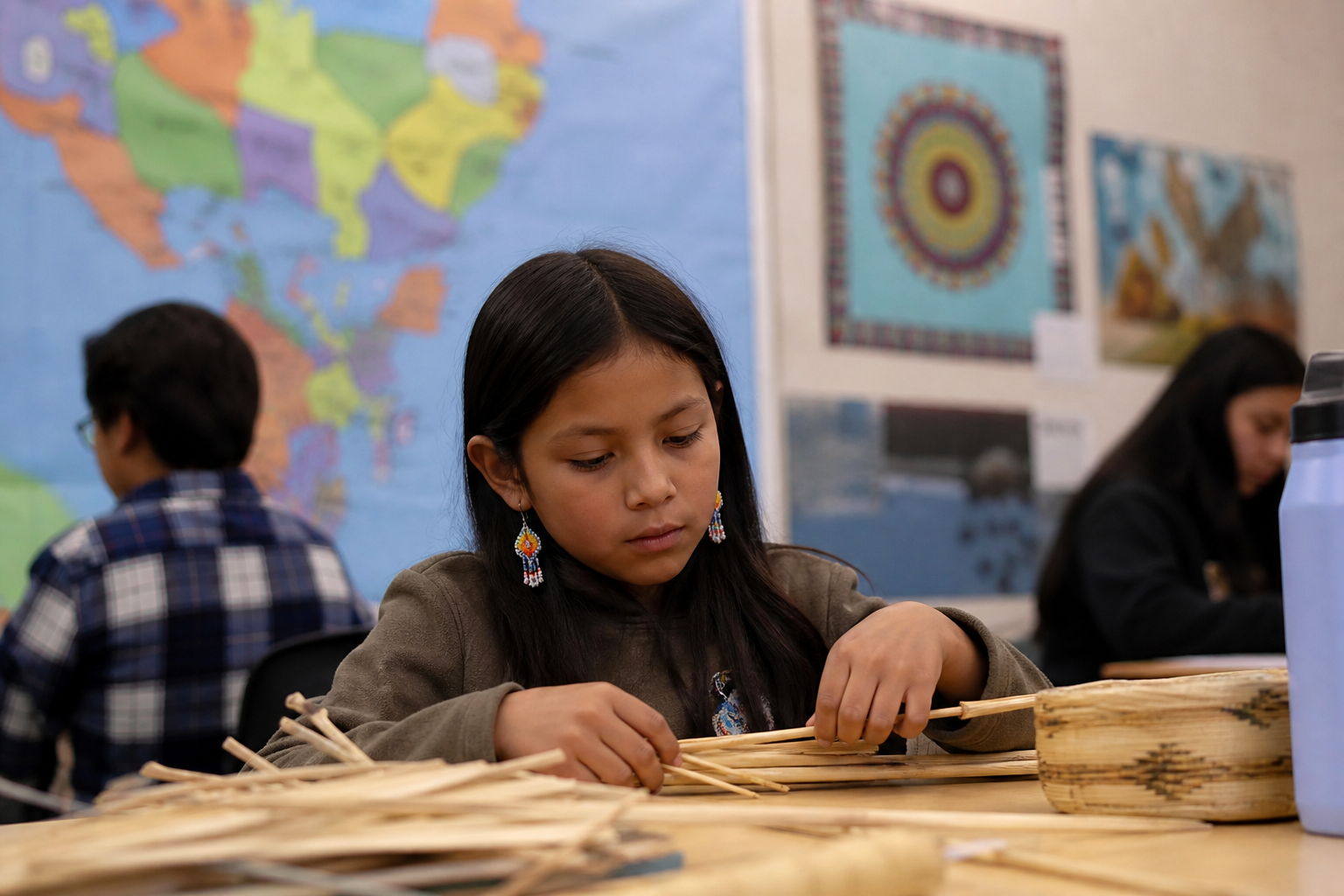
A central pillar of the implementation strategy is the “Indian Education for All” law, which operationalizes the constitutional requirement. Under the rollout, schools are expected to integrate Indigenous content not just in social studies, but across subjects including literature, science, and art. The challenge remains steep: training thousands of educators, many in remote communities, to teach material that was long absent from their own schooling and professional development.
A National “Gold Standard” Under Construction
The American Civil Liberties Union (ACLU) has framed Montana’s initiative as setting a precedent that other states should follow. Advocates argue that the state’s comprehensive legal foundation positions it uniquely well to deliver consistent, culturally grounded education at scale, even as practical hurdles persist.
“Montana first led the nation by enshrining Indigenous education in its constitution. Now’s the time to implement those promises.”
Experts note that what makes Montana’s approach distinct is the combination of a constitutional mandate, specific legislation, and a dedicated funding stream—elements often missing in other states where Indigenous education efforts rely on ad hoc grants or individual teacher initiative.
Indigenous Communities as Partners, Not Afterthoughts
A critical reporting question has been the extent to which tribal nations are involved in shaping the implementation process. State education officials say they are working with Montana’s tribal education departments and cultural committees to vet materials and co-design professional development. The goal is to ensure that curriculum reflects the distinct histories, languages, and governance of the state’s twelve tribal nations rather than presenting a generic or pan-Indian narrative.
On the ground, some districts with high Native student populations have served as early models, demonstrating how locally developed materials can meet state standards while remaining rooted in community knowledge. The statewide challenge is to replicate that authenticity in schools where Native students are a small minority and where educators may have never visited a reservation.
What’s at Stake for Students and the State
Supporters say the initiative’s success will be measured not just by test scores but by whether students in Montana leave school with a truthful and respectful understanding of the state’s first peoples. They point to the high rates of misunderstanding and stereotyping that persist nationally as evidence that education systems have failed Indigenous histories. Montana’s effort, if effective, could offer a roadmap for other states grappling with similar questions about curriculum representation.
State officials acknowledge that full implementation will take years and require continuous iteration. Teacher preparation programs at Montana universities are also being retooled so that new educators enter the classroom already equipped, rather than relying solely on in-service training. As the 2024-2025 school year progresses, inspectors and tribal monitors will assess whether the policy is producing real instructional change or merely updating paper documents.
For Indigenous educators and parents who have spent decades advocating for this moment, the hope is that constitutional words finally become formative experiences for every student in Montana.