Proposition 28 at a Crossroads: How Much of California’s $1 Billion Arts Investment Has Reached Classrooms?
A Landmark Promise for Arts Education
In 2022, California voters overwhelmingly approved Proposition 28, a ballot measure that dedicates roughly $1 billion each year to expanding visual arts, music, dance, and theater in the state’s public schools. The promise was bold: guarantee every student, regardless of zip code, access to a well-rounded creative education. Now, as the initiative moves through its fourth year, a central question is emerging from educators, policy analysts, and watchdogs alike—how much of that money has actually materialized in classrooms, and what difference is it making for millions of students?
The Mechanics of the Guaranteed Funding
Unlike typical education budgets that can be raided during tight fiscal cycles, Proposition 28 constitutionally earmarks funds specifically for arts education. The money flows through a formula based on enrollment, with an additional weighting intended to direct more resources toward schools serving low-income families, English learners, and foster youth. Its architects envisioned thousands of new arts teachers, restored programs that had been gutted during the Great Recession, and expanded instructional minutes that would turn California—often ranked near the bottom in arts access—into a national model.
Yet the sheer scale of the appropriation has raised governance questions. The California Legislative Analyst’s Office, which provides nonpartisan fiscal oversight, flagged early on that tracking local spending with precision would be a persistent challenge. Because the funds are routed through the state’s complex school funding system, simply seeing the line item on a district budget does not always reveal whether hiring is new or merely a replacement of money that was already being spent.
Where the Dollars Land—and Where They Don’t
The core reporting question that education journalists at EdSource and other outlets are now probing is straightforward: Has the $1 billion per year translated into a genuine expansion of arts access, or has it been absorbed quietly into general expenditures? Early district surveys suggest a mixed picture. Some urban systems with robust grant-writing capacity have rapidly hired dedicated dance and theater instructors and partnered with local museums. Other districts, particularly small and rural ones, report struggling to find credentialed arts teachers at all, leaving positions unfilled or temporarily covered by classroom teachers without specialized training.
Equity remains the most sensitive fault line. The measure’s supplemental grants were meant to close historical gaps—students in wealthier communities have long enjoyed private funding for marching bands, pottery studios, and digital media labs, while their less affluent peers often had no arts instruction beyond a once-a-week general music class. Preliminary data reviewed by the California Department of Education suggests that per-pupil arts spending has risen in the highest-need schools, but the magnitude of that increase varies wildly by region, with some schools showing dramatic hiring surges and others showing almost no change.
Beyond Budget Lines: Defining a “Measurable Expansion”
A debate is intensifying over what should count as success. Is it enough to show that districts set aside the money for arts? Or must they prove that actual student participation in sequential, standards-based courses has increased? The state’s accountability system currently does not include a specific indicator for arts education quality, making it difficult to answer definitively.
Advocates point to promising signs:
- Several large districts have restored full-time elementary music specialists, a position that had nearly vanished.
- Community arts organizations report a surge in partnerships, bringing artists-in-residence into schools for the first time in decades.
- Some county offices of education are using the funds to create shared theater and production facilities that rotate among smaller districts.
Skeptics, however, note that hiring data alone can be deceiving. A district might post a new “arts integration coach” position while simultaneously shifting an existing art teacher to a different campus, resulting in no net new instruction. Until independently audited reports show a clear, year-over-year rise in arts course offerings and enrollment, the true return on investment remains uncertain.
Transparency and the Road Ahead
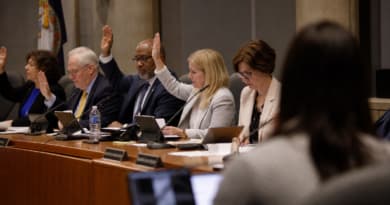
To bolster accountability, legislators have considered bills requiring more granular reporting from each local educational agency, breaking down exactly how many additional arts teachers were hired with Prop 28 money and how instructional minutes changed. Resistance has come from some districts arguing that the administrative burden is already high. Transparency advocates counter that $1 billion annually—roughly equivalent to the entire budget of several state departments—demands at least that level of scrutiny.
For now, the story of Proposition 28 is still being written. The funds are flowing, but whether they will fundamentally reshape the arts landscape in California’s 10,000-plus schools depends on rigorous implementation, unwavering oversight, and a shared definition of what it means to truly deliver an arts education to every child. The next round of state-mandated expenditure reports, due later this year, will be the most revealing test yet.
“The money is there by law, but ensuring it translates into a child holding a trumpet, painting a mural, or stepping onto a stage for the first time—that’s the work that happens at the local level, and it’s far harder to track,” one district arts coordinator told researchers, capturing both the hope and the fragility of the initiative.
As the public awaits clearer data, one thing is certain: California’s experiment in constitutionally protected arts funding is being watched nationwide, and its successes or stumbles will shape education policy debates for years to come.