Montana to Implement Indigenous Education Statewide
{
“title”: “Montana Seeks to Turn Landmark Indigenous Education Promise into Classroom Reality”,
“slug”: “montana-indigenous-education-implementation”,
“content”: “
From Constitutional Promise to Classroom Practice
\n\n
Montana is poised to become the first state in the nation to move beyond symbolic recognition and implement a comprehensive statewide framework for Indigenous education. The state, which already led the country by enshrining Indigenous education in its constitution, is now confronting the practical challenge of translating that landmark legal commitment into lesson plans, teacher training, and measurable accountability.
\n\n
The initiative, heralded by advocates as a potential gold standard for the rest of the United States, requires a coordinated effort involving state education officials, sovereign tribal nations, local school districts, and curriculum developers to embed Indigenous histories, cultures, and contemporary issues across all grade levels and subjects.
\n\n
The Architecture of Implementation
\n\n
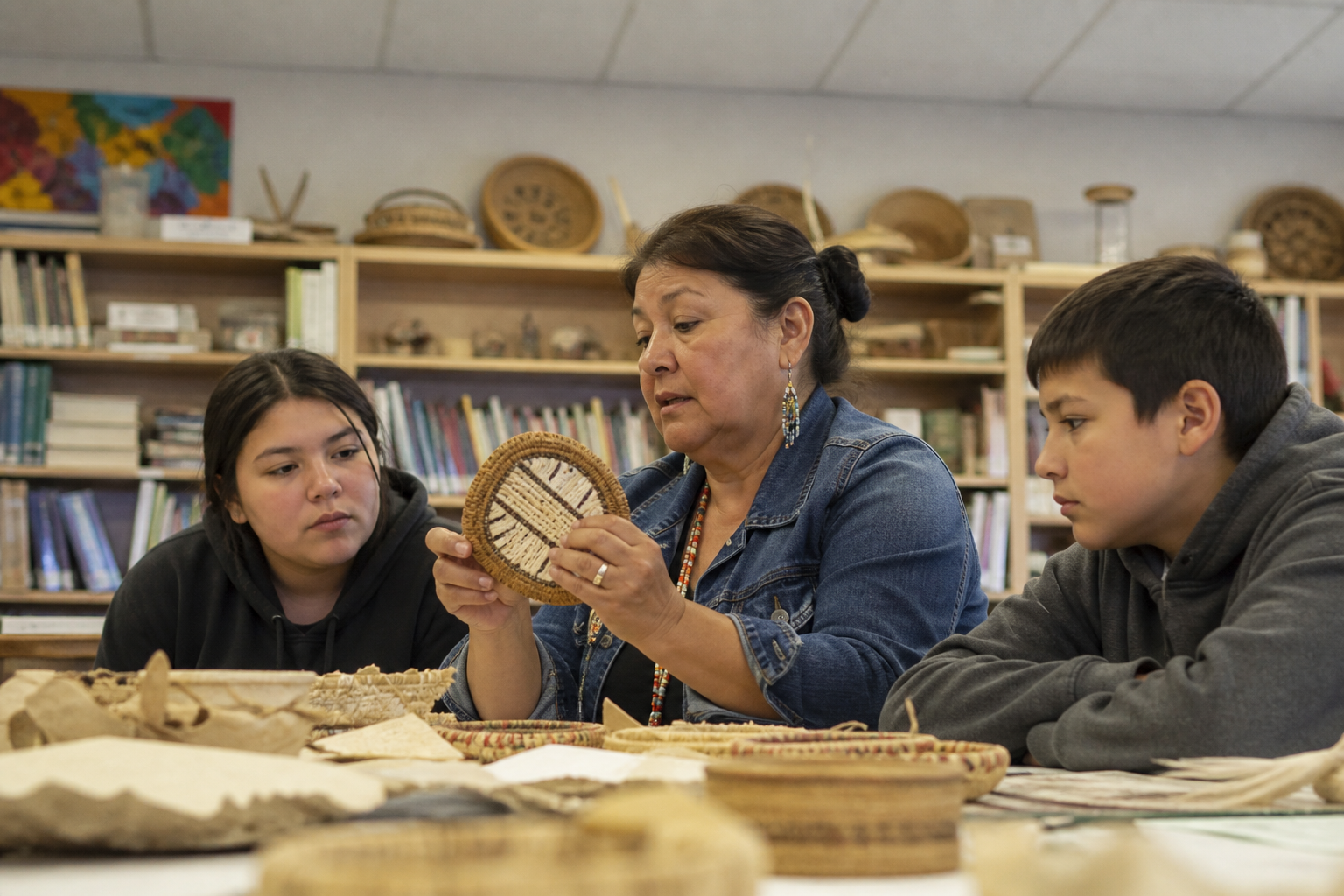
The constitutional mandate established Montana as a national leader in principle. The current phase shifts the focus to the machinery of public education. State education authorities are tasked with developing robust standards that move beyond isolated, one-off lessons about Native American history. The goal is to weave Indigenous perspectives into the fabric of the curriculum—from social studies and literature to science and art—ensuring students graduate with a substantive understanding of the tribal nations that share geography with the state.
\n\n
A critical component scrutinized by civil rights watchdogs, including the American Civil Liberties Union (ACLU), is whether the implementation plan is crafted in true partnership with Indigenous communities rather than being imposed externally. The process is under pressure to demonstrate that tribal governments and Indigenous educators are not merely consulted as an afterthought but are active architects of the content, ensuring cultural accuracy and pedagogical sovereignty.
\n\n
“Who Decides What Gets Taught?”
\n\n
The narrative of statewide implementation hinges on the question of authority. While the Montana Office of Public Instruction provides the administrative backbone, the substantive voice must come from the tribal nations themselves. Concepts like \”cultural intellectual property\” and \”data sovereignty\” are entering education policy discussions, demanding that curriculum reflects the lived realities and historical traumas of tribes without sanitizing or romanticizing the past.
\n\n
School districts are projected to receive updated guidance on selecting instructional materials and designing age-appropriate modules. Furthermore, teacher preparation programs face a significant overhaul. Educators will be required to undergo professional development aimed not just at cultural competency, but at deep historical literacy regarding federal Indian policy, treaty rights, and the resilience of Indigenous governance structures.
\n\n
\n
\”Montana sets the gold standard for Indigenous education nationwide. This is the moment to ensure that the promise of the constitution is visible in every classroom.\”
\n
\n\n
This push for professional readiness acknowledges that the biggest hurdle is often a lack of educator confidence. Districts are looking to recruit Indigenous teachers and mandate ongoing training to prevent the well-intentioned mandate from stagnating on paper.
\n\n
Accountability and the Long View
\n\n
Advocates are closely watching the metrics of success. Beyond the rollout of standards, the state will need to demonstrate accountability through revised assessment systems and transparent reporting on implementation fidelity across rural and urban districts. The disparity in resources between wealthy districts and those on or near reservations remains a critical friction point that the policy seeks to mitigate through targeted state support.
\n\n
The broader national significance is undeniable. As debates over critical race theory and historical accuracy roil school boards across the country, Montana’s approach provides a structured, legally grounded counter-narrative. By making Indigenous education a matter of constitutional law rather than political whimsy, the state offers a roadmap for how to codify inclusive education in a manner that is durable across election cycles.
\n\n
Observers note that Montana’s model is already being analyzed by policy makers from other states with significant Native populations. The success or failure of this implementation phase will likely dictate whether other statehouses pursue legally binding mandates for Indigenous education or continue to rely solely on voluntary inclusion.
\n\n
Stakeholders in Motion
\n\n
The constellation of entities responsible for upward of 140,000 public school students is vast. The process requires synchronization between the Montana Legislature, the Office of Public Instruction, and the sovereign tribal governments of the eleven federally recognized nations within the state’s boundaries. Organizations like the National Congress of American Indians have long advocated for this type of structural integration, viewing education as the primary tool for dismantling harmful stereotypes and fostering government-to-government respect from an early age.
\n\n
As the 2025 academic planning cycle begins, Montana’s education officials are signaling that the era of vague commitments is over. The translation of constitutional text into classroom practice is now the singular focus, carrying the weight of both legal obligation and historical justice. The policy infrastructure being built today is expected to set the benchmark for Indigenous representation in American public education for a generation.
“,
“category_name”: “Education”
}