Missouri Education Board Voices Caution Over $300 Million School Funding Push
Early budget talks signal a potential historic investment in public schools – but board members fear the price tag may be unsustainable
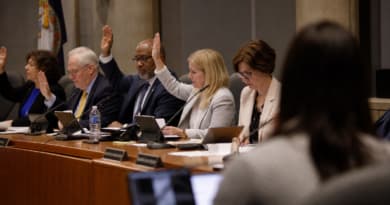
The Missouri State Board of Education is treading carefully around a preliminary proposal to inject an additional $300 million into the state’s public school system, as budget discussions get underway. While the figure would represent one of the largest single-year boosts for K-12 education in recent memory, several board members have expressed deep reservations about how such a commitment would be funded over the long term and what it might mean for other state priorities.
The $300 million figure emerged during initial conversations about the Department of Elementary and Secondary Education’s budget request for the upcoming fiscal cycle. Though details remain fluid, the proposal is understood to be aimed squarely at the foundation formula – the primary mechanism Missouri uses to distribute state aid to its more than 500 school districts. If fully realized, the increase could lift the state significantly closer to fully funding the formula for the first time in years, a goal long championed by education advocates.
A Cautious Board in an Election Year
Rather than embracing the number, board members used early sessions to press budget analysts on the core question of sustainability. Concerns were raised not about the worthiness of additional school funding, but about whether Missouri’s revenue growth can support an ongoing commitment of that magnitude without forcing cuts elsewhere or triggering future shortfalls.
“There is a real tension between what our schools need and what the state can responsibly promise,” one official familiar with the discussions said, describing the board’s mood as “pragmatic, not dismissive.” The source, who requested anonymity because the talks are preliminary, added that board members are acutely aware of the political calendar: lawmakers and the governor will ultimately decide what gets funded, and a massive ask could get trimmed dramatically in the legislative process.
Key worries voiced in the closed-door sessions include:
- Whether the state’s general revenue fund, already under pressure from rising healthcare and infrastructure costs, can absorb a $300 million annual increase without new taxes.
- The risk of creating a fiscal cliff if federal pandemic-era relief dollars that temporarily shored up school budgets are fully spent down.
- The political feasibility of passing such a figure through a Republican-controlled legislature that has historically prioritized tax cuts and been reluctant to approve large spending hikes.
What the Money Would Mean for Missouri Classrooms
To understand the stakes, it’s essential to look at how Missouri funds its schools. The foundation formula, established in 2005 and updated periodically, calculates a per-pupil target and fills the gap between what local districts can raise and that target. The state has chronically underfunded the formula – often by hundreds of millions of dollars – leaving districts to rely more heavily on local property taxes or to trim services. A $300 million infusion would dramatically narrow that gap, potentially allowing districts to raise teacher salaries, reduce class sizes, and expand mental health support programs.
According to Missouri’s Department of Elementary and Secondary Education, the state appropriated just over $3.5 billion in basic aid to schools in the current fiscal year. An extra $300 million would be roughly an 8.5% increase – a jump not seen since the formula was first rolled out. School administrators have long argued that such a boost is overdue, yet the board’s wariness suggests a recognition that sticker shock could jeopardize the entire proposal.
Reactions from Districts and Advocates
While the board deliberates, superintendents across the state are watching nervously. Many had hoped the conversations would produce a clear, bold recommendation that could be used to pressure lawmakers. Instead, the caution voiced by the board has prompted a mix of frustration and understanding.
“We need every penny, but we also need a number that can survive the political reality in Jefferson City,” said a central Missouri superintendent who spoke on condition of anonymity because their district isn’t directly involved in the talks. “If the board puts forward a pie-in-the-sky figure and it gets laughed out of the Capitol, we’ll end up with nothing. So maybe a dose of realism is wise.”
Advocacy groups like the Missouri School Boards’ Association and the state’s largest teachers’ union have consistently urged full funding of the formula. They argue that even $300 million is just a down payment on what’s owed after years of neglect. Yet some lobbyists privately acknowledge that the board’s fiscal wariness may be a strategic move to craft a request that is both ambitious and credible.
What Comes Next
The budget process is still in its infancy. The State Board of Education will continue to refine its recommendations over the coming weeks, with an eye toward submitting a formal request to the governor’s office and the Missouri Office of Administration, Budget & Planning by early fall. From there, the governor will craft an executive budget, which the General Assembly will debate and modify during the 2026 legislative session.
Several lawmakers have already signalled they are open to a substantial increase, provided it is tied to measurable outcomes and does not require tax hikes. Others, particularly fiscal conservatives in the House, are likely to push for a smaller number. The board’s final recommendation – whether it lands near $300 million or scales back the figure – will set the initial tone for what promises to be a contentious budget fight.
In the meantime, Missouri’s 900,000 public school students and their teachers can only wait and see whether this early, cautious dance leads to historic investment or yet another year of tight budgets and dashed hopes.