The Mystery of Trump’s Secret Military Flight to Turkey and the Air Force One Deception
The Hidden Trip
On August 11, 2026, a narrative surfaced that has sparked international debate over presidential transparency and diplomatic secrecy. U.S. President Donald Trump reportedly took a secret military flight to Turkey, bypassing the standard, publicly tracked protocols typically associated with movements aboard Air Force One. The story, initially framed by Reuters video coverage as a deliberate “deception,” has raised critical questions about what the White House chose to hide, the timeline of the travel, and the ultimate reasons for the clandestine journey.
What Was Withheld from the Public
In a typical presidential trip, the White House Military Office coordinates the travel, with flight paths often trackable by civilian flight-monitoring websites after a standard operational delay for security. According to the initial report by Reuters, the flight to Turkey deviated sharply from this norm. The information made available to the press appeared to suggest the president was in one location, while in reality, a military aircraft was transporting him to Turkish soil. The core of the deception involved a willful misrepresentation of the president’s schedule and location, leaving flight-tracking observers and media correspondents in the dark for a significant period.
The timeline remains a focal point. While specific departure times were obscured, it became evident that the president’s actual departure was not contemporaneous with the public White House daily guidance shared with the press pool. Official channels remained silent or issued statements that did not match the physical reality of the president’s geopolitical position until after the fact. This gap between public disclosure and operational reality forms the basis of the controversy.
Diplomatic Sensitivity or Security Panic?
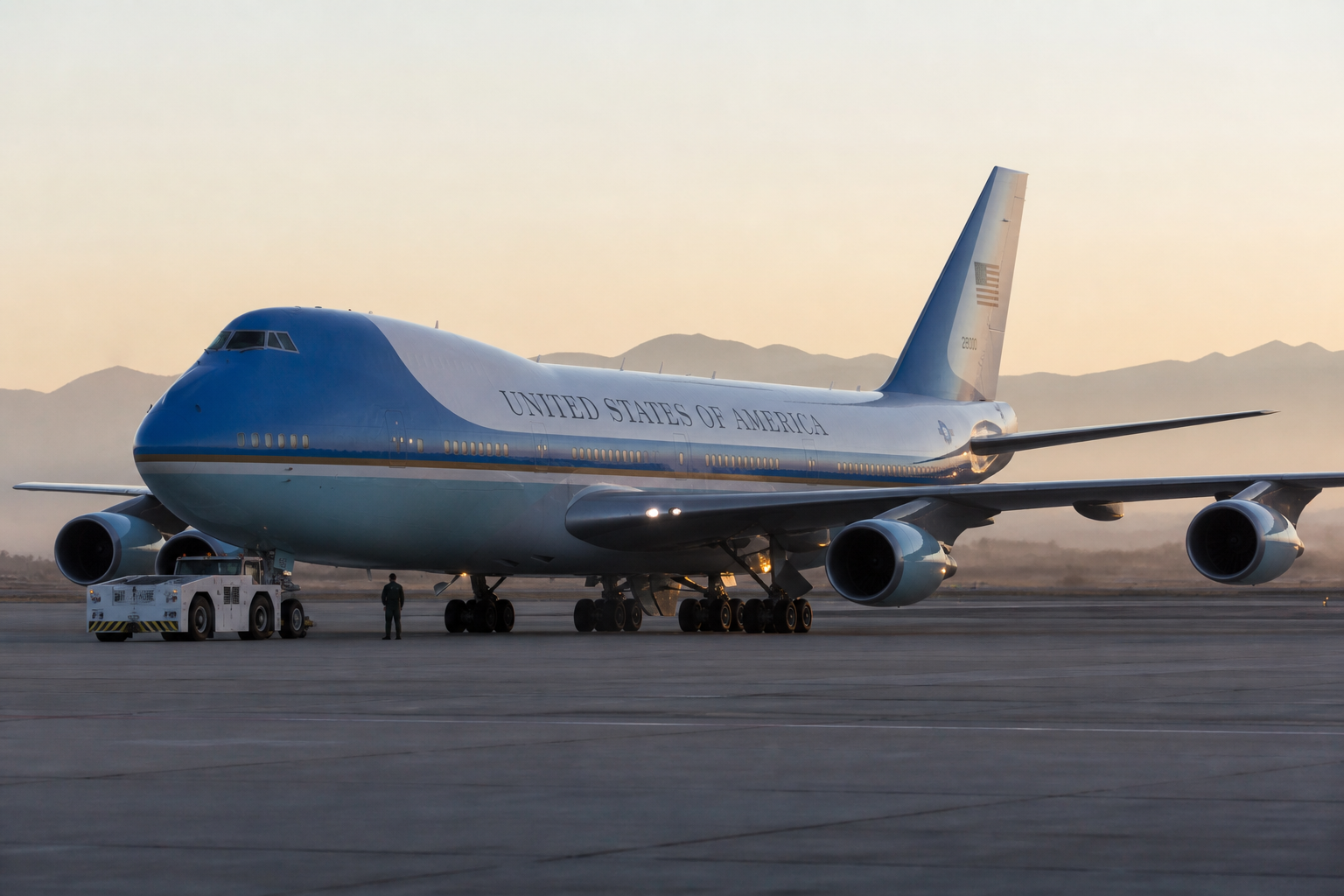
The rationale presented by unnamed defense officials, as reported in the source material, oscillates between extreme security concerns and extraordinary diplomatic sensitivity. One angle suggests that the secrecy was a necessary security protocol triggered by a specific, credible threat within the region that prohibited the use of the distinctive, high-visibility Air Force One. Because the iconic blue-and-white Boeing 747 is instantly recognizable and heavily tracked, substituting it with a nondescript military aircraft would significantly reduce the target profile of the Commander-in-Chief while transiting through volatile airspace.
However, the alternative explanation leans heavily on political optics. The nature of the Turkish engagement might have been deemed so diplomatically raw that the White House wished to control the narrative completely, withholding the meeting until specific agreements or assurances were locked in with the Turkish government. The deception, in this reading, was not about physical safety from an immediate missile threat, but about insulating a sensitive dialogue from premature public scrutiny and media pressure.
The Turkish Government’s Role
Details regarding the Turkish government’s complicity or awareness remain murky. It is unclear if the visit was a complete surprise sprung on Ankara by Washington or a deeply classified private meeting coordinated between the two governments without the usual pomp of a state visit. No official red-carpet footage or joint press conference was immediately provided, suggesting the trip was operational, transactional, and intentionally kept out of the public eye. Whether President Trump met with top Turkish officials in a bunker-like setting or a remote military installation is a critical missing piece of the puzzle that underscores the opaque nature of the mission.
Broader Implications for Presidential Transparency
This episode taps into a long-standing tension between a president’s need for operational security and the public’s right to know the whereabouts of the head of state. Standard procedures exist for press pool rotations, even during covert trips like those famously undertaken by past presidents to war zones. The use of a decoy schedule and the absence of a press pool during the transit phase pushes the boundary of acceptable operational security into the realm of absolute secrecy, creating a vacuum that allows foreign adversaries to define the narrative of the president’s movement.
The use of a secret military flight instead of Air Force One is not merely a logistical footnote; it carries the weight of statutory and political symbolism. It effectively allows the president to travel in a manner that is invisible to the very democratic institutions designed to provide a check on executive power. As the White House faces increasing scrutiny, the story of the Turkey flight will likely become a landmark case study in the erosion of press access to presidential movements.
As the story develops, media watchers and political analysts are calling for a clear, on-the-record statement from the White House Communications Agency explaining exactly why the travel was obscured, what threat model was used, and who signed off on the misdirection. For now, the secret flight remains an enigmatic chapter in the administration’s foreign policy, cloaked in the shadows of international intrigue and domestic deniability.