Trump Links Iran War to 9/11 in Pentagon Memorial Remarks
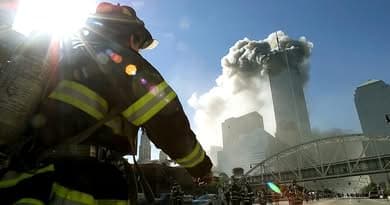
President Donald Trump marked the anniversary of the September 11 attacks at the Pentagon with a speech that praised the U.S. military and explicitly linked its present-day operations against Iran to the legacy of that day in 2001. Speaking at the Pentagon’s 9/11 commemoration, Trump framed the ongoing tensions with Tehran as an extension of the national security struggle that began after al-Qaeda’s strikes on New York and Washington.
A carefully chosen backdrop
The Pentagon ceremony, held at the crash site of American Airlines Flight 77, has traditionally been a solemn tribute to the nearly 3,000 victims. Trump, however, used the occasion to assert that the work of the armed forces continues in the war with Iran. The remarks were captured on video and rapidly drew attention for their political and rhetorical significance.
The president’s message underscored a long-running U.S. military posture toward Iran that has included airstrikes, cyber operations, and the targeted killing of Quds Force commander Qassem Soleimani in January 2020. By placing these actions under the umbrella of the post-9/11 security paradigm, Trump appeared to signal that the conflict is not a discrete foreign policy issue but part of a broader, continuing campaign.
Military praise and strategic messaging
Trump devoted much of his speech to lauding the bravery and sacrifices of service members, from the first responders on 9/11 to troops currently deployed in the Middle East. Defense officials and analysts noted that using the term ‘war’ to describe the Iran confrontation carries legal and political weight, even though neither country has formally declared hostilities. The characterization could bolster the administration’s case for maintaining a robust military presence in the region without seeking new congressional approval.
Critics were quick to point out the unusual nature of such an overtly political statement on a day typically reserved for unity and mourning. Some veterans’ groups and families of victims have historically urged that the anniversary be kept free from partisan or policy debates. The president’s linkage, however, fits his broader pattern of invoking 9/11 to justify hardline security measures—a rhetorical strategy that echoes earlier administrations, albeit in a different geopolitical context.
Potential fallout and historical echoes
The speech is likely to rekindle discussion about the scope of U.S. military engagement under the 2001 Authorization for Use of Military Force (AUMF), which Congress passed in the wake of 9/11. Successive administrations have stretched that authority to cover operations far beyond the original al-Qaeda and Taliban targets. Trump’s reference to a ‘war in Iran’ may provide fresh ammunition for lawmakers seeking to rein in presidential war powers, as well as for those who support a more aggressive posture toward Tehran.
Iran, for its part, has yet to officially respond, but the remarks come at a sensitive moment. European allies are struggling to salvage the 2015 nuclear deal, and proxy conflicts continue in Iraq, Syria, and Yemen. The anniversary linkage could harden perceptions in Tehran that Washington remains committed to regime change or permanent military pressure.
A speech that looked forward as well as back
In many ways, the Pentagon commemoration this year served as a reminder that the shadow of 9/11 still looms large over American foreign policy. By connecting the memorial to the current standoff with Iran, Trump not only honored the past but also defined the present—a choice that will likely continue to draw scrutiny in the weeks ahead, particularly as the U.S. presidential election enters its final phase.