Rubio Meets Colombia’s Leader, Ties Trade Talks to Anti-Trafficking Push Across Andes
Rubio Meets Colombia’s Leader, Ties Trade Talks to Anti-Trafficking Push Across Andes
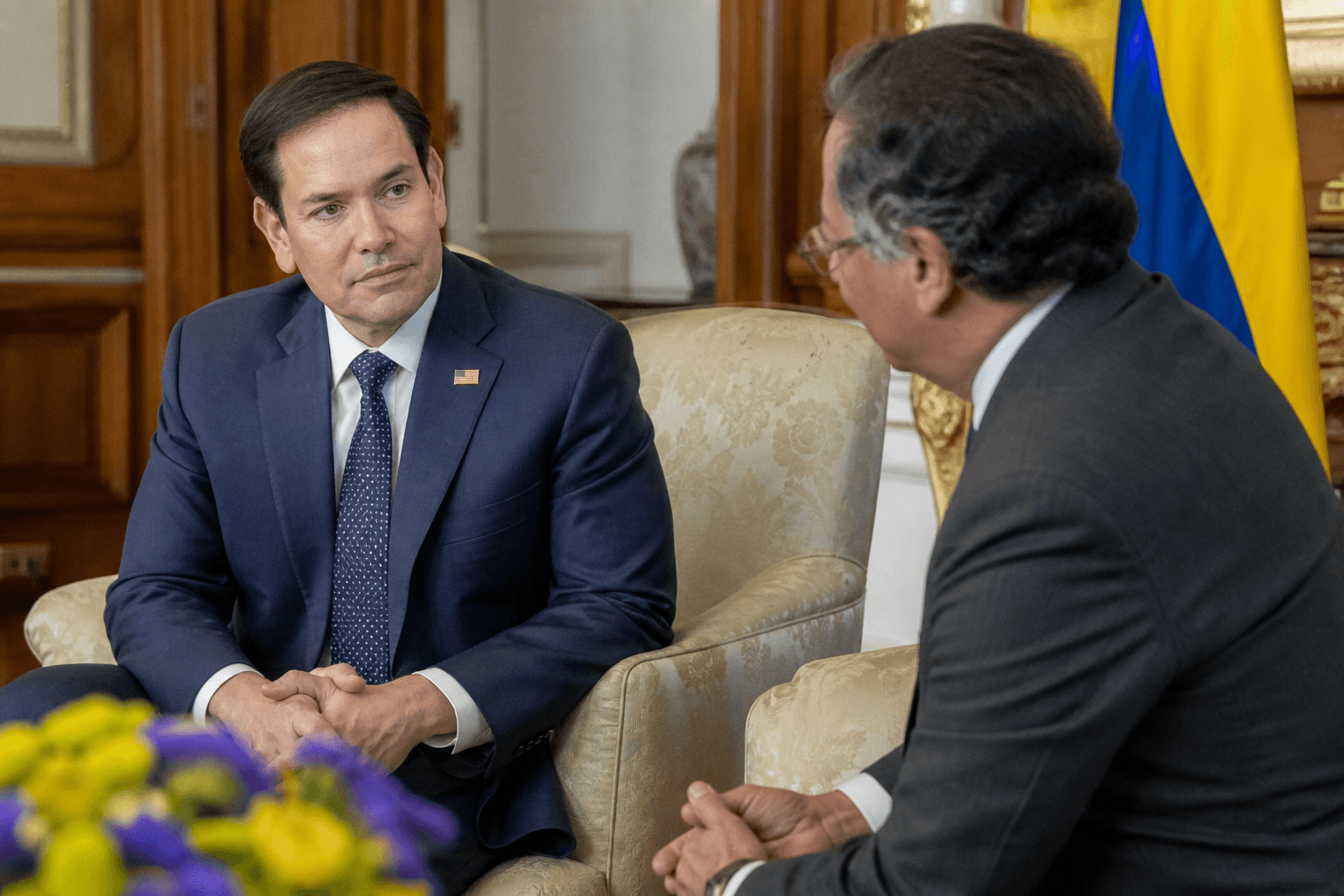
Secretary of State Marco Rubio held high-level talks with Colombia’s leadership on Monday, framing a new phase of U.S.-Andean cooperation where trade negotiations appear increasingly linked to security and counter-narcotics commitments. The meeting in Bogotá is the first leg of a three-nation swing that will also take Rubio to Ecuador and Peru, underscoring a coordinated U.S. effort to address cocaine flows while recalibrating economic ties.
“I will be speaking this week with leaders in Colombia, Ecuador and Peru about the traffickers ravaging our communities and about trade deals that can benefit all our people,” Rubio told reporters before the closed-door session. The itinerary signals that Washington no longer treats drug interdiction and tariff discussions as separate baskets but as overlapping priorities in a region where cocaine production continues to surge.
A Pivotal Partnership Under Pressure
Colombia remains the United States’ closest security partner in Latin America, yet the relationship has experienced friction in recent years over shifting U.S. drug policy and sporadic tariff threats. Monday’s meeting was seen by analysts as a test of whether the two governments can align a tougher anti-trafficking posture with trade incentives that are economically important for Colombia’s export-driven sectors.
Senior Colombian officials, speaking on condition of anonymity because they were not authorized to brief the press, indicated that the discussions included concrete proposals for joint operations targeting cocaine processing hubs in the Catatumbo and Nariño regions—zones that also feed trafficking networks stretching into Ecuador and Peru. No formal agreement was announced immediately after the meeting, but both sides characterized the tone as constructive.
Security and Tariffs on the Same Agenda
By placing trade and tariff issues directly beside security cooperation on the agenda, Rubio is advancing a diplomatic model that the U.S. Department of State has described as “integrated bilateral dialogues.” The approach mirrors tactics previously applied in Central America, where migration enforcement and investment pledges were bundled together.
“We cannot talk about commerce while ignoring the criminal economies that distort markets and destabilize governments,” Rubio said, according to a readout provided by a State Department spokesperson. “Colombia understands that, and we are committed to delivering results on both fronts.”
The strategy carries risks. Some Colombian lawmakers have expressed concern that conditioning trade preferences on counter-narcotics benchmarks could expose vulnerable rural communities to economic penalties without addressing the poverty that fuels illicit crop cultivation. Colombian Foreign Ministry officials, however, stressed that the talks aim at expanding market access rather than imposing sanctions.
Ecuador and Peru: Broadening the Regional Arc
After departing Colombia, Rubio is scheduled to meet Ecuadorian President Daniel Noboa and Peruvian President Dina Boluarte. Ecuador’s role in the cocaine supply chain has drawn increasing alarm from Washington, with Guayaquil emerging as a major transshipment point for cocaine bound for Europe and North America. Peru, the world’s second-largest coca cultivator according to United Nations data from the UN Office on Drugs and Crime, is seen as critical to any lasting supply-side strategy.
A U.S. official traveling with the secretary indicated that the Ecuador and Peru stops will each feature dedicated working groups, with Ecuador’s agenda tilted toward port-security partnerships and Peru’s toward alternative-development programs aimed at coca growers in the VRAEM valley. Whether tariff concessions are on offer for Quito and Lima as well remains unclear, though the State Department has signaled a “policy of reciprocity” that may extend to any country ready to deepen enforcement cooperation.
What Comes Next
Diplomatic observers will watch for a joint statement or memorandum of understanding that could outline specific delivery windows for new interdiction initiatives and trade facilitation measures. Colombia’s presidency at presidencia.gov.co and its Foreign Ministry at cancilleria.gov.co are expected to release further details in the coming hours.
Rubio’s trip continues through the week, with each capital stop designed to reinforce the message that the Andean region is a single operational theater for both malign trafficking networks and an integrated U.S. policy that links security outcomes with economic incentives.