Spanish Construction Crew Unearths 9 Million Euro Gold Treasure While on the Job
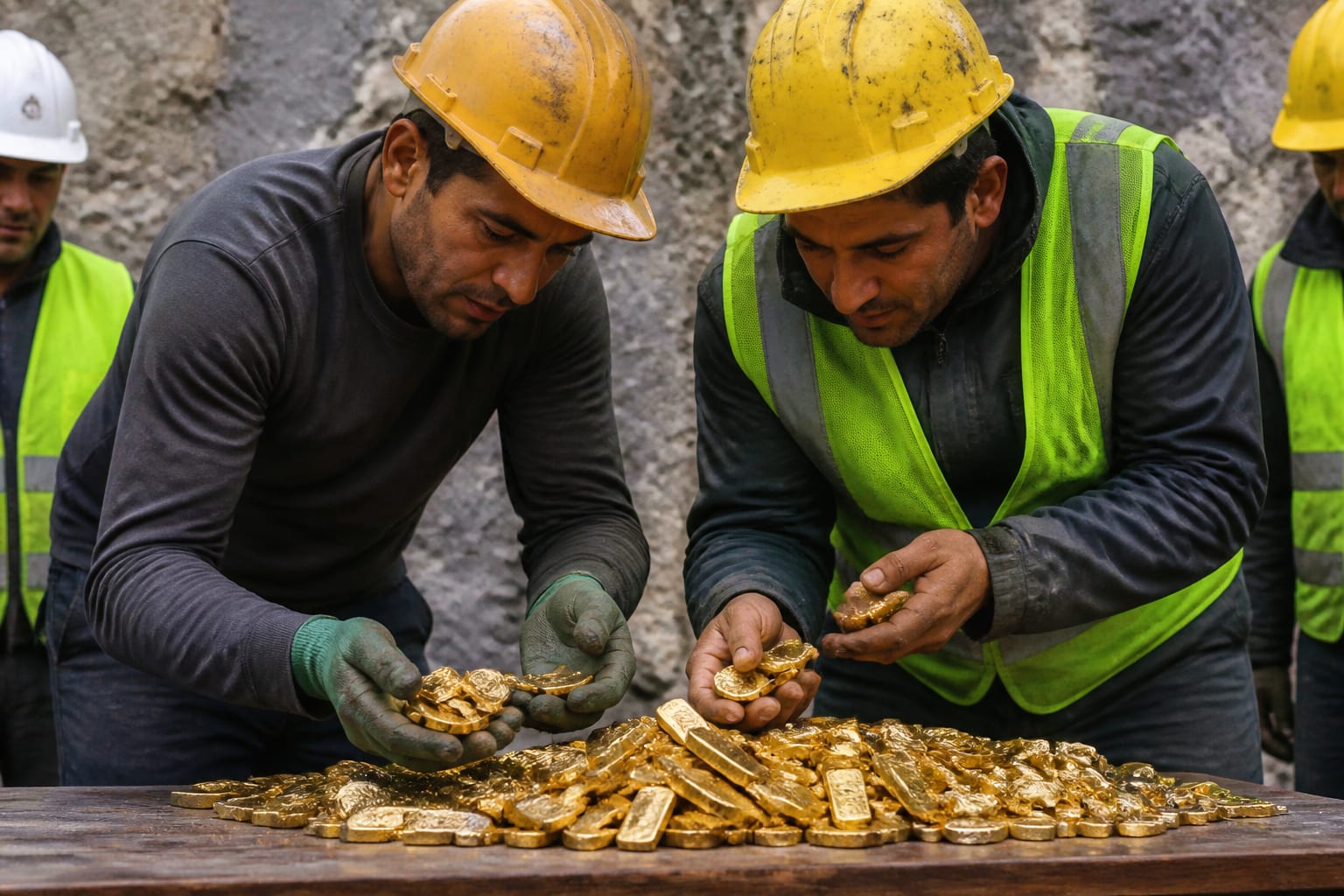
A routine day at a construction site in Spain turned into a life-changing event for eight workers who stumbled upon a hidden cache of gold coins and bars worth an estimated 9 million euros ($10.5 million). The extraordinary find, reported by local authorities, has ignited a flurry of questions about the treasure’s origins, its rightful owner, and the legal steps that follow such a discovery.
Details remain limited, but the initial discovery was made during excavation work at a site whose location has not been disclosed to prevent looting or unauthorized treasure hunting. The workers reportedly uncovered a container or a buried hoard containing a substantial number of gold pieces, including both coins and bars. The total estimated value of 9 million euros suggests a trove of significant size and historical weight.
How the Discovery Unfolded
According to the account relayed by global news networks, the eight construction workers were going about their normal duties when their equipment struck something metallic. Upon closer inspection, they realized they had unearthed a collection of glittering gold artifacts. The precise moment of discovery was described as surreal, blending the mundane nature of their work with the stuff of pirate legends.
“You hear about these things in movies, but you never think it will happen to you,” one worker reportedly said, according to sources. Their identities have not been released, and the construction company has refrained from making public statements, likely to avoid disrupting the ongoing investigation.
The Legal and Historical Maze
In Spain, such finds are not simply “finders keepers.” The country’s Historical Heritage Law (Ley de Patrimonio Histórico Español) mandates that any discovery of objects with potential archaeological or historical value must be reported to the competent authorities. The treasure is likely to be taken into custody by the Spanish Ministry of Culture or the regional government’s heritage department while experts assess its age, origin, and significance.
If the gold is deemed to be of historical interest—and given its apparent value, that seems probable—it could be classified as part of Spain’s cultural patrimony. In such cases, the finders may be entitled to a reward, which is typically half the appraised value, shared with the landowner. However, the exact legal process can be complex, often involving negotiations with museums and state institutions that may wish to acquire the pieces for public display.
“The outcome hinges on whether the hoard is considered a treasure trove or an archaeological find,” said a heritage law expert who spoke on condition of anonymity. “If it’s clearly a buried hoard with no identifiable owner, the state steps in to preserve it for the nation.”
What Could the Treasure Be?
Speculation is already mounting about the origins of the gold. Spain’s rich history includes centuries of Roman, Visigothic, Moorish, and medieval Christian rule, any of which could have left behind buried wealth. Gold coins from the Roman Empire or the Spanish Empire’s golden age—such as doubloons or escudos—are frequently found in hoards across the Iberian Peninsula. The presence of gold bars might point to a more modern or bulk storage deposit, perhaps hidden during times of war or economic instability.
Archaeologists and numismatists will likely be called in to examine the coins’ mint marks, dates, and condition. The bars will be tested for purity and possible hallmarks that could trace their origin. The hope is that the cache will offer a tangible link to a specific historical event, such as the Spanish Civil War, when many families buried their wealth to protect it from confiscation.
Next Steps for the Lucky Workers
While the eight men may have physically struck gold, their financial windfall is not guaranteed. If the treasure is declared of national importance, they could receive a reward based on the appraisal, but they may also face a lengthy wait while the legal machinery grinds forward. In the meantime, the gold will be securely stored, likely in a bank vault or a museum conservation lab, awaiting the final determination.
The local authorities have not yet announced whether an investigation will be opened to determine if the find was accidental or if any construction permit breaches occurred. However, given the human-interest nature of the story, most attention is focused on the sheer luck of the discovery.
For the construction workers, the find has already changed their lives, even if only in story. As one local resident put it, “It’s a fairy tale—but it’s also a reminder that history is literally under our feet.”
The Spanish Ministry of Culture has not issued a formal statement, but a spokesperson indicated that the find is being handled “in accordance with standard heritage procedures.”