NYC Bans Generative AI for 600,000 Elementary and Middle School Students
One-Year Ban Targets Classroom AI Use for Youngest Learners
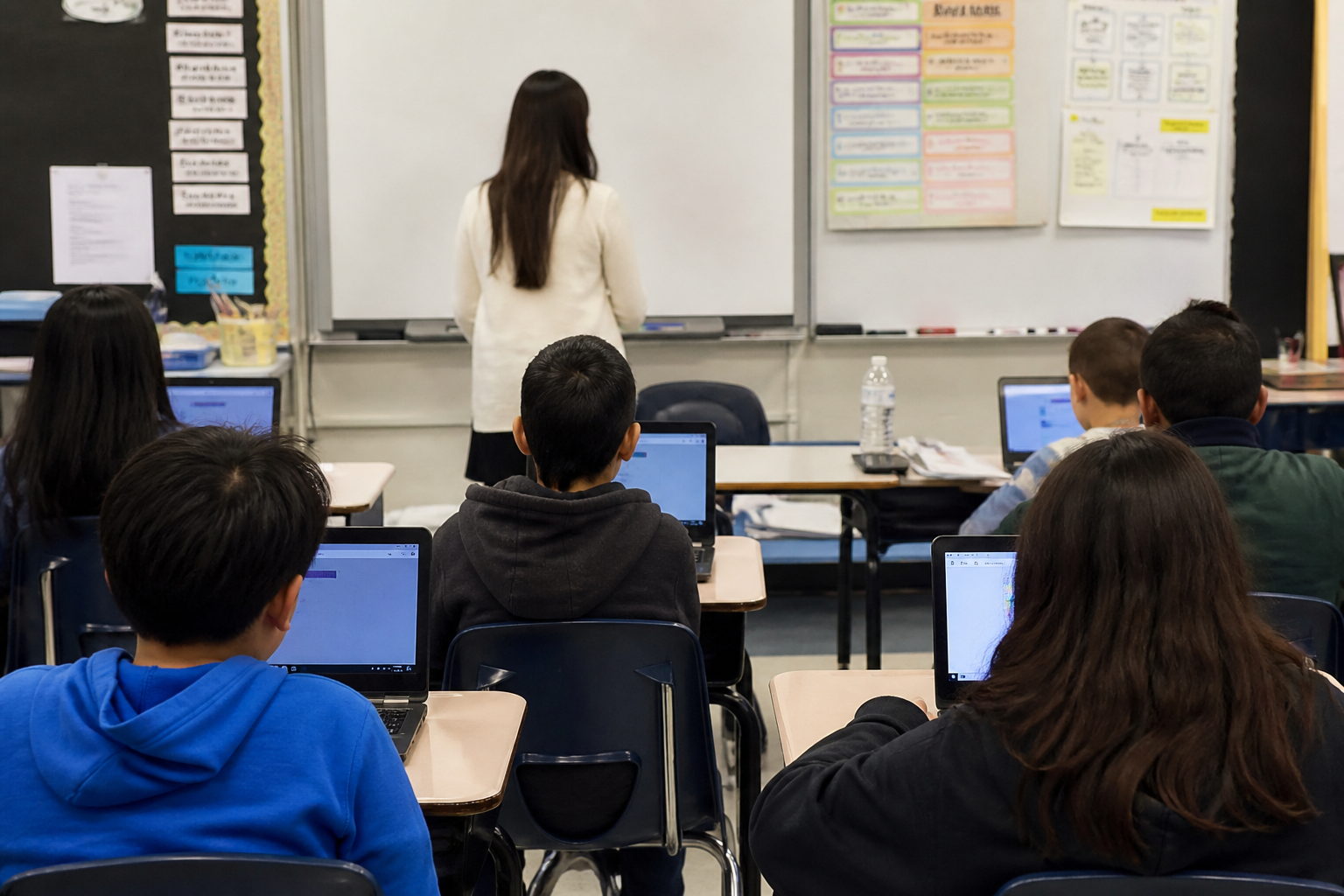
New York City school officials have imposed a one-year ban on the use of generative artificial intelligence for elementary and middle school students, a sweeping decision that will affect roughly 600,000 public school pupils. The policy, which takes effect immediately, marks one of the largest district-wide brakes on the fast-moving classroom adoption of tools such as ChatGPT, Google Gemini, and Microsoft Copilot.
What the Ban Covers
The restriction applies specifically to students in kindergarten through eighth grade. Generative AI platforms—which can produce text, images, audio, and code from simple prompts—will be blocked both on school-issued devices and on school networks for those grade bands. The New York City Department of Education (DOE) has yet to release a full list of prohibited tools, but officials indicated the ban will sweep in any software that generates original content on demand rather than simply retrieving information.
Rationale: Privacy, Integrity, and Age-Appropriateness
The decision comes amid intensifying concerns over student privacy, academic integrity, and the developmental appropriateness of handing unmonitored AI tools to younger children. District leaders have pointed to risks that students might submit AI-generated work as their own, undermining critical thinking and writing skills. There are also fears that some models may surface inaccurate or biased information, and that platforms might collect minors’ data in ways that violate federal privacy laws.
“We want to give our educators time to understand this technology before we expose our youngest learners to it,” a DOE spokesperson said in a statement. The one-year timeframe is being treated as a pause during which the district will gather data, consult with experts, and potentially craft permanent guardrails.
Enforcement and Compliance
The DOE plans to enforce the ban through network-level blocking and by pushing updates to school-managed devices. Teachers will receive training on recognizing signs of generative AI use, and the district is developing a reporting system for accidental breaches. For the moment, the definition of “generative AI” will rest on whether a tool creates novel content rather than retrieving static facts—a distinction that could require ongoing technical review as new features roll out across popular education platforms.
The National Landscape
New York City’s move places it at the forefront of a growing backlash against unchecked AI in classrooms. While several smaller districts have already imposed restrictions, the city’s size—the largest school system in the United States—gives the decision outsized influence. Many school leaders are caught between administrators eager to harness AI for personalized learning and parents worried about screen time, cheating, and existential risks to deep learning.
Some education technology advocates argue that banning the tools outright may leave students unprepared for a workforce saturated with AI. Others praise the caution, noting that even leading AI developers acknowledge the technology is not yet ready for unsupervised use by children. The U.S. Department of Education’s Office of Educational Technology has urged districts to design “guardrails” rather than bans, but the NYC policy signals that the pendulum can swing far in the opposite direction when student safety is at stake.
What Happens Next
Over the next year, the DOE will monitor whether the ban improves academic honesty and reduces data privacy incidents, while also gathering teacher feedback on whether older students might benefit from structured AI literacy lessons. The ban does not extend to high schools, where many students already use generative AI under teacher supervision for research and writing assignments.
The city has directed parents to the NYC Public Schools website for updates on the policy and on any exemptions that may be granted for assistive technology used by students with disabilities.
The one-year experiment will be closely watched by districts across the country that are wrestling with the same question: At what age—and under what rules—should generative AI be allowed in the classroom?