
AI in Jaw Surgery: New Bibliometric Study Maps Research Surge and Clinical Potential
From Lab to Operating Room: How Artificial Intelligence Is Reshaping Orthognathic Surgery
A new bibliometric analysis published in Cureus is shedding light on the rapid evolution and expanding footprint of artificial intelligence (AI), machine learning (ML), and deep learning (DL) in the highly specialized domain of orthognathic surgery and maxillofacial traumatology. Rather than testing a new surgical device or intervention, the study systematically maps the scientific literature, revealing how research activity, collaboration networks, and clinical application themes are maturing at a remarkable pace.
The work, published in Cureus, harnesses bibliometric methodology—quantitatively analyzing publication patterns, citation trends, and keyword frequencies—to chart the trajectory of AI in this surgical niche. It identifies the most influential journals, authors, institutions, and geographic hubs driving innovation, while also spotlighting the specific tasks where intelligent algorithms are poised to make the biggest difference.
Where AI Is Making Inroads in Orthognathic Surgery
The analysis highlights several core areas where AI, ML, and DL are being applied or actively researched:
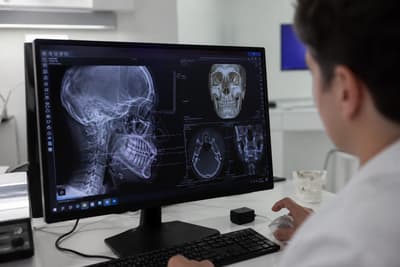
- Preoperative planning and simulation: Deep learning models can analyze 3D cone-beam CT scans and facial photographs to automatically segment bone and soft tissue, generate virtual surgical plans, and even predict postoperative facial aesthetics.
- Diagnostic support: Machine learning classifiers are being trained to detect craniofacial anomalies, classify malocclusions, and flag pathology in panoramic radiographs with high accuracy.
- Surgical outcome prediction: Algorithms are learning to forecast long-term stability, relapse risk, and nerve injury probability based on preoperative variables and implant design.
- Trauma assessment: In maxillofacial traumatology, convolutional neural networks can rapidly identify fracture patterns on CT scans, potentially triaging urgent cases and reducing interpretation time.
The bibliometric study confirms that these research themes have seen exponential growth in recent years, accompanied by a sharp rise in international collaborations and funding from surgical societies and biomedical engineering programs.
Who Is Leading the Charge?
By mapping co-authorship networks and citation clusters, the analysis identifies a small but highly productive group of research centers—predominantly in Europe, East Asia, and North America—that are dominating the literature. The fields of oral and maxillofacial radiology, craniofacial engineering, and surgical informatics are converging, and the study’s findings help early-career researchers and clinicians locate potential mentors, partners, and training datasets.
“Bibliometric mapping acts like a GPS for a rapidly evolving field,” the authors note in their discussion, emphasizing that such overviews are critical when the volume of new papers exceeds what any single surgeon can realistically digest.
The Gap Between Research Momentum and Clinical Adoption
Despite the impressive bibliometric indicators, the study also underscores a persistent gap between research output and routine clinical use. While many algorithms achieve high performance in controlled retrospective settings, prospective validation, regulatory approval, and integration into existing surgical workflows remain rare. The authors advocate for more multicenter clinical trials, explainable AI frameworks, and standardization of reporting guidelines to move these tools from the engineering bench to the operating theater.
“The evidence is still maturing,” the analysis suggests, “and caution is warranted before autonomous decision-making replaces surgeon judgment.” This sentiment echoes broader concerns in medical AI about dataset bias, generalizability, and liability.
Why It Matters for Patients and Surgeons
Orthognathic surgery corrects severe jaw discrepancies that affect chewing, speech, breathing, and facial harmony. The procedures are technically complex, highly customized, and carry risks of nerve damage, relapse, and aesthetic dissatisfaction. The promise of AI is to bring a new degree of precision, predictability, and efficiency—reducing planning time, improving surgical accuracy, and ultimately enhancing patient outcomes.
The bibliometric analysis provides a vital reference point for clinicians, researchers, and policymakers seeking to understand how AI is weaving itself into the fabric of craniofacial surgery. As the field matures, the same mapping techniques could be used to track if research dollars and algorithmic breakthroughs translate into safer, more accessible care worldwide.
For those interested in exploring the full dataset and methodology, the original study is available in the open-access journal Cureus.
The research community now has both a roadmap and a call to action: demonstrate that AI can move beyond promising numbers to robust, real-world surgical transformation.