West Bank Village of Qusra Under Strain as Families Report Months of Settler Attacks
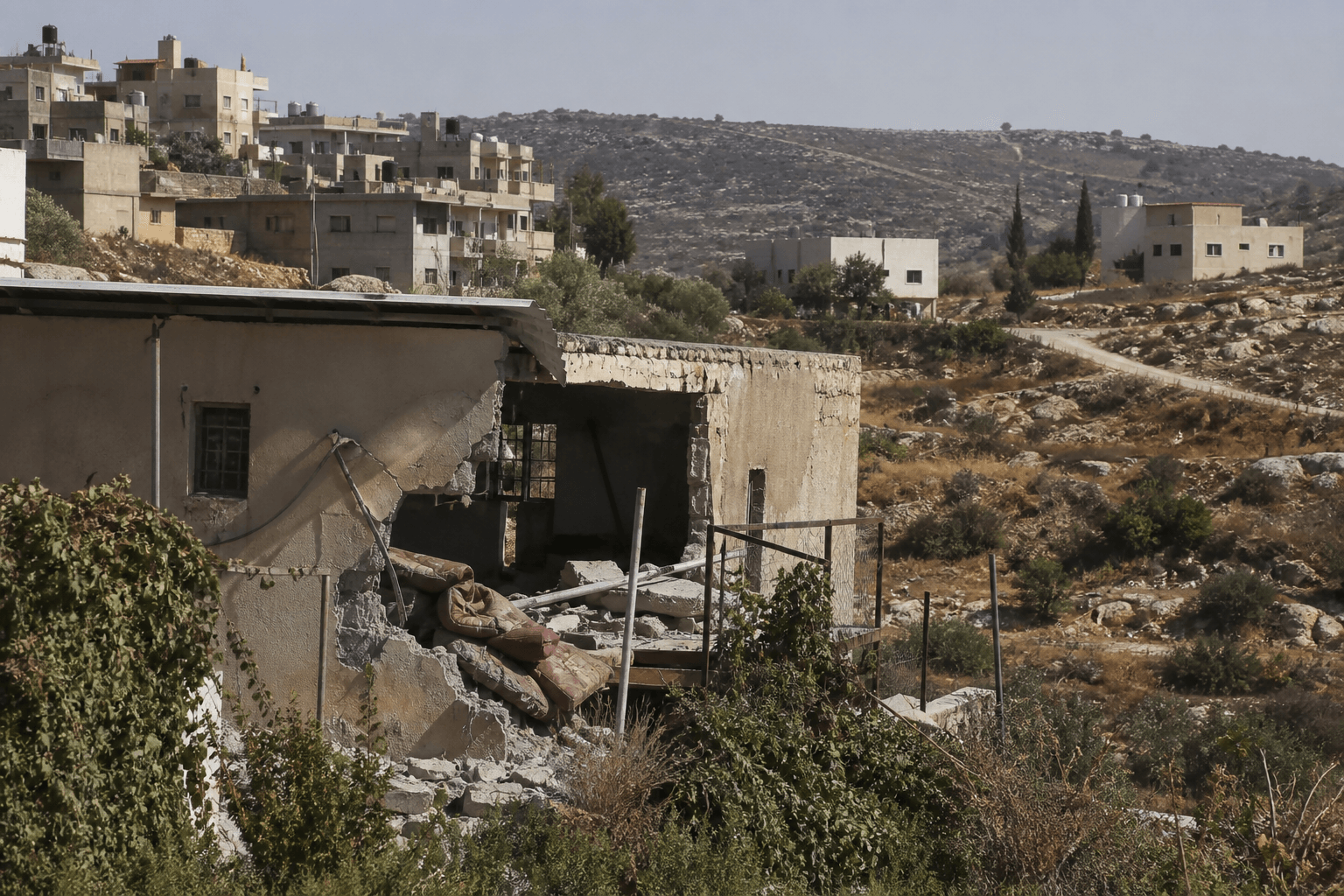
Palestinian families living on the edges of Qusra, a village in the occupied West Bank, say they have faced a sustained campaign of militant settler attacks and intimidation that has left parts of the community effectively under siege. Rather than a single outbreak of violence, residents describe a pattern of harassment that has reshaped daily life, restricted movement and deepened fears about safety.
The accounts, reported from Jerusalem, focus on households on the village outskirts, where the proximity of nearby settlement activity has become a central feature of the insecurity. Families say the pressure has built over months, with repeated incursions, damage to property and threats forcing some to avoid fields, roads and school routes at certain hours. The situation has become less about isolated confrontations and more about a grinding reality of unpredictable danger.
A village on the front line
Qusra sits in the northern West Bank, a region that has long been a flashpoint in the wider contest over land and security in the occupied Palestinian territory. Residents say the village’s outlying homes have absorbed much of the recent tension. Those living on the perimeter report being particularly exposed to groups of armed civilians and to intimidation that they say receives little meaningful intervention.
The effect is not only physical. Families describe a narrowing of daily life: children kept home from school when tensions spike, farmers reluctant to reach agricultural land, and people avoiding the main road after dark. Even when no attack occurs on a given day, residents say the threat of one shapes decisions about work, education and family visits.
Although the accounts come from residents and could not be independently verified in every detail, the consistency of the descriptions points to a broader pattern rather than a one-off event. Human rights groups have documented dozens of similar cases across the West Bank, often in areas close to settlement outposts, where law enforcement responses are seen by Palestinians as slow or absent.
Rising violence since the Israel-Hamas war
The situation around Qusra is unfolding within a wider escalation of settler-Palestinian violence that has intensified since the outbreak of the Israel-Hamas war. The United Nations OCHA West Bank protection updates have recorded a sharp increase in settler-related incidents, alongside military operations and Palestinian attacks. That broader context has made local security incidents more volatile and harder to contain.
Palestinian communities and Israeli human rights organizations argue that the lack of accountability fuels cycles of retaliation. B’Tselem, an Israeli human rights group that documents settler and military violence, has repeatedly warned that attacks on Palestinian villages often occur without effective enforcement, leaving communities to organize their own protection. The group maintains a database of incidents and calls for independent investigations.
For residents of Qusra, the war has made an already precarious situation worse. They say the attention of the outside world has been fixed on Gaza, while villages in the West Bank have faced mounting pressure with less scrutiny. Security analysts note that prolonged unrest in the northern and central West Bank could further destabilize a region already strained by military operations, settler expansion and Palestinian militancy.
Questions of protection and accountability
The central question raised by the accounts from Qusra is not whether a single attack occurred, but whether residents can rely on protection from Israeli authorities. Israeli military and police units are responsible for security in the West Bank, and officials have said in the past that they act against violence and open investigations into credible allegations. However, Palestinians in many villages say the response to settler attacks is often inadequate, with incidents going unanswered or investigations producing no charges.
That gap between resident accounts and official action is a recurring theme in the reporting from the West Bank. Families in Qusra say they file complaints and try to document what happens, but the process can feel futile. The result, they say, is a sense of abandonment on the village outskirts, where homes are most exposed and where the presence of security forces is least reassuring.
For months, families on the village outskirts say they have lived with the threat of attack — not as an occasional danger, but as part of the ordinary rhythm of life.
Why Qusra matters
Qusra’s experience is significant beyond the village itself. Northern and central West Bank communities sit close to major transport routes, agricultural land and settlement blocs, making local insecurity a trigger for wider confrontation. If families feel they must defend themselves because formal protection is lacking, the risk of escalation grows.
The village also illustrates the human dimension of a conflict often discussed in political or military terms. Behind the incident counts are households weighing whether to leave their homes, parents deciding when a road is safe, and farmers losing access to land that has sustained them for generations. Those choices, repeated across the West Bank, shape the future of the territory as much as any diplomatic process.
For now, residents of Qusra say they are not leaving. But they describe a community holding on under siege, waiting for a level of protection and accountability that they say has yet to arrive.