Japan Defense Minister Visits Yasukuni Shrine on WWII Surrender Anniversary, Reigniting Regional Tensions
Japan Defense Minister Visits Yasukuni Shrine on Surrender Anniversary
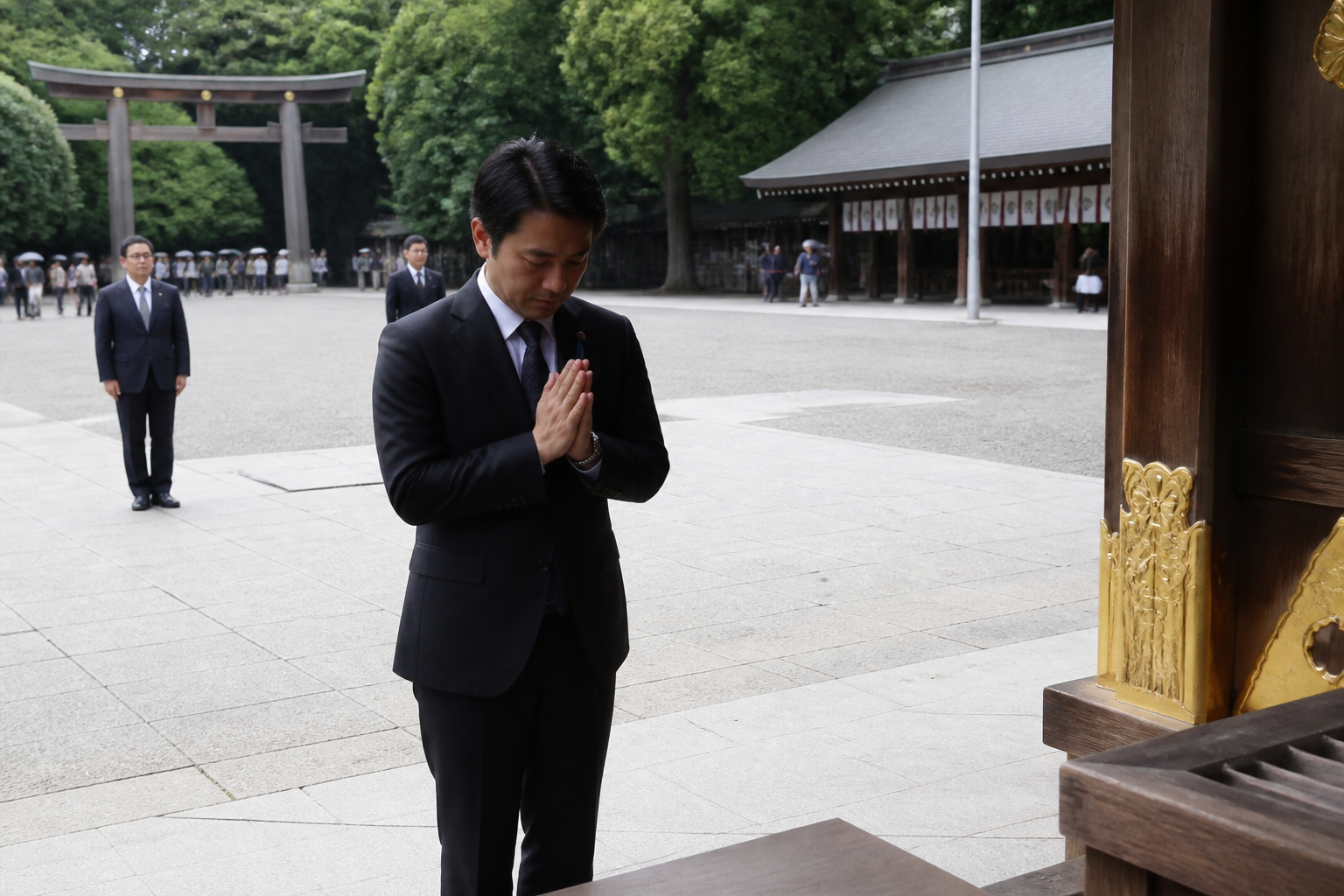
TOKYO — Japanese Defense Minister Shinjiro Koizumi visited Yasukuni Shrine on Saturday, a move that immediately carries diplomatic weight because Aug. 15 is the anniversary of Japan’s surrender in World War II. The shrine in central Tokyo honors Japan’s war dead, but its inclusion of people convicted as war criminals after the conflict has made it one of East Asia’s most sensitive political sites.
Koizumi’s visit places a senior security official at the center of a long-running dispute. China and South Korea routinely criticize trips by Japanese leaders or cabinet ministers to the shrine as evidence of historical revisionism or insensitivity to wartime suffering. A defense minister’s presence is especially significant because the role oversees Japan’s military and security policy, making the visit more than a personal act of remembrance in the eyes of neighboring governments.
A date loaded with history
Aug. 15 marks the day in 1945 when Japan announced its surrender in World War II. In Japan, the date is associated with ceremonies for the war dead and national reflection. Across the region, however, the anniversary is also a moment when unresolved grievances over wartime conduct resurface.
Yasukuni Shrine, located in central Tokyo, enshrines Japan’s war dead. The shrine’s identity as a symbol of militarism stems largely from its inclusion of individuals classified as war criminals by post-World War II tribunals. That specific element distinguishes Yasukuni from other memorial sites and makes visits by high-ranking officials a recurring diplomatic flashpoint.
Why the shrine remains controversial
The diplomatic sensitivity around Yasukuni has persisted for decades. For China and South Korea, a visit by a sitting minister is often interpreted as a sign that Japan has not fully acknowledged the harm caused by its wartime actions. The two countries have repeatedly called on Japanese officials to avoid the shrine.
- Yasukuni enshrines Japan’s war dead, including individuals convicted as war criminals after World War II.
- China and South Korea view visits by Japanese leaders or cabinet ministers as a sign of historical revisionism or insensitivity.
- A defense minister’s visit carries added political weight because the position directly manages Japan’s defense and security affairs.
The political significance of Koizumi’s visit
Shinjiro Koizumi is serving as Japan’s defense minister, a post that makes him a central figure in the country’s security relationship with the United States and its neighbors. Any action by the defense minister at Yasukuni can be read as a signal about Tokyo’s posture toward historical issues, even if the visit is framed as a private matter.
The initial report did not specify whether Koizumi visited in a private capacity or as an official act. That distinction can matter in Japanese politics, where politicians sometimes describe Yasukuni visits as personal acts of mourning. However, when a sitting cabinet minister appears at the shrine, the line between personal and official is often blurred in the eyes of other governments.
No statement from Koizumi’s office or from the Japanese Ministry of Defense was included in the early account. It was also not immediately clear whether the foreign ministries of China and South Korea would issue formal responses, though the visit is likely to draw close attention in both capitals.
Japan’s balancing act
Japan has long tried to balance the domestic practice of honoring its war dead with the need to maintain stable ties with China and South Korea. Yasukuni visits by senior officials repeatedly test that balance. The shrine remains a place where domestic remembrance and international tension intersect, especially on Aug. 15.
The visit by Koizumi is likely to be scrutinized for what it says about Tokyo’s approach to historical issues at a time when regional security concerns remain high. The seniority of the visitor, combined with the symbolic date, amplifies the potential diplomatic impact regardless of whether the visit was intended as a private act of remembrance.
For now, the visit stands as another reminder that the legacy of World War II continues to shape Japan’s relationships with its closest neighbors, more than seven decades after the war ended.