
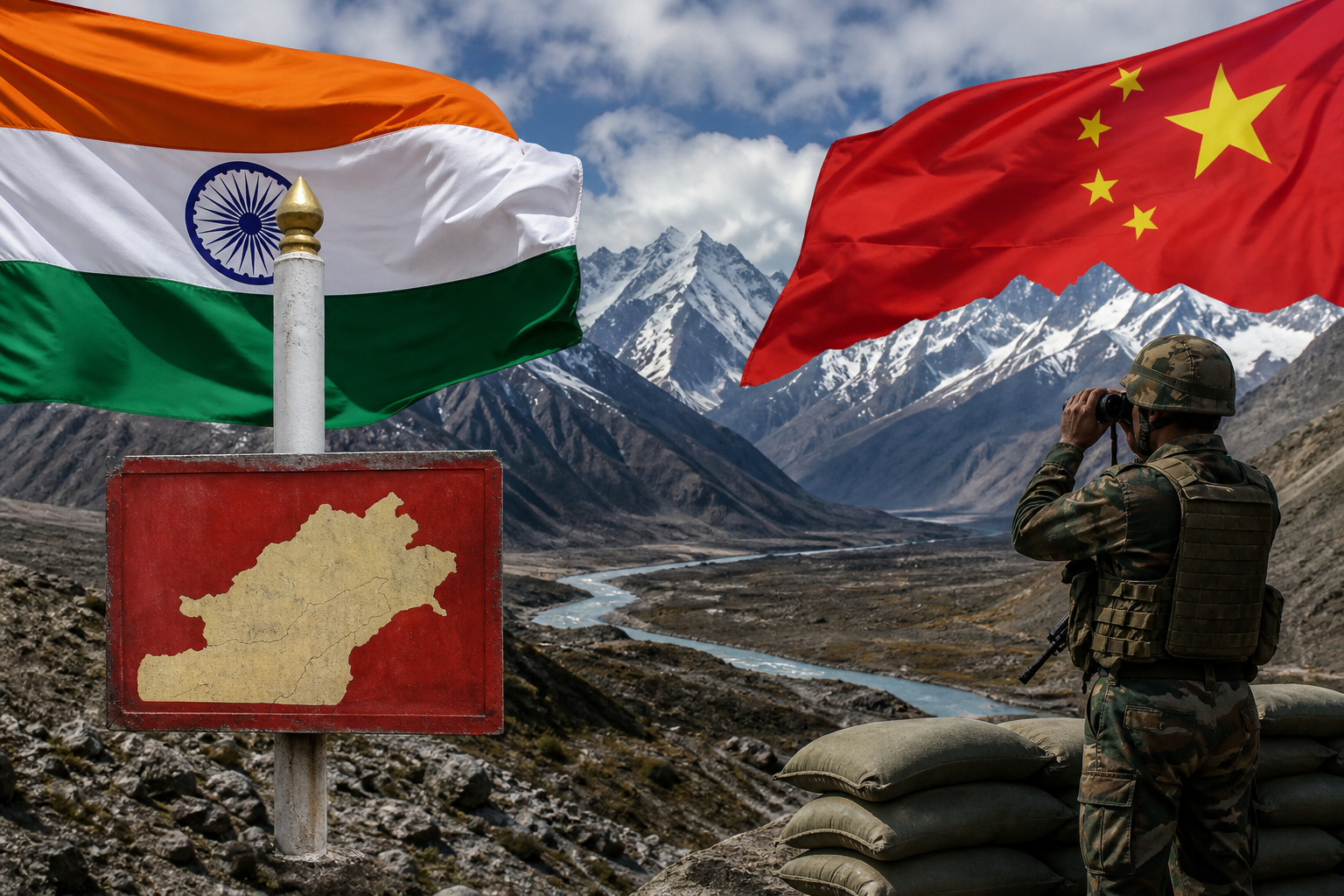
India Rejects China’s Objection to Naming 27 Places in Arunachal Pradesh, Calls It ‘Integral Part of India’
India Rejects China’s Objection to Naming 27 Places in Arunachal Pradesh
India has firmly rejected China’s objection to the formal naming of 27 places and geographical features in Arunachal Pradesh on official Indian maps, with New Delhi reiterating that the northeastern state is an “integral and inalienable part of India.” The Ministry of External Affairs (MEA) dismissed Beijing’s protest, framing the cartographic exercise as a routine sovereign administrative action.
The development unfolded last week when Indian authorities formally identified the 27 locations using their standard Indian nomenclature on the official map of the country. China, which continues to lay claim to the region by referring to it as “South Tibet,” immediately voiced strong opposition to the move, calling it illegitimate.
India’s Sovereign Assertion
Indian government sources indicated that the naming convention is not a new action on the ground but rather a formalization of existing names already in local use. The move is widely seen as a periodic reaffirmation of India’s administrative control and territorial integrity in the face of China’s competing claims. The strong rejection of China’s objection aligns with India’s long-held position that the state of Arunachal Pradesh is a constitutional and sovereign part of the country.
According to a report by NDTV, Indian officials dismissed the protest by asserting that activities within Indian territory do not require external validation. The MEA’s response underscores the continued sensitivity of the India-China border dispute, particularly along the Line of Actual Control (LAC).
China’s ‘South Tibet’ Claim Rejected
Beijing’s protest is rooted in its longstanding territorial claims over the region. The Chinese Foreign Ministry has historically rejected any demonstration of Indian sovereignty over Arunachal Pradesh. India, however, has consistently maintained that the state’s identity and borders are non-negotiable. The latest exchange of diplomatic notes highlights the persistent friction despite ongoing military and diplomatic talks aimed at de-escalation and disengagement along the tense border.
India is likely to present the map naming as a purely administrative and cartographic update, rather than an escalation of tensions or a change in the ground situation. This follows a pattern where India continues to develop infrastructure and exercise administrative rights in the region, which China invariably protests. The Press Information Bureau (PIB) and the Indian Ministry of External Affairs are expected to provide further clarifications if the diplomatic row escalates.
Broader Border Tensions
The naming dispute is the latest in a series of friction points between the two nuclear-armed neighbors. Relations have been fraught since the deadly Galwan Valley clash in 2020, which led to a protracted military standoff. While diplomatic and military-level talks have led to disengagement at several friction points, fundamental differences over the LAC’s alignment and claims over areas like Arunachal Pradesh continue to simmer.
Analysts note that while the naming of places does not alter the military status quo on the ground, it serves as a potent symbolic assertion of sovereignty. Beijing’s response via the Chinese Ministry of Foreign Affairs is being closely watched for potential follow-up statements that could either de-escalate or further strain bilateral ties.
India’s decisive rejection of China’s remarks reinforces New Delhi’s message that administrative decisions regarding Arunachal Pradesh are a domestic matter. As of now, no change in the actual control status of the territory has been reported, but the diplomatic spat ensures that the status of the eastern sector of the India-China border remains a key flashpoint in bilateral relations.
Source: NDTV