Spain Bolsters Security in Ceuta After Online Calls for New Mass Border Rush
Spain Bolsters Security in Ceuta After Online Calls for New Mass Border Rush
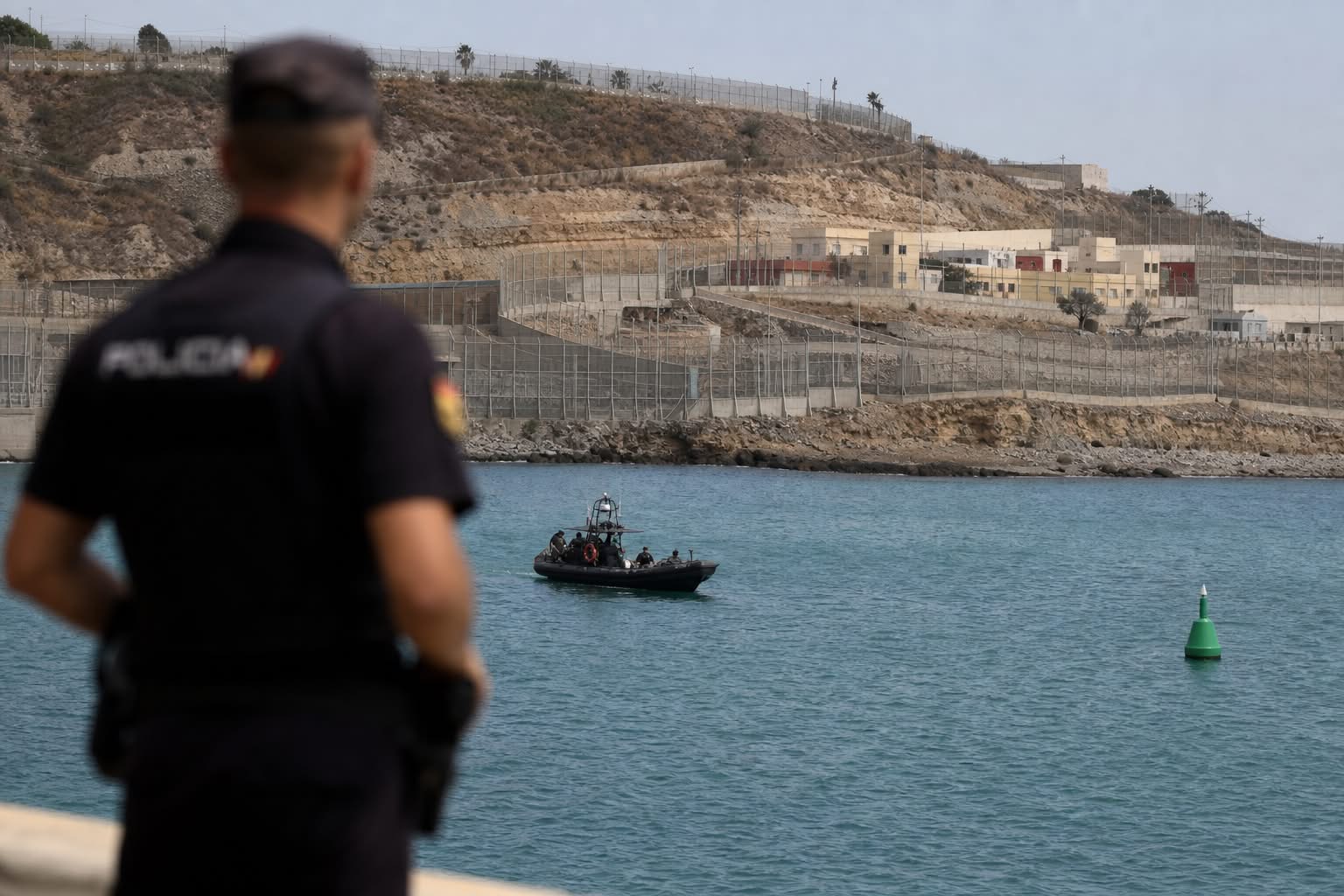
Spain has reinforced its police and military presence in the North African enclave of Ceuta amid a surge of online mobilization calling for a renewed mass attempt to cross the border from Morocco. The deployment highlights Madrid’s growing concern over a potential repeat of past large-scale border rushes that have strained the Spanish enclave and tested EU frontier management.
Heightened Alert at a Sensitive EU Land Border
Ceuta, a small Spanish territory on the Mediterranean coast of Morocco, represents one of the European Union’s most politically sensitive land borders. The increased security measures come as social media posts and encrypted messaging platforms have circulated calls encouraging a coordinated push toward the heavily fortified perimeter. Spanish authorities are treating the online chatter with the utmost seriousness, deploying additional agents from the National Police and Civil Guard, along with military personnel, to deter any irregular crossing attempt.
The exact scale of the reinforced deployment has not been publicly detailed for operational reasons, but local officials confirmed that coordination between police, border authorities, and the armed forces has been intensified. The immediate objective is to prevent a scenario similar to the crisis of May 2021, when around 8,000 migrants surged into Ceuta over a two-day period, overwhelming security forces and triggering a diplomatic row between Madrid and Rabat.
Monitoring Online Mobilization
Spain’s Interior Ministry has ramped up digital surveillance of platforms where the calls for a mass border rush have appeared. According to reporting by Reuters journalists David Latona and Maria Alejandra Cardona, the security apparatus is focused on identifying organizers and disrupting the online networks that amplify these messages. The government’s strategy blends physical deterrence at the border fence with proactive cyber monitoring to prevent the situation from escalating.
“The reinforcement is a preventative measure to maintain order and guarantee the integrity of our borders in the face of orchestrated attempts to breach them,” a government source familiar with the operation told Reuters.
Broader Spain-Morocco Migration Dynamics
The renewed tension in Ceuta cannot be divorced from the broader context of Spain-Morocco migration relations. The two countries have a long history of cooperation—and friction—over border control, often intertwined with diplomatic and security negotiations. Morocco has historically used migration pressure as a lever in bilateral disputes, and any mass crossing attempt inevitably draws Rabat’s role into the spotlight.
While Morocco has not issued an immediate public response to the latest online calls, its security forces typically maintain a presence on the southern side of the border. The degree to which Moroccan authorities intervene to prevent a build-up of people remains a crucial variable. Spanish officials have privately expressed the hope that robust bilateral channels will keep the situation from spiraling, though they are preparing for the worst.
Local Conditions and Official Statements
On the ground in Ceuta, residents have reported a noticeably heavier uniformed presence near the border perimeter and at key access points. The local government of Ceuta, which has long called for more national support to manage migration flows, has welcomed the reinforcements but insists that a long-term solution requires greater European engagement and a comprehensive migration pact with Morocco.
Spain’s Ministry of the Interior has not published a formal statement detailing the exact number of additional personnel, but officials have confirmed that the operation is active and will remain in place as long as the threat persists. The government is also in contact with European border agency Frontex, though no joint operation has been announced at this stage.
Analysts note that the situation remains fluid. The online calls could fizzle out, or they could materialize into a sudden, large-scale movement. The Spanish government’s posture is clear: it will not tolerate a repeat of the chaotic scenes that saw soldiers and police struggling to control the border two years ago. For now, Ceuta waits, its security forces on high alert along one of Europe’s most volatile frontiers.