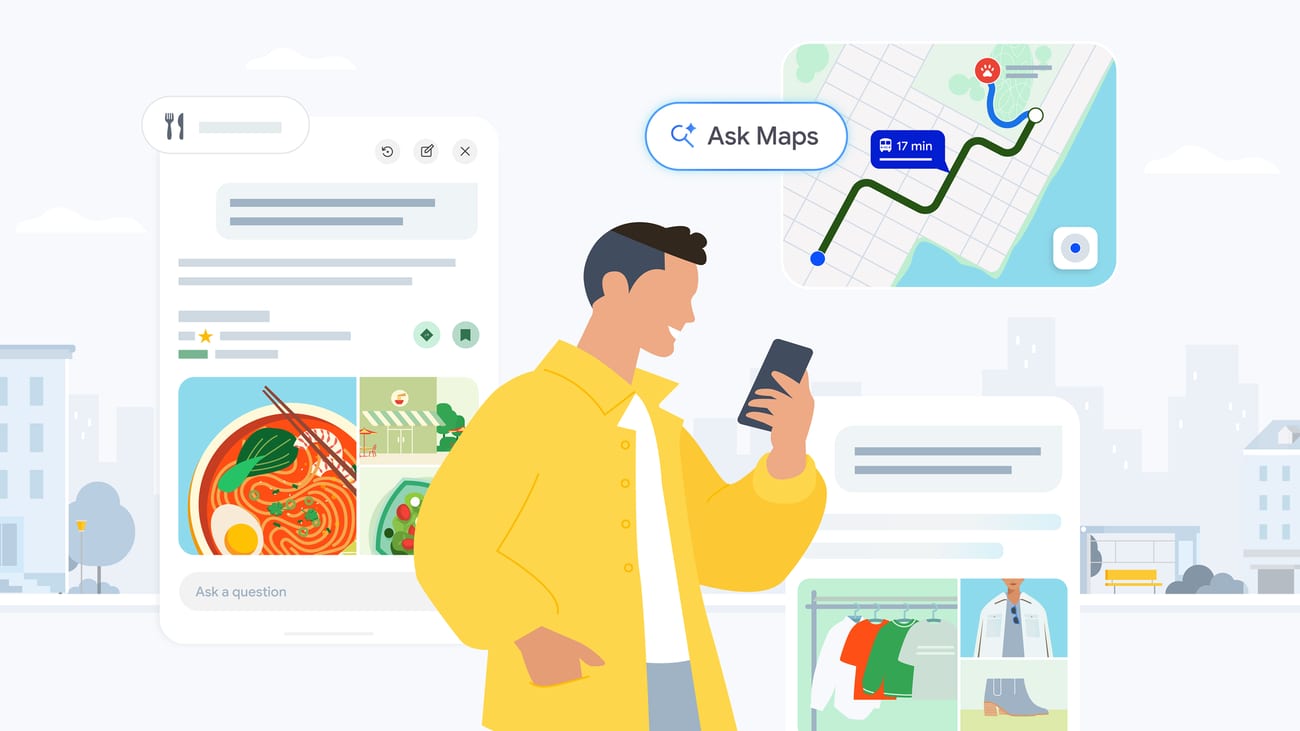
Google Maps’ Ask AI Now Lets You Order Food and Track Transit in Real Time
From Search to Action: Google Taps AI to Make Maps a ‘Do-It-for-Me’ Assistant
Google is turning its popular navigation app into a proactive, action-oriented companion. The company has announced a significant expansion of Ask Maps, the conversational AI feature that helps users discover places and plan journeys. The latest improvements, detailed in a blog post, introduce agentic food ordering and richer real-time transit information, signaling a strategic shift towards making Google Maps a place where users not only search but complete everyday tasks without leaving the app.
The update positions Ask Maps as a central piece of Google’s broader effort to infuse its products with Gemini-era AI capabilities. Instead of merely listing restaurant options or bus routes, the assistant can now help users place a food order directly, while commuters get live, detailed transit updates woven into their journey planning.
Agentic Food Ordering Comes to Ask Maps
The headline feature lets users search for food and place an order directly inside Google Maps. A user could, for example, ask for “the best pepperoni pizza near me” and then complete the purchase without hopping between apps or websites. This agentic capability—where the AI handles a series of steps on behalf of the user—is a direct answer to the emerging “do-it-for-me” internet, where assistants move beyond answering questions to performing actions.
Google’s blog post frames the addition as part of a broader set of Ask Maps improvements, not a one-off feature, hinting at a long-term roadmap. The ability to order food without leaving Maps integrates tightly with local discovery, potentially making the app a one-stop shop for hungry travelers and locals alike. While Google hasn’t yet detailed the full list of supported regions or delivery partners, the feature likely relies on integrations with third-party restaurant platforms and delivery services—similar to how Google previously partnered with providers like DoorDash and Uber Eats for ordering within Maps. The company may eventually expand the agentic model to other verticals, such as booking appointments or purchasing tickets.
Real-Time Transit: A Smarter Everyday Commute
Alongside the food ordering upgrade, Google is enhancing Ask Maps with richer real-time transit information. Commuters can now receive more detailed live departure times, delay alerts, and alternative route suggestions directly within the AI-powered conversational interface. This reinforcement of Maps as a live travel companion aims to reduce friction for daily public transport riders and travelers navigating unfamiliar systems.
The transit upgrades signal that Ask Maps isn’t just a novelty for early adopters; it’s being baked into the core commuting experience. Real-time data from transit agencies—something Maps has long offered—now gets an intelligent overlay. Users can ask contextual questions like “Is my bus delayed?” or “What’s the fastest route home right now?” and receive answers that factor in live feeds and predictive modeling. This makes the assistant more valuable for time-sensitive, everyday decisions rather than occasional exploration.
A Gemini-Powered Roadmap Beyond Navigation
These updates cannot be viewed in isolation. They align with Google’s stated ambition to weave generative AI across its most-used products. At recent developer conferences, the company demonstrated how Gemini could understand complex queries and carry out multi-step tasks. Ask Maps’ new capabilities are a tangible deployment of that vision, turning the app into a platform for micro-transactions and personal assistance.
By making Maps more “action-oriented,” Google competes with voice assistants like Apple’s Siri and Amazon’s Alexa, as well as Meta’s AI assistants embedded in messaging platforms. However, Maps has a distinct advantage: it already sits at the center of local search, navigation, and discovery for over a billion users. Adding agentic features like food ordering could deepen user engagement and create new revenue streams through transaction commissions or advertising.
The move also underscores a broader industry trend toward task-completion AI. Rivals are working on similar features, but Google’s head start with integrated services—from Gmail to Calendar to Maps—gives it a unique ecosystem play. A user could conceivably plan a dinner outing, order ahead, navigate there, and update their calendar, all through interconnected Google services driven by the same AI backbone.
Rollout and What Comes Next
Google has not yet published a full regional breakdown or an exhaustive list of food-ordering partners. The announcement, published on the company’s official blog, suggests that the features will roll out gradually, likely starting in the United States and select English-language markets before expanding. Users interested in early access can keep an eye on the official Google Blog and the Google Maps Help center for updates.
Tech analysts anticipate that Google will connect the dots between Ask Maps and its broader AI assistant strategy at future events, potentially tying into Google Gemini’s memory and cross-app capabilities. For now, the immediate takeaway is clear: Google Maps is no longer just a map. It’s a growing AI platform designed to get things done, one pepperoni pizza at a time.