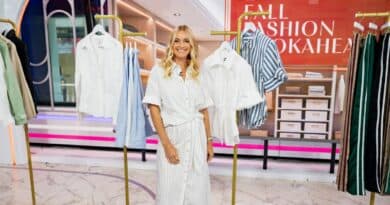
A Midsize Model Walked and Watched Copenhagen Fashion Week: Her Outfits Are the Trend Report
Why a midsize model’s Copenhagen wardrobe is resonating now
Copenhagen Fashion Week has become one of the most closely watched stops on the international fashion calendar, not only for its runway shows but for a street-style scene that tends to set the next season’s tone. This season, a model who both walked in and attended the event offered a different kind of front-row report: a first-person breakdown of everything she wore across the week, and the styling ideas she expects to carry home.
The account centers on midsize fashion representation, an area of the fashion conversation that has grown louder as audiences demand more realistic and inclusive coverage of bodies on and off the runway. By using her own wardrobe as the main editorial lens, the model turns personal outfits into a practical trend report rather than a behind-the-scenes show recap.
Copenhagen’s street style sets the agenda
Copenhagen Fashion Week has built a reputation for strong street style and directional Scandinavian influence. Attendees outside the official Copenhagen Fashion Week schedule are often photographed as much as the collections themselves, and the city’s fashion week has become a source for accessible styling cues that travel beyond Denmark.
The article slots into that larger conversation: rather than focusing only on runway collections, it treats one model’s daily outfits as evidence of what is actually being worn, layered, and repeated by someone working inside the event. The result is a style brief that is personal and size-inclusive while also pointing to broader trend directions.
What the model’s approach reveals
There are three layers to the story. First, it is a firsthand account from someone who experienced Copenhagen Fashion Week from two positions: as a model walking in shows and as an attendee watching them. That dual role gives the wardrobe breakdown a working perspective that a purely spectator-focused street-style roundup may lack.
Second, the piece distinguishes between what the model wore personally and what she observed from other attendees or the broader fashion-week atmosphere. That distinction matters because personal outfit choices reflect what someone is willing to commit to for a full day of shows, castings, and events, while street-style observations capture what is visible across the crowd.
Third, the midsize focus is central to the appeal. By putting a midsize model’s wardrobe at the center of the story, the article speaks to readers who often do not see their body type reflected in traditional fashion week coverage, and it positions those outfits as trend-setting rather than as an afterthought.
A working perspective on the week
Because the model’s wardrobe is the editorial spine of the piece, the trend takeaways are grounded in repeatable outfit logic: what was practical enough to wear across a busy schedule, visually strong enough to hold up in the street-style scrum, and flexible enough to translate beyond the fashion week calendar. The value is less in a single headline piece and more in how the outfits fit together across several days.
Personal outfits vs. the broader crowd
The article keeps a clear line between personal style choices and what was visible around the event. That separation matters because what one model chooses to wear does not automatically equal a wider trend, and the model’s account appears to treat her own looks as one data point within a larger Copenhagen fashion-week scene. The result is a trend report that is specific about its lens without claiming every attendee is dressing the same way.
Why this matters for fashion week coverage
Fashion week coverage has traditionally been dominated by runway reviews and celebrity front-row moments. A first-person wardrobe account from a working midsize model shifts that lens toward how fashion is actually worn, and by whom. It also reinforces that Copenhagen Fashion Week is not only a trade event but a public-facing moment where personal style becomes part of the news.
The story’s size-inclusive angle may be the hook, but the underlying format — a model using her own outfits as a trend report — is a reminder that fashion week influence now comes from many directions. Runway collections, attendee styling, and individual models’ daily choices all feed into what ultimately reaches the high street.
The takeaway
- The piece offers a firsthand account from a model who both walked and watched Copenhagen Fashion Week.
- It uses her midsize wardrobe as the main lens, bringing size-inclusive representation into fashion week coverage.
- It separates what she wore personally from what she observed in the broader street-style scene.
- It frames the outfits as a practical trend report rather than a runway-only review.
For readers, the takeaway is straightforward: the trends that survive Copenhagen Fashion Week are the ones someone can actually wear from morning to night, not just the ones that photograph well once.