Hermès Unharnessed: How Nadège Vanhée Is Quietly Revolutionizing Luxury Fashion
A New Sensuality in the Temple of Craft
For decades, Hermès has been the epitome of understated luxury — a house built on meticulous craftsmanship, timeless silhouettes, and an almost monastic devotion to heritage. The Birkin bag, the silk carré, the equestrian-inspired ready-to-wear: all spoke a language of restraint and enduring elegance rather than overt provocation. Yet under the artistic direction of Nadège Vanhée, a palpable shift is taking place in the women’s wear collections. The French maison, long associated with a disciplined, almost severe aesthetic, is now tiptoeing toward the risqué — loosening the stylistic harness without breaking the reins of its identity.
Vanhée, who has quietly helmed Hermès women’s wear since 2014, is increasingly exploring a more sensual, visually bolder fashion language. Hemlines are rising, silhouettes are becoming more fluid, and a certain erotic charge — once entirely absent from the Hermès lexicon — is now glinting through the collections. A recent deep-dive into the house’s creative direction suggests that this is not a radical rupture but a carefully calibrated evolution: one that tests how far the storied label can push boundaries while remaining instantly recognizable to its loyal clientele.
The Quiet Force Behind the Change
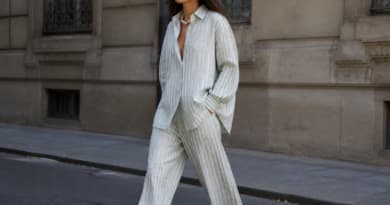
Nadège Vanhée has never been a designer who courts the spotlight. Her tenure at Hermès has been defined by a gradual, almost subterranean transformation. Where previous guardians of the house emphasized armor-like construction and a certain bourgeois propriety, Vanhée injects whispers of skin, movement, and seduction. In recent runway presentations, sheer fabrics, cut-outs, and second-skin leathers have appeared alongside the classic Kelly coats and impeccably tailored trousers — a juxtaposition that feels less rebellious than intriguingly liberated.
Those close to the house say the shift is emblematic of a broader question facing heritage luxury brands: how to stay relevant to a new generation without alienating the core customers who have sustained them for generations. Vanhée’s answer appears to be a form of controlled release — unharnessing just enough of the erotic imagination to feel modern, but never so much that it betrays the house’s foundational codes.
Craft, Meet Desire
What makes this evolution particularly noteworthy is the way Vanhée integrates the risqué into Hermès’s almost fetishistic relationship with craft. In her hands, a leather harness — a traditional equestrian motif — becomes a seductive detail, subverting its utilitarian origins. Knitwear clings rather than covers. Evening dresses expose the back in ways that feel both vulnerable and impeccably constructed. The craftsmanship remains paramount, yet it now serves a double purpose: to showcase technical mastery and to explore the sensuality of the body beneath.
Critics have remarked that this direction positions Hermès in quiet dialogue with louder luxury peers who have long embraced provocation. Unlike the overt sexiness of some Italian or American houses, Vanhée’s vision is subtle, intellectual even — an intimacy whispered rather than shouted. It is fashion that acknowledges desire but frames it through the lens of material precision and tradition.
Balancing Innovation with Heritage
The tension between innovation and heritage is one of luxury’s oldest riddles. At Hermès, that tightrope is perhaps narrower than anywhere else, given the cult-like reverence for its product icons and the family-controlled structure that insulates it from short-term market pressures. Vanhée’s ability to push boundaries therefore rests on an unspoken pact: every risqué gesture must still be unmistakably Hermès. The leather must be sublime, the silk patterns rooted in the house archive, the overall silhouette anchored by a sense of French nonchalance rather than sheer exhibitionism.
This balancing act has not gone unnoticed by the fashion world. The house’s recent collections have drawn praise for their quiet audacity — a reminder that sensuality need not be vulgar and that a heritage brand can be both timeless and timely. For all the column inches devoted to the latest logo-mania or streetwear collaborations, Hermès under Vanhée is making a different case: that true desire is built on intimacy, quality, and the slow reveal.
What It Means for the Luxury Landscape
Hermès’s subtle pivot arrives at a moment when the luxury sector is grappling with taste shifts brought by younger consumers who value experience, individuality, and a certain emotional candor. Many heritage houses have responded by embracing viral marketing, daring creative directors, or edgy collaborations. Hermès, characteristically, is taking the long view — recalibrating its aesthetic internally, trusting that the right customers will notice and stay.
By unharnessing fashion in this deliberate, almost philosophical way, Nadège Vanhée is not discarding the house’s legacy but enriching it. She is proving that a brand synonymous with discipline can also be a space for desire — as long as every stitch, every fold, and every sheer panel earns its place through exacting craftsmanship. In an industry often addicted to noise, Hermès is betting that the world’s most powerful luxury statement might just be a well-placed whisper.