Loudoun County Plans More Cricket Fields as Sport’s Popularity Surges
From Office Park Tournaments to Dedicated Pitches
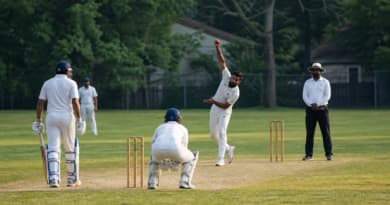
What began as a casual weekend tournament among AOL employees in 2008 has quietly evolved into a region-wide recreation movement. Now, Loudoun County is responding to that momentum with a concrete plan: more cricket fields.
Vinod Motwani, who helped organize that early tournament nearly two decades ago, could scarcely have imagined the scale of today’s demand. Back then, finding a flat stretch of grass was a challenge. Today, the booming popularity of the sport in Northern Virginia has county officials scrambling to expand playing space.
Rising Participation Fuels Pressure on Existing Fields
Loudoun County’s parks and recreation planners are facing a familiar story: the existing inventory of cricket pitches, often carved out of multi-use parks, can no longer keep pace with the number of leagues, casual players, and youth programs. Weekend scheduling conflicts are routine, and some teams travel to neighboring jurisdictions just to secure a game.
The growth is unmistakable. Local leagues that once fielded a handful of teams now boast dozens, drawing players from the county’s fast-growing South Asian diaspora and, increasingly, from a broader cross-section of residents discovering the sport. County officials have taken note and are now advancing plans to add dedicated cricket fields to the public park system.
Where the New Fields May Go and How They’ll Be Funded
While the plan is still in its formative stages, the county is evaluating several potential sites, with a focus on areas where population growth and existing field shortages overlap. Parks, Recreation and Community Services officials are working with a needs assessment to prioritize locations that can accommodate both cricket and complementary uses. Funding is expected to draw from a combination of capital improvement budgets, proffer contributions from developers, and possibly state-level recreation grants. The exact timeline remains fluid, but the commitment to expanding cricket infrastructure is now a formal part of the county’s long-term open-space planning.
A Legacy Rooted in Community Organizing
The 2008 AOL tournament, organized by Motwani and his colleagues, was a microcosm of how the sport took root. It wasn’t a top-down initiative but a grassroots effort by immigrants eager to maintain a cherished pastime. That bottom-up energy has propelled cricket from picnic-style matches to structured leagues, and now to a point where it demands a permanent place in the county’s recreational landscape.
“We never thought about county fields back then,” Motwani recalled in a recent interview. “We just wanted to play. Now, the next generation expects it.”
Players and Organizers Voice Scheduling Challenges
For players like Arjun Mehta, a software engineer and league captain in Sterling, the shortage isn’t just an inconvenience—it’s a barrier to the sport’s growth. “We have to book fields months in advance, and even then we’re often sharing space with soccer or lacrosse,” he said. “A dedicated cricket pitch would change everything.”
League organizers echo that frustration, noting that the lack of facilities forces them to cap team registrations and turn away interested players. The county’s move to add fields is seen as overdue recognition of cricket’s place in the community fabric.
Loudoun in the Regional Context
Loudoun is not alone. Across Northern Virginia and the Washington metro area, the demand for cricket fields has surged. Fairfax County, for example, has already invested in multiple dedicated pitches and continues to explore additional sites. The broader region is home to a thriving ecosystem of leagues, from hardball T20 competitions to recreational softball cricket, fueled by the nation’s second-largest concentration of Indian Americans. The sport’s inclusion in the 2028 Los Angeles Olympics is only expected to accelerate interest.
For Loudoun County, the challenge is to keep pace with its neighbors while addressing the unique needs of its own communities. The new fields represent more than just grass and stumps; they are a tangible acknowledgment of the county’s changing identity and the power of a sport that once lived only in the margins of corporate campuses and public parks.
As planning moves forward, those who spent years improvising on borrowed fields will finally see their passion carved into the landscape—a fitting legacy for a tournament that started with a simple email chain among AOL employees in 2008.