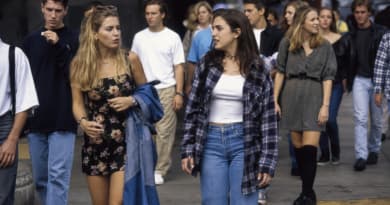
Why Gen Z’s Outfits Have Become Impossible to Read
The Lost Language of Clothing
Not long ago, walking down a city street was like scanning a live feed of human identity. The studded leather jacket screamed punk. The tailored mod suit whispered clean-cut revivalism. The oversized hip-hop tee boomed a cultural allegiance. Time was, if you wanted to know what people’s deal was, you read their clothes. That is the central premise of a recent opinion essay exploring the cultural shift in how young people dress, arguing that the once-legible sartorial codes of youth subcultures have dissolved into a frequently incomprehensible mix.
The essay, penned by a writer who formerly worked at a street-fashion magazine, draws on years of observing subcultural style up close. The core tension identified is not that Generation Z lacks style, but that the social signals embedded in their clothing have become remarkably difficult to decode. Where older generations used distinct uniforms to signal membership in a specific tribe, Gen Z’s approach appears more fragmented and highly individualized.
The Death of the Subcultural Uniform
The historical function of fashion within youth culture was largely tribal. The columnist reflects on an era when street-fashion magazines could easily catalog and name styles because those styles were fairly consistent uniforms. You could identify a mod, a rocker, a goth, or a hippie within seconds. These outfits served as a shorthand for a person’s musical taste, political leanings, and general worldview. Today, that immediate legibility has eroded. A single Gen Z individual might pair a vintage band tee from a band they’ve never listened to with tailored trousers and niche, ironic sneakers, creating a visual profile that resists easy categorization.
This marks a significant departure from the traditional role of fashion as a social decoder. The essay suggests that the difficulty in reading Gen Z’s fashion is not simply a failure of older generations to keep up, but a genuine evolution toward a less linguistically stable system of dress. The reference points are now so vast and algorithmically sourced that they create a private, constantly shifting language rather than a public dialect.
The Digital Blurring of Style
Several forces likely contribute to this new illegibility. The rise of social media platforms has melted the boundaries between distinct subcultures. A user can scroll from a hyper-specific “cottagecore” post to a neon-infused rave look in seconds, absorbing both into a generic pool of visual inspiration. This digital environment encourages sampling and mixing over the pursuit of a coherent, single identity. Furthermore, the dominance of fast fashion and the normalization of thrift culture have made wildly disparate items available at low cost, removing the economic and geographical barriers that once kept styles tethered to particular scenes.
Online aesthetics, which can number in the hundreds and mutate weekly, have replaced the longevity of classical subcultures. The essay touches on this point, implying that physical time and place once grounded a look. Today, a style built on a fleeting internet trend has a half-life too short to evolve into a readable social signal before it is replaced by its algorithmic successor. The result is not an absence of identity, but an identity expressed through chaotic, deeply personal curation that often leaves outside observers puzzled.
The outfits once formed a clear language; now they often read like an intimately personal, shapeshifting text.
Not a Lack of Identity, But a New Code
While the opinion piece is rooted in the author’s personal experience within the fashion media, it is crucial to note that the argument is an interpretation, not a universal verdict on Gen Z’s self-expression. Broad evidence about youth culture suggests that identity is as strong as ever; it is simply communicated through a hybrid set of tools that includes not just clothing but also digital profiles, vocal patterns, and curated online personas. The difficulty of interpretation may say as much about the observer’s outdated decoding methods as it does about the generation being observed.
The essay concludes not with a dismissal of Gen Z’s fashion sense but with a poignant reflection on change. The old guard of street-fashion observers, the writer included, may simply be watching in real time as a new, more complex language of self-expression is born—one that prioritizes fluidity, irony, and personal narrative over clear, collective symbolism. It’s a language that asks to be felt rather than read, and for a generation raised on a deluge of information, that might be precisely the point.