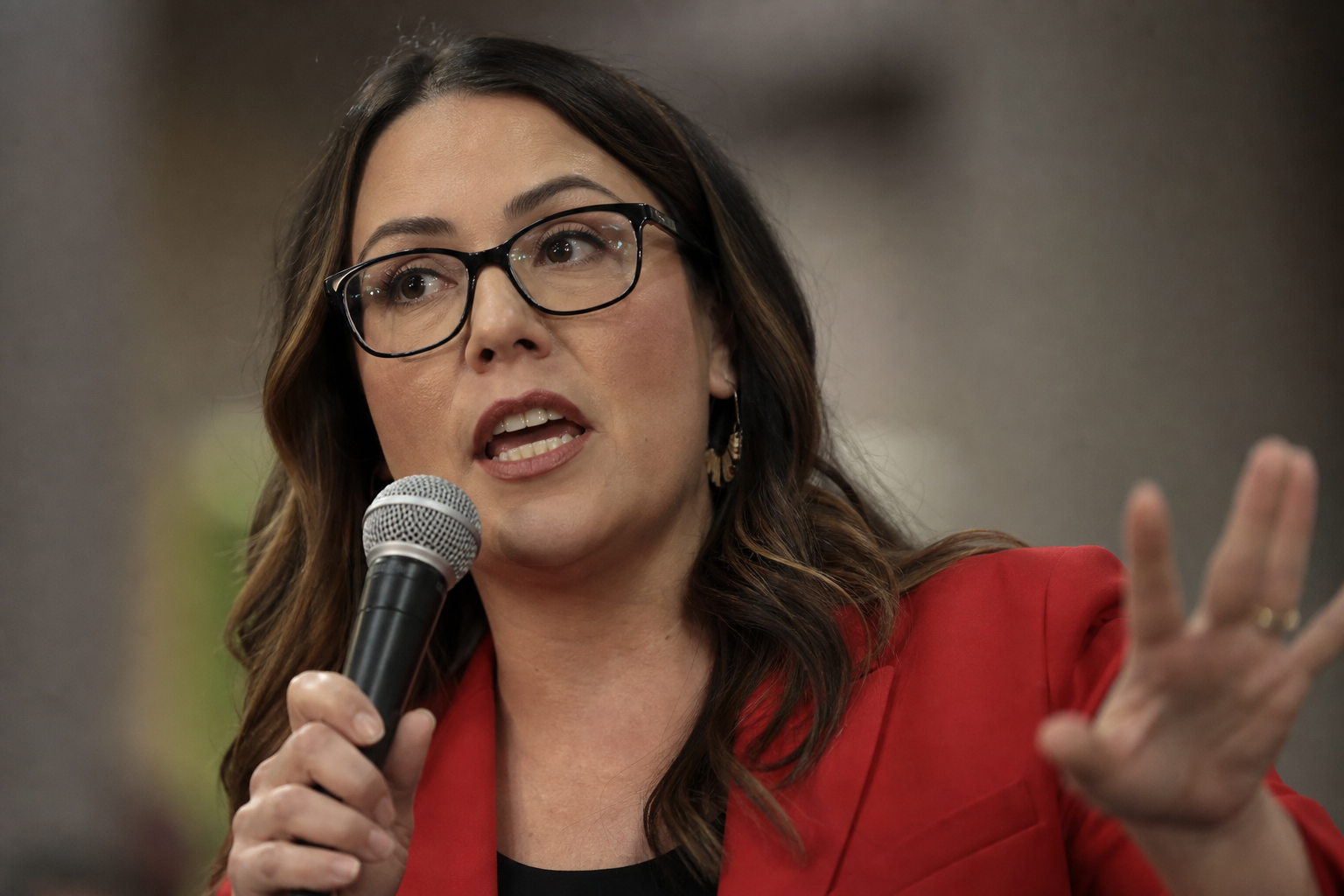
Progressive Peggy Flanagan Sweeps Minnesota Senate Primary as Anti-ICE Fury Reshapes Democratic Race
Minnesota Lieutenant Governor Peggy Flanagan has clinched a decisive victory in the state’s Democratic Senate primary, dealing a sharp blow to moderate challenger Angie Craig and handing progressive forces a high-profile win in a contest deeply colored by fury over federal immigration enforcement. The result cements Flanagan’s position as the party’s standard-bearer heading into the general election and sends a clear signal about the potency of anti-ICE sentiment among the state’s Democratic base.
A Clear Progressive Mandate
Flanagan’s win was not merely a question of name recognition. Throughout the campaign, she leaned heavily into her record as a progressive champion, contrasting her opposition to Immigration and Customs Enforcement (ICE) practices with what she cast as Craig’s more cautious approach. That framing resonated in a primary where grassroots activists and voters turned out in force to back a candidate unafraid to call for sweeping changes to federal deportation policy and to denounce ICE’s presence in Minnesota communities.
The lieutenant governor’s victory marks the latest chapter in an ongoing ideological tug-of-war within the Democratic Party. Flanagan, a citizen of the White Earth Nation and the highest-ranking Native American woman in statewide executive office, has carved out a national profile as a voice for marginalized communities. Her primary campaign stitched together a coalition of young voters, urban liberals, and immigrant-rights advocates, all energized by the promise of a Senate platform that would aggressively push back against enforcement-heavy immigration strategies.
On the other side, Representative Angie Craig, who represents a swing district in the southern suburbs of the Twin Cities, approached the race with a message built on bipartisanship and a record of winning in purple territory. Craig’s supporters argued she offered the party its best shot at flipping the Senate seat, but the primary electorate proved more interested in ideological fidelity than tactical moderation. The outcome lays bare the tension between a national party eager to compete in tough seats and a primary electorate that wants candidates to match their urgent anger on core issues.
Anti-ICE Anger Dominates the Campaign
The dominant theme of the race was unmistakable: anger at ICE. Following high-profile enforcement actions in the Upper Midwest and a series of raids that advocacy groups said sowed fear in immigrant neighborhoods, the Democratic primary became a referendum on what the party’s posture should be. Flanagan repeatedly called ICE a “rogue agency” and pledged to use her Senate office to push for drastic oversight and restructuring. At campaign stops and in televised debates, she linked her opponent’s perceived moderation on immigration to a status quo that she argued has betrayed immigrant families.
This focus on immigration enforcement created a clear contrast. While Craig supported comprehensive immigration reform and had criticized some enforcement tactics, she stopped short of embracing the full-throated anti-ICE rhetoric that animated Flanagan’s campaign. For many primary voters, that difference was decisive. Organizers with groups like the Minnesota Immigrant Rights Action Committee described a surge in volunteer sign-ups and small-dollar donations in the weeks leading up to the vote, all driven by frustration with federal deportation policies.
The primary results add weight to a larger question facing the Democratic Party: whether anti-ICE energy can be a winning issue not just in deep-blue primaries but in a general election where swing voters are in play. Turnout data from the Secretary of State’s office confirmed a notable uptick in precincts with large immigrant populations, suggesting the issue drove engagement beyond the usual party faithful.
What the Outcome Means for the General Election
Flanagan now turns her attention to the Senate race, where she will face a Republican opponent in a state that has not voted for a GOP presidential candidate in decades but has shown a willingness to elect Republicans to statewide office. Democrats hope the lieutenant governor’s anti-ICE message will galvanize the party’s progressive base, but strategists caution that the general election audience is broader and potentially less sympathetic to calls for sweeping enforcement overhauls.
Party unity emerged as an immediate concern. In her concession speech, Craig pledged to support Flanagan and emphasized the stakes of holding the seat, but the ideological bruises of the primary will take time to heal. Flanagan, for her part, has already begun reaching out to moderate Democrats and independent voters, acknowledging that her primary strategy must evolve for a statewide general election audience.
Beyond Minnesota, the result is being watched closely by national progressives who see Flanagan’s win as a blueprint for channeling grassroots anger over immigration into electoral success. The primary may also influence how Democratic senators currently in office frame their own stances on ICE as the issue continues to polarize voters on the left.
For complete and official results, the Minnesota Secretary of State provides data on turnout and precinct-level breakdowns. As the general election approaches, both parties will be parsing those numbers to understand just how deep the anti-ICE sentiment runs — and whether it can propel Peggy Flanagan to Washington.