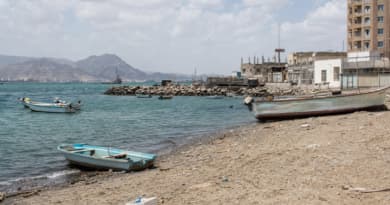
Yemen’s Houthis Seize Strategic Red Sea Islands, Raising Global Shipping Fears
A New Flashpoint in the Red Sea
Yemen’s Houthi rebels have reportedly seized control of the Greater and Lesser Hanish islands, a strategically vital archipelago in the southern Red Sea. The move adds a volatile new dimension to an already tense maritime environment and deepens concerns over the security of one of the world’s most critical shipping corridors.
Islands at the Heart of Global Trade
The Hanish islands sit at the mouth of the Bab el-Mandeb strait, a narrow chokepoint between the Red Sea and the Gulf of Aden through which roughly 12% of global seaborne trade passes each year. The strait is the gateway for vessels transiting the Suez Canal, carrying everything from crude oil to containerised goods. Control over the islands provides a commanding position to monitor, harass, or potentially interdict commercial and military traffic.
Historically, the islands have been a flashpoint. Long-standing territorial disputes between Yemen and Eritrea flared into armed conflict in the 1990s, before an international tribunal awarded sovereignty to Yemen in 1998. The Houthis’ latest move wrenches control of that prize away from the internationally recognized government, which has been locked in a civil war with the Iran-backed group since 2014.
An Escalation of the Houthi Maritime Campaign
The seizure fits squarely within the Houthis’ broader campaign of maritime pressure, which has escalated dramatically since November 2023. Framing their actions as solidarity with Palestinians amid the Israel-Hamas war, the group has launched dozens of missile and drone attacks against commercial vessels and Western naval ships in the Red Sea and Gulf of Aden. The campaign has forced major shipping companies to reroute around the Cape of Good Hope, adding weeks to transit times and driving up freight costs and insurance premiums.
Occupying the Hanish islands gives the Houthis a durable, land-based forward operating position from which to extend their reach. Unlike mobile attack boats or drone launches from the mainland, a physical presence on these islands could enable more persistent surveillance, missile emplacements, and the ability to stage fast-attack craft close to shipping lanes.
Regional Domino Effects
The development comes as the broader Middle East simmers with overlapping tensions. While a fragile ceasefire has largely held in Yemen’s main war zones, the Houthis have used the lull to consolidate power and pivot towards projecting force beyond the country’s borders. Iran, their principal patron, stands accused of arming and guiding these operations as part of a wider regional strategy to pressure Israel and its Western backers.
Saudi Arabia, which borders the Red Sea and has been a primary target of Houthi attacks during the Yemen war, is likely to view the island seizure with alarm. Riyadh has sought to de-escalate and negotiate a permanent exit from the conflict, but continued Houthi aggression in the maritime domain threatens both Saudi shipping and the kingdom’s Vision 2030 economic ambitions, which include massive Red Sea tourism and logistics projects.
What Comes Next
So far, there has been no immediate official reaction from the Yemeni government, regional powers, or the multinational naval coalitions that patrol the region. The U.S.-led Operation Prosperity Guardian and the European Union’s Aspides mission have both been conducting defensive and escort operations to protect merchant vessels, but neither force has a mandate for territorial intervention on Yemeni soil. The Houthis’ hold on the islands would likely require a kinetic operation to dislodge, an option no external actor appears eager to pursue.
In the short term, the seizure is expected to further unnerve global shipping companies and insurers. Already elevated war-risk premiums could climb higher, especially if Houthi forces use the islands as a launchpad for attacks or to threaten navigation through the Bab el-Mandeb more directly. The international community may respond with increased naval patrols and renewed diplomatic condemnation, but the Houthis have shown little responsiveness to either pressure or persuasion throughout their Red Sea campaign.
The fall of the Hanish islands underscores a stark reality: even as the world’s attention remains fixed on Gaza, the Houthis are methodically reshaping the security map of the Red Sea, one strategic asset at a time.