India Rises as Vital Link in Israel’s Weapons Supply Chain Amid Escalating Conflict, Says Amnesty
Amnesty International’s Findings on India’s Role
A new Amnesty International report has cast a spotlight on India’s growing entanglement in Israel’s military operations, revealing that the country has become an “important part” of Israel’s weapons supply chain as violence in the Middle East escalates. The findings, detailed by The Guardian, describe a network involving Indian manufacturers, exporters, and logistical intermediaries facilitating the movement of arms and components to Israel.
The report stops short of naming all the companies involved but points to a pattern where Indian entities are increasingly functioning as transshipment hubs or direct suppliers, circumventing traditional export controls. According to Amnesty, this arrangement has deepened largely without public scrutiny, raising questions about India’s obligations under international humanitarian law and its own arms export regulations. The human rights group argues that by enabling weapons transfers, India may be complicit in serious violations committed during the conflict.
Deepening Bilateral Ties Under Modi and Netanyahu
The revelations come against the backdrop of a decade-long strategic embrace between Prime Minister Narendra Modi and his Israeli counterpart Benjamin Netanyahu. Since 2014, India and Israel have elevated their relationship from covert intelligence sharing to open, high-profile cooperation in defense, agriculture, water technology, and cybersecurity. Bilateral trade has soared, and India is now one of the largest buyers of Israeli military hardware, while also co-producing drones, missiles, and surveillance systems under the “Make in India” initiative.
What the Amnesty report underscores is that this partnership is no longer one-sided. “India is not just a customer; it has become an integral node in Israel’s supply ecosystem,” The Guardian notes, citing defense analysts. The flow of components now moves both ways, with India emerging as a reliable sourcing and transit point. This shift has been facilitated by Modi’s Hindu nationalist government, which sees alignment with Israel as both a pragmatic counterterrorism measure and a geopolitical lever in West Asia.
Geopolitical Context and Official Silence
The report arrives at a moment when the Israel-Hamas war and regional tensions have drawn global condemnation over civilian casualties. India’s increasingly visible role in the weapons supply chain thus puts it at odds with its traditional support for Palestinian statehood and its non-aligned rhetoric. The Ministry of External Affairs has not issued a formal statement on the Amnesty findings, and The Guardian reports that the Indian government did not respond to requests for comment. The Israeli government similarly maintained silence on the substance of the allegations.
This lack of accountability has drawn sharp criticism from human rights organizations and opposition figures within India. They argue that the Modi government’s cozy relationship with Israel undercuts India’s moral standing and could implicate the country in war crimes. “It is unconscionable that Indian industry is being used to fuel a conflict marked by such overwhelming civilian harm,” an Amnesty researcher told The Guardian.
Domestic Pressures Add to the Picture
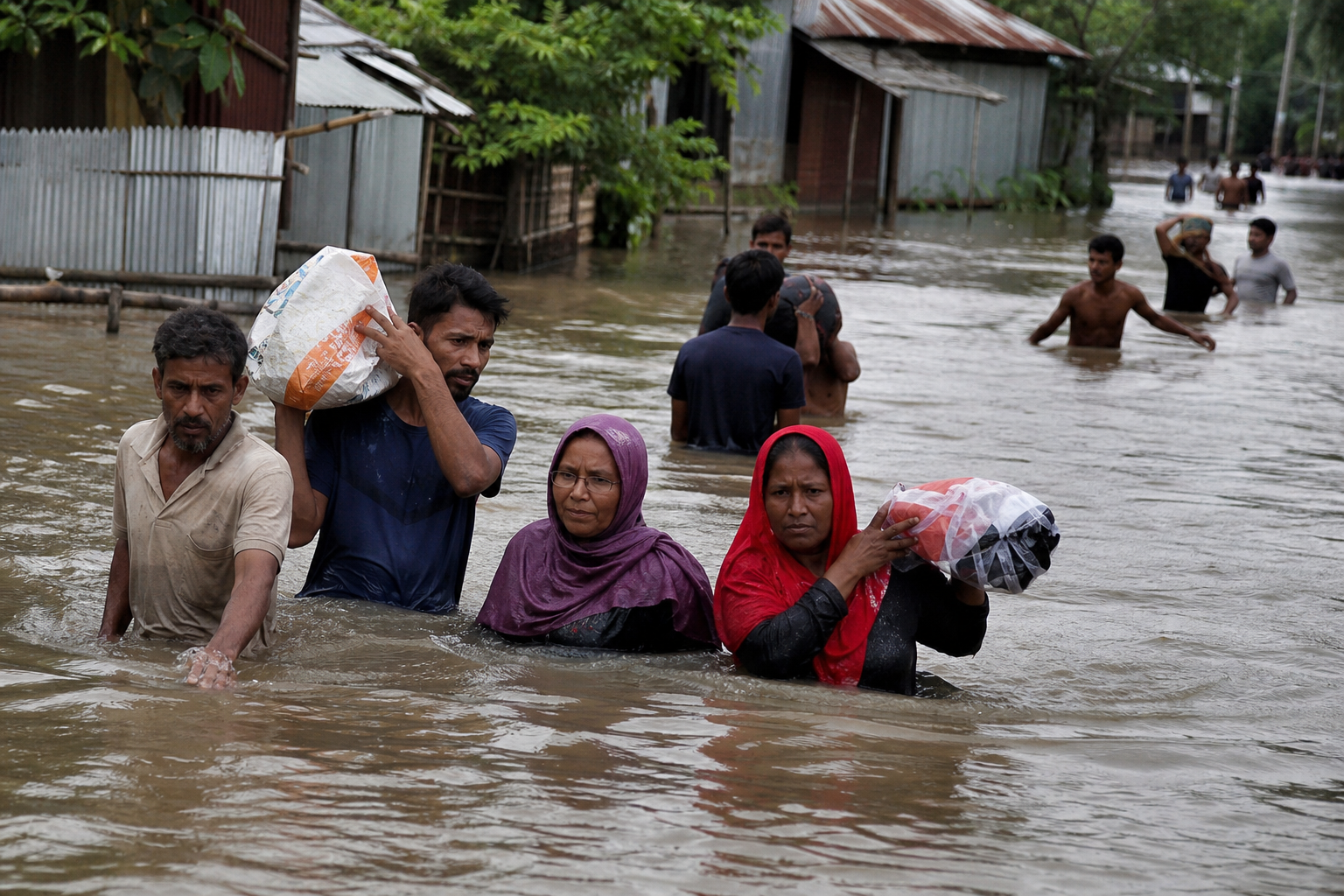
While the diplomatic and defense ramifications unfold on the international stage, India is also grappling with a host of domestic crises. The same Guardian dispatch notes severe flooding in Assam that has displaced thousands, alongside spreading student protests over economic grievances and governance. These unrelated events paint a picture of a country where foreign policy choices are increasingly scrutinized against urgent homegrown challenges, and where civil society is quick to question the ethical dimensions of arms exports while citizens suffer natural disasters and dissent is met with crackdowns.
As the Middle East conflict shows no signs of abating, India’s deepening defense entanglements are likely to attract more global attention, especially if evidence continues to emerge of Indian-manufactured or Indian-shipped components being used in active combat zones.
Source: The Guardian