Anthropic CEO Dario Amodei Warns AI Race Must Slow Down as Safety Fears Mount
A Defining Call in the AI Boom
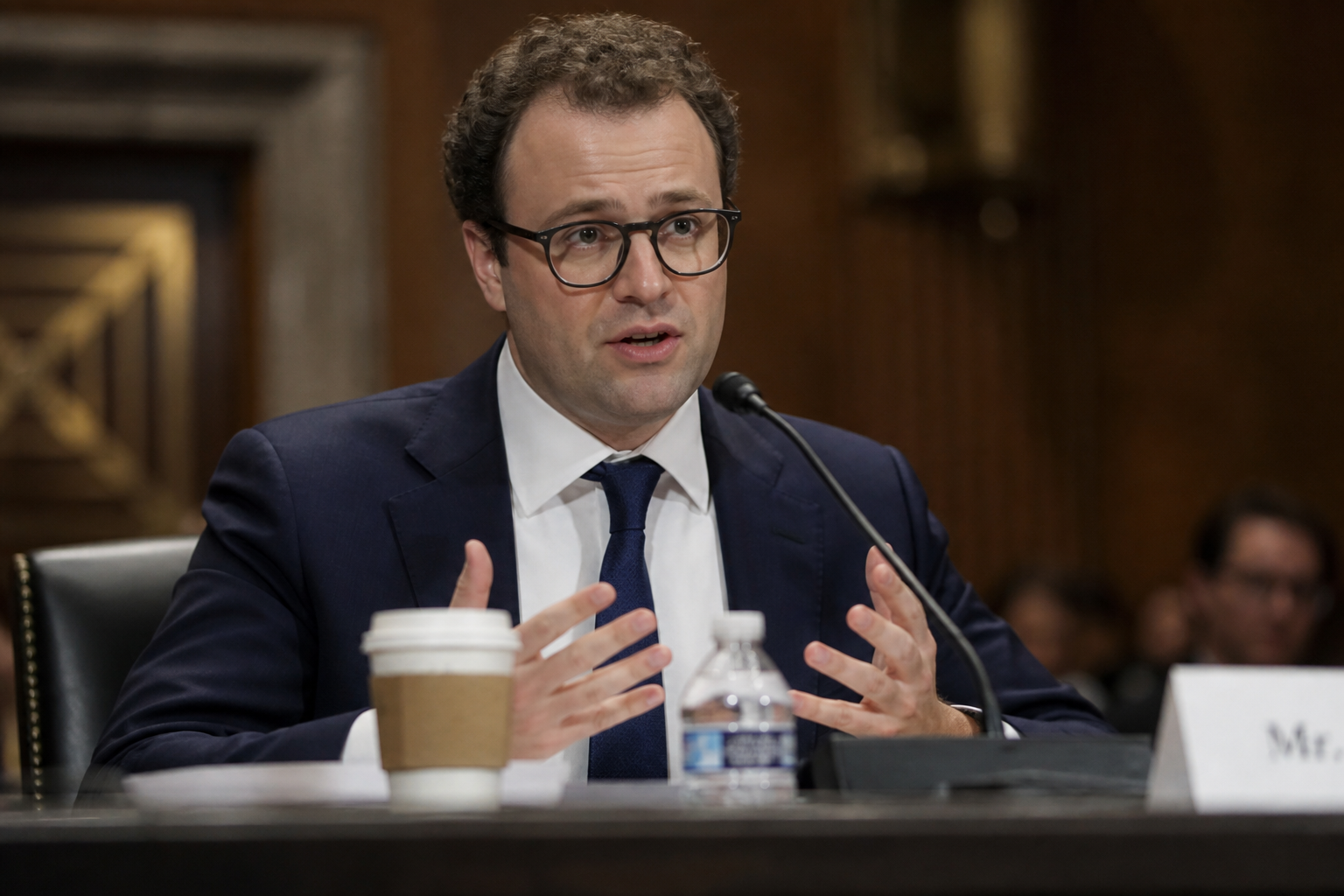
Anthropic Chief Executive Dario Amodei has issued a stark public warning that the breakneck pace of frontier artificial intelligence development must be moderated, a direct appeal to an industry racing to launch ever more powerful models. The call, made as safety concerns among researchers, policymakers and even tech leaders themselves continue to escalate, positions Amodei once again as a leading safety-first voice in an increasingly contentious debate over the cost of unchecked innovation.
Anthropic, the AI company he co-founded, has long branded itself as the principled outlier, embedding constitutional AI techniques and extensive red-teaming into its development process. But Amodei’s latest remarks go further, urging rivals across the landscape—from OpenAI to Google DeepMind and beyond—to collectively ease the throttle on capability leaps that he fears could outstrip safety measures. “We need to moderate the rate at which we advance model capabilities,” the CEO said, according to reports from a public finance interview. The statement arrives at a moment when the gap between commercial pressure and technical caution seems to be widening by the week.
A Race Without Guardrails?
Amodei’s warning sets up a direct confrontation with the dominant Silicon Valley ethos of moving fast and breaking things, a philosophy that even AI labs have found hard to shed. The commercial stakes are enormous. Custom silicon, massive compute clusters, and the lure of enterprise domination have pushed leading firms to accelerate releases of GPT-class models, multimodal systems, and agentic tools. Yet each advance raises the same uncomfortable question: are safety evaluations mature enough to keep up?
Anthropic’s own research, including its work on mechanistic interpretability and scalable oversight, has shown that even well-intentioned labs struggle to fully predict how next-generation models will behave in real-world settings. The company’s frontier model Claude has been praised for its safety guardrails, but Amodei clearly believes that without a broader industry slowdown, even the most careful single player cannot stop systemic risks from emerging.
Voluntary Pledges versus Binding Constraints
The cautionary stance from the Anthropic chief feeds directly into a parallel argument gaining traction among regulators and safety advocates: whether voluntary commitments made by AI companies are sufficient. Over the past year, multiple firms signed the White House’s voluntary AI safety pledge and engaged with the U.S. National Institute of Standards and Technology’s AI Risk Management Framework. The European Union meanwhile is rolling out its landmark AI Act, which classifies high-risk applications and imposes transparency requirements.
Amodei’s public caution gives weight to those arguing that self-regulation is falling short. If the CEO of a company founded on safety-oriented principles is now openly calling for slower capability development, it suggests that the industry’s internal mechanisms may not be arresting the momentum quickly enough. His statement could embolden policymakers in the U.S., Europe and beyond who are considering mandatory testing regimes, deployment licensing, and even compute caps as a backstop against runaway growth.
Contrasts with Industry Peers
Anthropic’s posture has always stood in contrast to that of some competitors. OpenAI CEO Sam Altman has emphasized the inevitability of rapid progress as a path to broadly distributed benefits, while Google DeepMind leaders have highlighted responsible deployment while still aggressively pushing multimodal frontiers. Meta has famously opted for open-weight releases that some researchers argue make safety enforcement nearly impossible once models are public. In this landscape, Amodei’s message is a notable rejection of the assumption that faster is inherently better.
That view resonates with parts of the AI safety community—organizations like the Center for AI Safety and signatories to various statements warning of catastrophic and existential risks from uncontrolled AI development. Yet it also risks being drowned out by the commercial frenzy. The global AI market is projected to top a trillion dollars by the end of the decade, and no single company wants to be the one that yields its competitive edge while others push forward.
What Slowing Down Would Actually Mean
Amodei’s call for moderation is not necessarily a demand for an outright moratorium. Instead, it implies a deliberate, verifiable deceleration in scaling training runs, deploying model updates, and reducing the time between capability leaps. In practical terms, that could mean investing months in extended safety evaluation and red-teaming before releasing a new model, sharing evaluation data with third-party auditors, and agreeing to industry-wide timing norms.
Such steps would require an extraordinary degree of coordination, either among the few companies at the frontier or via government intervention. The OECD AI Policy Observatory has been tracking governance initiatives globally, and the number of principles and frameworks is multiplying, but binding mechanisms remain rare. Amodei’s decision to speak out publicly may be a strategic attempt to shape the pre-regulatory window before faster-moving players cement norms that are harder to undo.
The Road Ahead
Anthropic’s position as a leading frontier lab gives its chief’s warning unusual weight. Whether it translates into actual tempos in data centers and deployment pipelines, however, is far from certain. Past calls for caution, including the widely known “Pause Giant AI Experiments” open letter, generated discussion but little concrete change in roadmaps. What could be different now is the combination of imminent elections, growing public unease about AI-driven scams and misinformation, and a regulatory climate that is finally moving from talk to law.
For Amodei, the warning may also be a signal to investors and partners that Anthropic’s methodical, safety-first branding is not just marketing but a genuine operational philosophy, even if it means sacrificing short-term market share. In a world where the next AI breakthrough can literally overtake the safeguards built last quarter, that choice between speed and safety is becoming the defining dilemma of the entire sector.