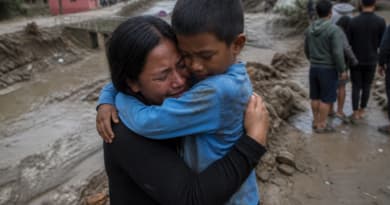
Race to Deliver Aid as Catastrophic Flash Floods Batter Nepal
Race to Deliver Aid as Catastrophic Flash Floods Batter Nepal
A massive international relief operation is underway after days of relentless monsoon rains triggered devastating flash floods and landslides across Nepal, leaving a trail of destruction and tens of thousands in desperate need of assistance. With entire villages submerged, roads washed away, and communications severed, aid agencies are racing to reach survivors as the scale of the humanitarian crisis unfolds.
Wide-Scale Destruction in Mountain Communities
The deluge, which began in recent days, has hit the central and eastern hilly regions hardest. Torrents of water roared down river valleys, sweeping away homes, livestock, and vital infrastructure. Bridges connecting remote settlements have collapsed, and agricultural land critical for food security lies under a thick layer of mud and debris. While exact casualty numbers are still being compiled, early warnings indicate that hundreds of people may be missing, and thousands more have been forced to seek shelter on higher ground.
Nepal, a country of rugged terrain and extreme climatic conditions, is no stranger to monsoon disasters. However, meteorologists note that this season’s rainfall has been exceptionally intense, likely linked to shifting weather patterns driven by climate change. The heavy downpour has triggered multiple landslides, further complicating rescue efforts and cutting off entire districts from road access.
Rescue and Relief: A Race Against Time
Search-and-rescue teams from the Nepalese Army, Armed Police Force, and local volunteers are working around the clock, using inflatable boats, ropes, and helicopters to evacuate stranded residents. Sniffer dogs have been deployed to locate survivors trapped under collapsed structures. The immediate priority is pulling people to safety before another round of heavy rain arrives.
Relief supplies are being dispatched from the capital Kathmandu and regional hubs. The most urgently needed items include:
- Ready-to-eat meals and high-energy biscuits for displaced families.
- Water purification tablets and jerry cans to prevent acute diarrhea.
- Tarpaulins, blankets, and sleeping mats to provide emergency shelter.
- Essential medicines, including oral rehydration salts and antibiotics.
Helicopter airlifts are proving vital, as many road networks remain blocked by landslides. Aid agencies are setting up temporary staging areas in accessible towns, from which smaller trucks and porters will carry supplies on foot to the most isolated villages.
Government Leads Response, Appeals for Global Support
Nepal’s National Disaster Risk Reduction and Management Authority (NDRRMA) has activated its emergency operations center and is coordinating all response activities. The government has released emergency funds from the Prime Minister’s Disaster Relief Fund to sustain the initial rescue and relief phase. Authorities have formally requested international assistance, citing the overwhelming scale of the damage and the country’s limited logistical capacity.
In a televised appeal, officials stressed that the scale of the disaster far exceeds national capacity and urged for swift international support.
Global Agencies and Neighbors Step In
The international community has responded quickly. The United Nations Office for the Coordination of Humanitarian Affairs (OCHA) is deploying a rapid assessment team to support the government-led effort. The World Food Programme is mobilizing food stocks from its regional warehouse, while UNICEF is focusing on restoring water and sanitation services and setting up safe spaces for children.
The International Federation of Red Cross and Red Crescent Societies (IFRC) and the Nepal Red Cross Society have mobilized hundreds of trained volunteers, who are distributing relief kits and providing first aid. Several governments have also offered bilateral aid. India has dispatched a consignment of tents, medicines, and food, while China has pledged emergency supplies and technical experts. The United States and the European Union have expressed their condolences and are evaluating further assistance packages. Real-time situation reports are being tracked on the ReliefWeb platform, which is coordinating humanitarian information.
Mounting Humanitarian Needs and Long Road to Recovery
Field assessments are still under way, but humanitarian agencies warn that the overall needs are immense, with the number of displaced and families requiring shelter, food, and medical care growing by the day. The risk of waterborne diseases such as cholera and typhoid is skyrocketing as floodwaters mix with sewage. Health workers are bracing for a surge in cases of diarrhea, skin infections, and respiratory illnesses among displaced populations.
Children have been particularly affected. Many schools have been damaged or are being used as shelters, putting education on hold. Trauma counseling and psychosocial support will be essential for those who have lost family members and seen their homes destroyed.
Beyond the emergency phase, the recovery will be long and costly. Rebuilding washed-out roads, bridges, and public buildings in remote mountainous terrain is a major engineering challenge. Livelihoods — especially subsistence farming — have been shattered, raising the specter of food insecurity in the months ahead. Humanitarians and climate experts alike are calling for increased investment in disaster preparedness, early warning systems, and climate-resilient infrastructure, warning that such devastating events are likely to become more frequent.
“This is not just a natural disaster; it is a stark reminder of the vulnerabilities faced by communities on the frontlines of climate change,” said a senior humanitarian official. “What we do now will determine whether this crisis deepens or whether we can help Nepal build back stronger.”
As global aid shipments continue to arrive and rescue teams reach the last uncontacted pockets, the world’s focus remains on saving lives and preventing a second wave of suffering in a nation that has already endured so much.