Chinese Humanoid Robot Outruns Usain Bolt’s 100-Meter World Record
A New Pace in the Hundred
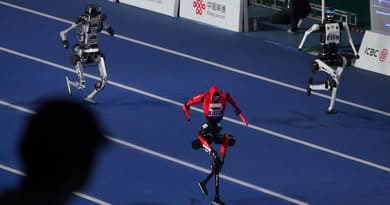
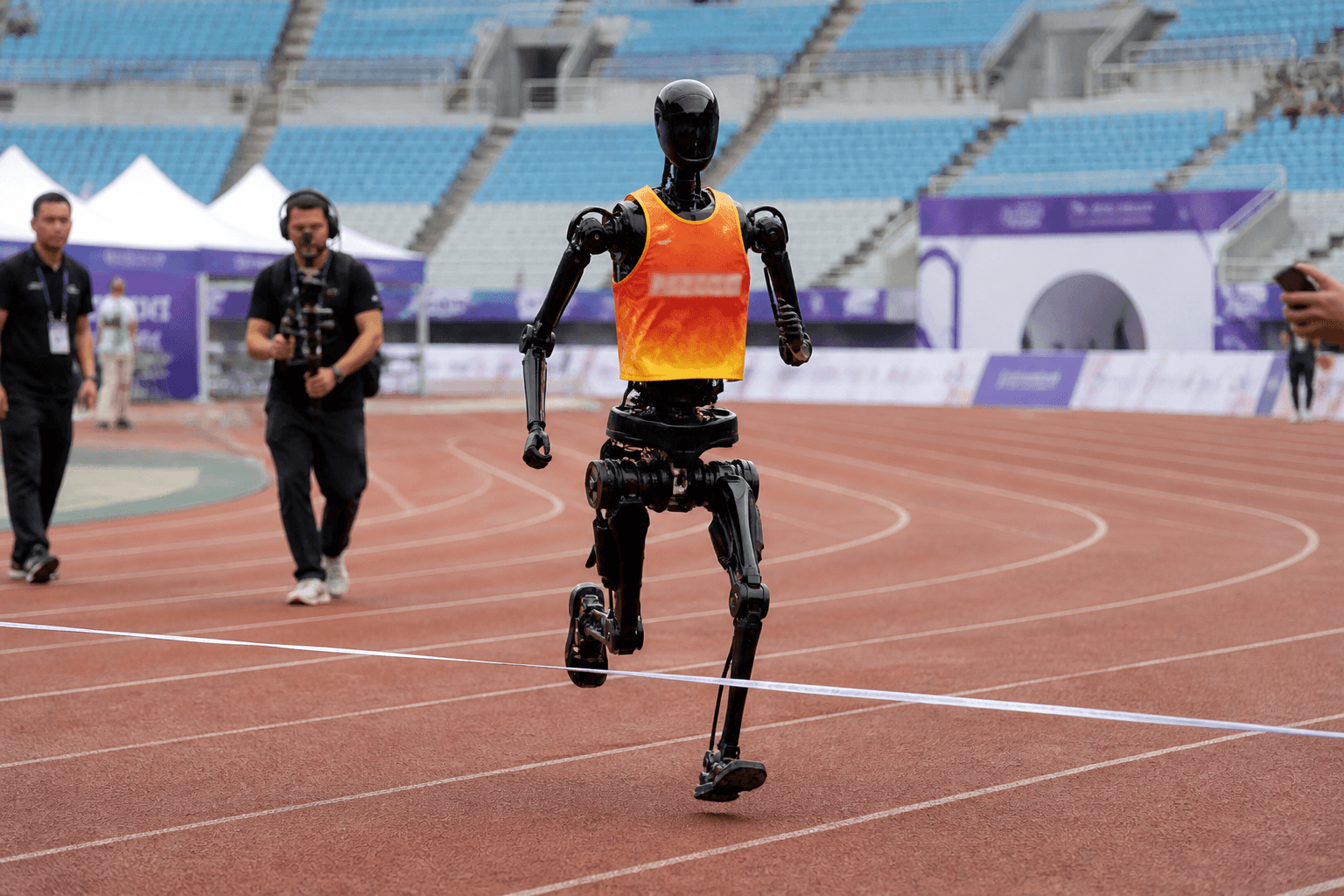
At the World Humanoid Robot Games in China, a humanoid machine has reportedly smashed the symbolic barrier set by Usain Bolt’s 100-meter world record, crossing the finish line in a time that outpaced the Jamaican sprinter’s legendary 9.58-second mark. The event, designed as an Olympics-style competition for robots, saw two human athletic records fall, with the sprint capturing headlines as a defining moment for robotic speed.
From Human Benchmark to Robot Feat
Organizers framed the dash as a direct comparison to Bolt’s world record, acknowledging that the performance was a robotics demonstration rather than a human-versus-human contest. The robot’s exact time was not immediately disclosed, and questions remain about the conditions under which the clocking was achieved—wind assistance, track surface, and whether the robot completed the run entirely autonomously or required external guidance.
The games are part of China’s ambitious drive to lead the global humanoid robot industry, showcasing capabilities across athletic, navigation, and task-oriented challenges. Events like sprinting not only test raw speed but also balance, gait efficiency, and real-time terrain adaptation—areas of intense research interest.
Symbolism vs. Verification
While the comparison to Bolt’s record is attention-grabbing, experts caution that such demonstrations straddle the line between engineering milestones and marketing spectacle. Official timing data, technical specifications of the robot, and competition rule details are awaited to fully validate the achievement. The broader context underscores rapid progress: humanoid robots are increasingly performing complex physical tasks, and competitions like these serve as public benchmarks that both drive innovation and attract investment.
The sprint also reignites conversations about the pace of robotics development. Bolt’s 9.58 seconds, set in 2009, stood for years as a near-mythical limit of human athleticism. For a machine to edge past that threshold, even in a controlled setting, marks a psychological milestone that may accelerate expectations for robotics in industrial and service roles.