
Nigel Farage Returns to Parliament After Defeating Count Binface in Mocked Election
Farage Seals Victory Over Count Binface in a Parliamentary Election That Has Britain Laughing
Nigel Farage has won back a seat in the House of Commons after defeating his most eccentric opponent yet: Count Binface, a satirical candidate who wears a trash can on his head and campaigns on intergalactic pledges. The result, reported Friday by the Associated Press, marks a sharp twist in Farage’s political career — one that sees him reclaiming a seat he had voluntarily given up only a month earlier.
A Resignation, a By-Election, and an Unlikely Challenger
Farage, a key architect of Brexit and the leader of the populist Reform UK party, stunned Westminster when he resigned from his parliamentary seat four weeks ago. His departure triggered a by-election, a vote that he immediately declared he would contest. Many analysts called the move a political stunt designed to draw attention to his party and put pressure on the main political rivals.
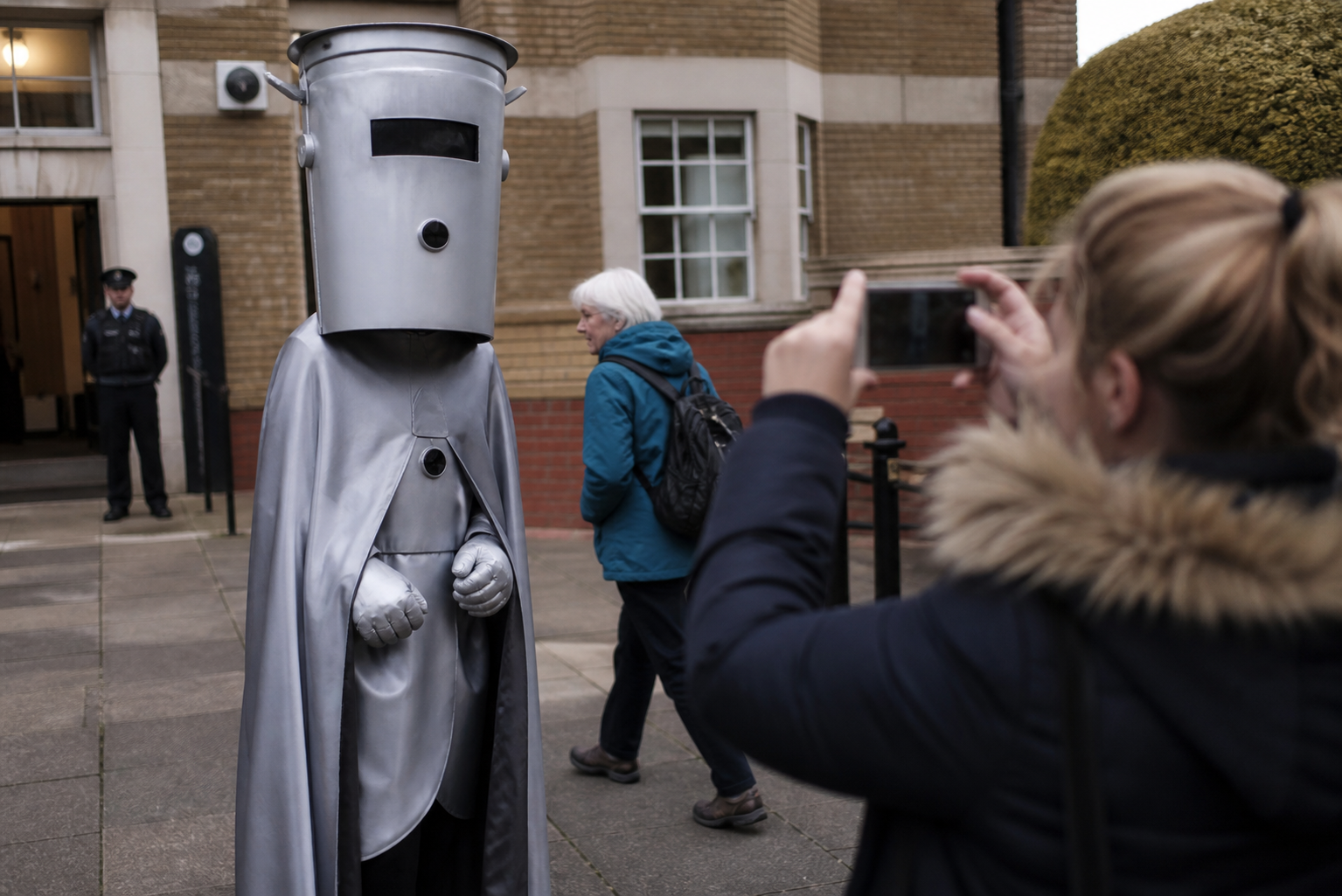
What no one predicted was that his main opponent would be a man in a barrel. Count Binface, the comedic creation of performer Jon Harvey, filed his candidacy papers and quickly turned the race into a magnet for satire. Binface’s manifesto — which includes promises to build a bridge over the English Channel, nationalize the pop star Adele, and make “your mum” a protected species — was widely shared on social media, overshadowing more traditional campaign messages.
The Result and Its Symbolism
When the polls closed and votes were counted, Farage emerged victorious, as expected. The Associated Press confirmed that he beat Count Binface and all other candidates, solidifying his return to Parliament. The margin of victory was not immediately reported, but the sheer oddity of the matchup ensured the story ricocheted around the world.
The contest was quickly dubbed the ‘bin election’ by commentators on social media, where jokes and memes proliferated. One viral post showed the two candidates side by side under the caption ‘Pick your PM.’ The mockery, however, did little to dampen the significance of Farage’s win. For his supporters, the victory represents a powerful comeback for a politician often written off by the political establishment.
Why Farage Quit and Why It Matters
Farage’s decision to resign his seat was not a spur-of-the-moment act. He has long complained that the main parties are ignoring the concerns of ordinary voters, and the by-election was seen as a gambit to force a conversation about issues like immigration and the cost of living. By stepping down and then immediately running again, he essentially dared his critics to stop him. That gamble has now paid off.
The win also cements Farage’s role as a perpetual disruptor. Having previously failed seven times to win a Westminster seat, he now returns to the chamber where he can exert pressure on both the Conservative and Labour parties. Reform UK, his insurgent party, has been climbing in the polls, and Farage’s presence in Parliament gives the movement a prominent national platform.
Political analysts note that the spectacle of the Count Binface race, while humorous, actually worked to Farage’s advantage. It generated wall-to-wall media coverage and allowed him to frame the by-election as a rebellious act against a disconnected elite. Every time mainstream outlets covered the joke candidate, they also broadcast Farage’s message.
Who Is Count Binface?
Count Binface is no stranger to high-profile elections. The character, who describes himself as an intergalactic space warrior, has stood in several notable races, most famously against then-Prime Minister Boris Johnson in the 2019 general election. On that occasion, he finished with just 69 votes, but his presence drew global attention. Since then, he has become a recurring feature of British ballots, offering voters a protest option wrapped in absurdity.
His platform this time included perennial favourites: a pledge to bring back Ceefax, the classic teletext service, and a plan to rename London Bridge to Phoebe Waller-Bridge. While the policies are not serious, his candidacy reflects a broader trend of ‘anti-politics’ candidates tapping into public discontent. In a race that many saw as a foregone conclusion, Binface gave people a reason to pay attention.
What Comes Next
Farage now takes his seat in a Parliament that remains deeply divided over the direction of the country. With a general election looming, his return promises to inject more volatility into an already unpredictable political environment. Reform UK has vowed to field candidates across the country, and Farage’s new mandate will amplify his calls for stricter immigration policies and a smaller state.
For the public, however, the lasting image of this by-election may not be Farage’s victory speech but the lanky frame of Count Binface standing quietly behind him on stage, a silent protest in metallic garb. As one observer tweeted: ‘Only in Britain can a man in a bin make a political heavyweight look ridiculous.’
As the sun set on polling day, the Count himself took to social media to thank his 87 voters — or ‘loyal minions’ — and promised to return. Whether the laughter marks a low point for democracy or a high point for entertainment, one thing is certain: the 2024 election cycle has delivered its most memorable moment yet.


