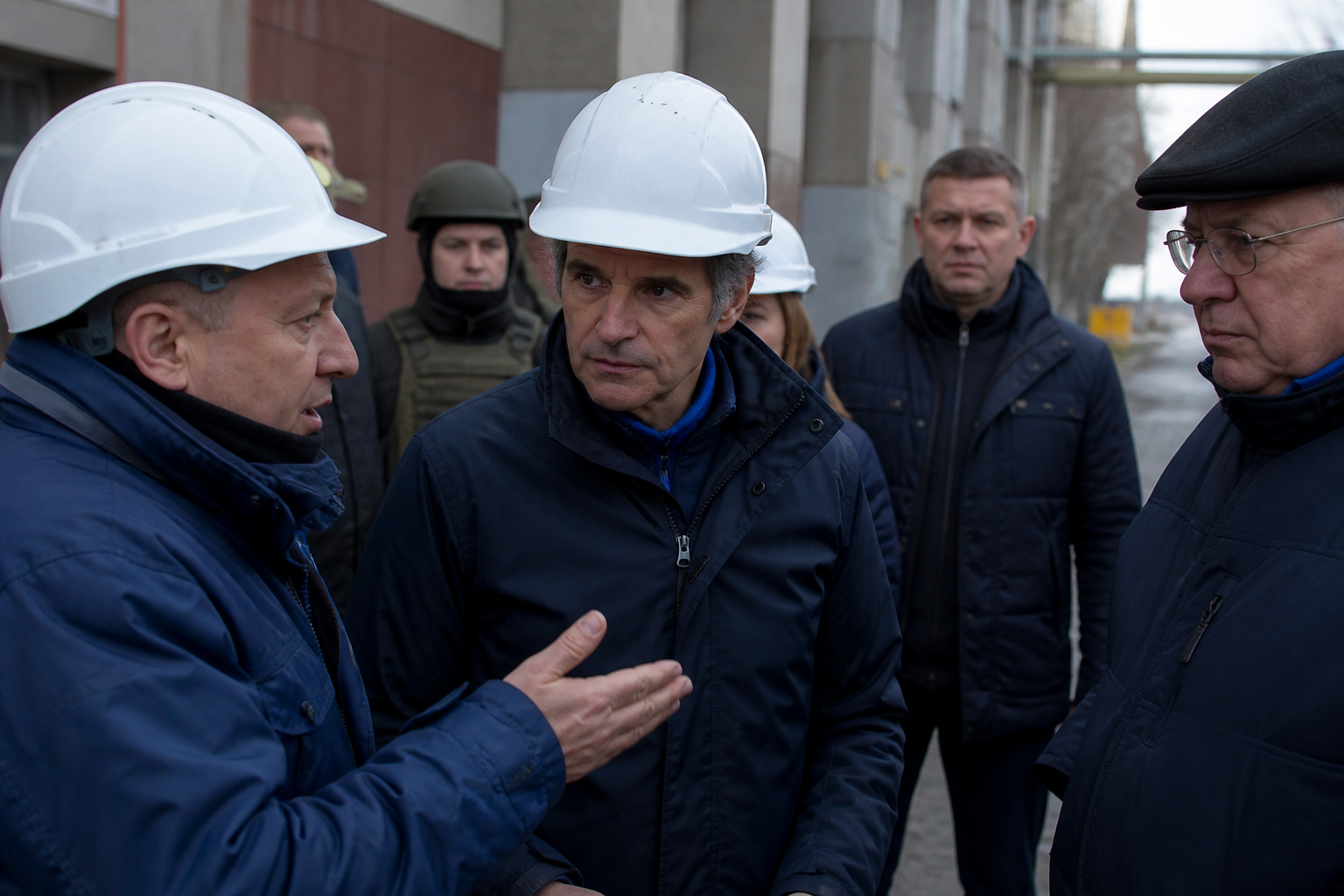
IAEA Warns Zaporizhzhya Nuclear Plant ‘Highly Vulnerable’ After Repeated Off-Site Power Losses
The Zaporizhzhya Nuclear Power Plant (ZNPP) in southeastern Ukraine – the largest nuclear facility in Europe – remains in a deeply precarious state as recurring losses of external electricity supply underscore the extreme fragility of the grid that keeps its safety systems running. In a statement released Thursday, International Atomic Energy Agency (IAEA) Director General Rafael Mariano Grossi warned that a recent uptick in off-site power disruptions has once again placed the plant in a high-risk situation, with the site forced to rely on emergency diesel generators to maintain vital cooling functions.
The incident is the latest in a long series of grid failures since the plant fell under Russian military control in March 2022. The frontline of the war runs just a few kilometres from the plant, and shelling, drone strikes and general infrastructure degradation have repeatedly severed the high-voltage lines that normally supply the electricity ZNPP needs to operate its reactor cooling and other critical safety systems. As Grossi emphasised, each loss of off-site power pushes the plant closer to a potential nuclear safety crisis.
Growing International Concern
The IAEA has maintained a permanent team of inspectors at Zaporizhzhya since September 2022, and it continues to publicly report on every outage. The latest alert highlights an observable increase in the frequency of these events. According to the agency’s assessment, even brief interruptions can have severe consequences because the plant’s emergency diesel generators, while designed to kick in automatically, are themselves a limited and fallible resource. Fuel supplies, maintenance and the sheer number of repeated starts all factor into the reliability of these backup systems in a prolonged crisis.
Ukraine’s State Nuclear Regulatory Inspectorate has consistently flagged the risk that a total loss of backup power – combined with damage to the plant’s own infrastructure – could lead to a meltdown scenario. Local staff operating under Russian management are working under immense psychological and professional pressure, adding another layer of human-factor vulnerability that the IAEA has repeatedly flagged.
The Broader Conflict and Nuclear Safety
The Zaporizhzhya plant’s condition is emblematic of a new reality in which nuclear facilities are no longer safe havens but become front-line assets in modern warfare. The IAEA has called on all parties to establish a nuclear safety and security protection zone around the site, but diplomatic efforts have so far failed to produce a concrete agreement. Meanwhile, the fragility of Ukraine’s national grid – already battered by months of Russian missile and drone strikes on substations and power lines – means that even a successful reconnection of the plant to the outside network can be quickly undone by the next military escalation.
Thursday’s update did not specify the exact cause of the most recent loss, but its timing coincided with reports of new combat operations in the broader Zaporizhzhia region. The IAEA’s statement concluded with a sobering reminder: the safety margin at Europe’s biggest nuclear power plant is shrinking, and the world cannot afford to treat repeated close calls as a normal state of affairs.