US Confirms It Has Deployed Space Weapons for National Defense
US Acknowledges Space Weapon Deployment in Historic First
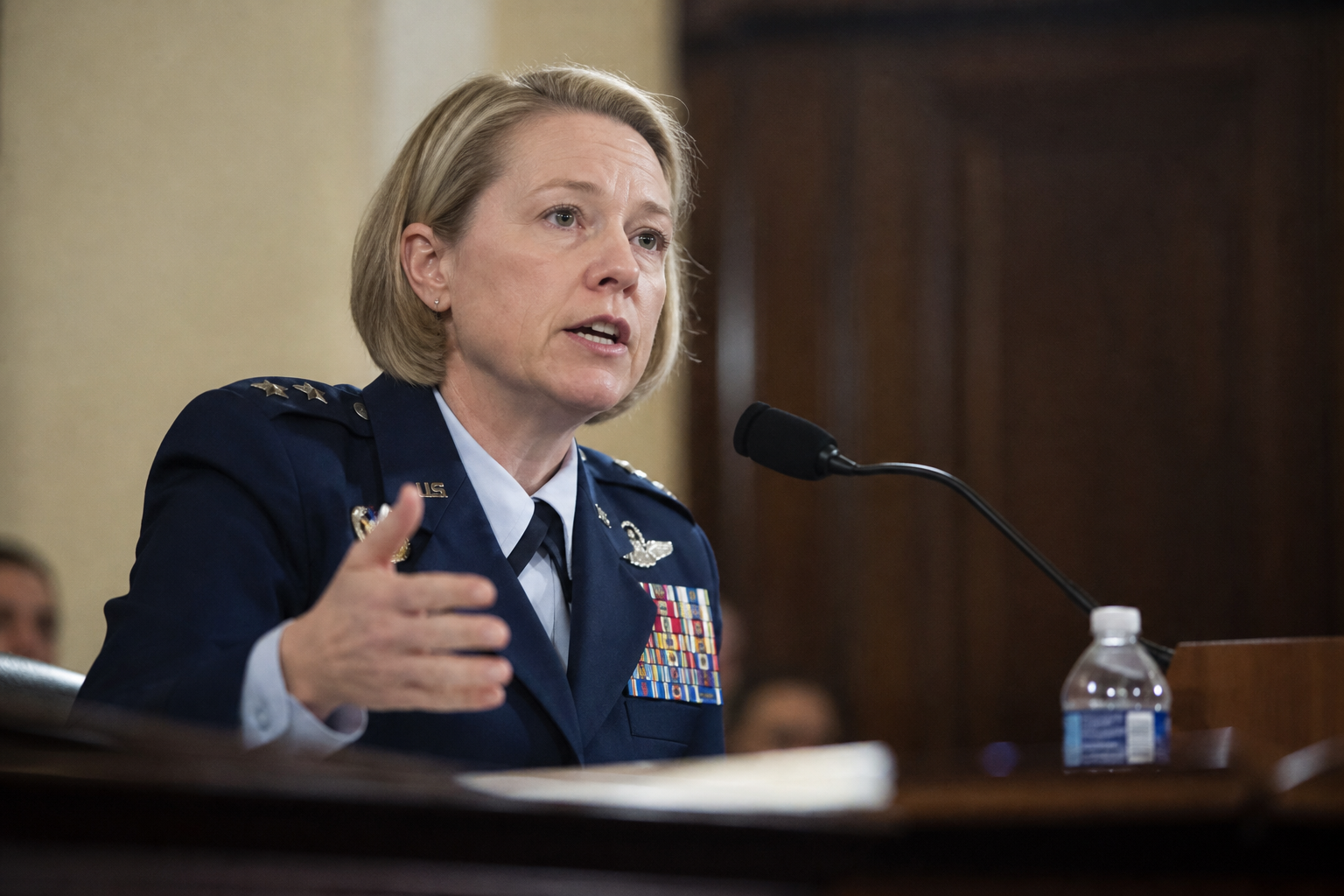
The United States has for the first time publicly confirmed that it has deployed weapons in space, a landmark acknowledgment that shifts long-standing ambiguity into official policy. The disclosure was made by the Secretary of the Air Force, who stated that the capabilities are necessary to defend the country against enemy action.
The announcement, reported by the BBC, marks the end of decades of speculation and careful wording by Washington. While the US military has long operated satellites for communication, navigation, and missile warning, the explicit confirmation of weapon systems positioned beyond Earth’s atmosphere raises profound questions about the future of warfare and the militarization of space.
From Ambiguity to Acknowledgment
For years, US officials have spoken of the need to protect American assets in orbit, often using terms like “space domain awareness” or “deterrence.” The Air Force Secretary’s direct statement, however, represents a deliberate break from that diplomatic hedging. By framing the weapons as a defensive necessity, the US is signaling both to allies and adversaries that it is willing to cross a threshold that had previously existed only in rumor.
The precise nature of the space weapons has not been detailed. Officials have declined to specify whether they are kinetic interceptors, directed-energy systems, or electronic warfare platforms. This lack of technical detail leaves open the question of what “defense against enemy action” means in practical terms—whether it involves disabling an adversary’s satellite, intercepting a missile during its boost phase, or more exotic capabilities.
A Global Ripple Effect
The confirmation comes amid intensifying competition among major powers to dominate the space domain. Russia and China have both invested heavily in anti-satellite technology and other space-based military programs. In 2021, Russia demonstrated a direct-ascent missile that destroyed one of its own defunct satellites, creating a debris field that drew international condemnation. China has conducted similar tests and has developed robotic arms for potential satellite repair or sabotage.
The US move may prompt calls for renewed diplomatic efforts to prevent an arms race in space. The United Nations has long sought to negotiate a treaty banning weapons in orbit, but progress has been stalled by deep divisions among spacefaring nations. The Outer Space Treaty of 1967 prohibits weapons of mass destruction in space, but leaves gray areas regarding conventional arms.
A Strategic Shift
Analysts note that the acknowledgment could be aimed at reassuring allies that the US is prepared to protect shared space infrastructure—such as GPS and communication networks—while also serving as a deterrent to potential adversaries. The Air Force Secretary’s framing suggests that the weapons are not offensive but purely protective, a characterization that will be closely scrutinized.
“The US must be prepared to defend its interests wherever they are threatened, and that now clearly extends to space,” said a senior defense official familiar with the policy shift. The remark echoes a growing consensus within the Pentagon that space is no longer a sanctuary but a potential theater of conflict.
Critics argue that the deployment of any weapon system in space risks triggering a destabilizing escalation. They warn that the line between defensive and offensive capabilities can be dangerously thin, and that a miscalculation in orbit could have catastrophic consequences for the global economy and security.
For the moment, the US appears to be betting that transparency—coupled with a clear defensive rationale—will strengthen its strategic position. As more details emerge, the international community will be watching closely to see if this announcement is a one-time revelation or the beginning of a new, more openly confrontational posture in the final frontier.