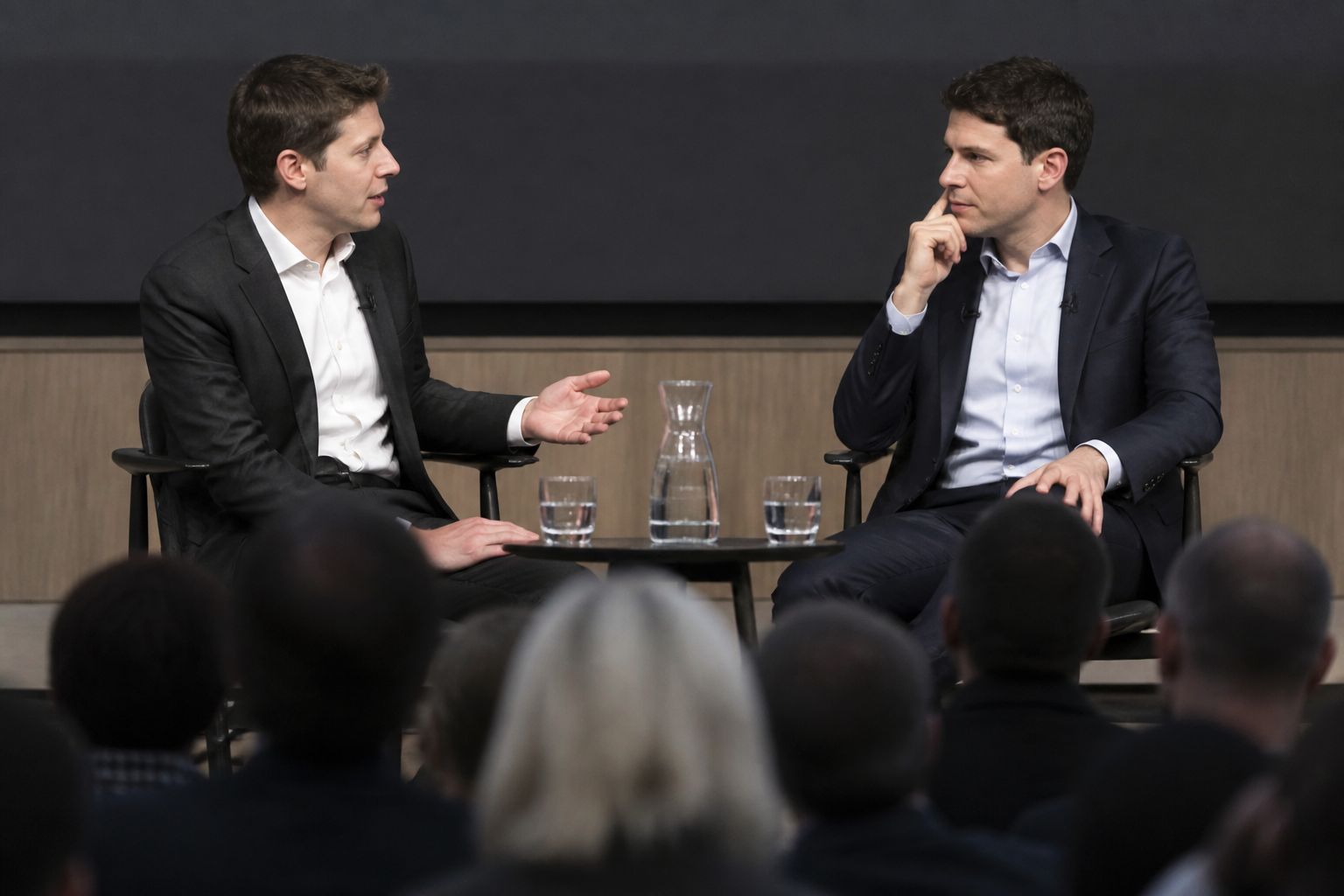
Top AI CEOs Unexpectedly Converge on Call to Slow ‘Dangerous’ Artificial Intelligence Race
A Rare Public Alignment on AI Safety
In a significant moment for the artificial intelligence industry, the chief executives of two of the world’s leading AI labs are publicly agreeing that the headlong rush to build ever-more powerful systems must be slowed. The convergence of views, reported by NBC News, signals a growing chorus of caution emanating from inside the very companies driving the AI boom.
The agreement marks a notable shift from a landscape often defined by fierce competition toward one where industry leaders are openly grappling with the profound safety, oversight, and societal risks their creations pose. While the AI field has long debated safety versus speed, having two top-tier CEOs publicly align on the need for restraint underscores a deepening anxiety about the current trajectory.
The Core Tension: Capability Versus Catastrophe
The central tension driving this public stance is the disconnect between rapid capability gains and the potential for catastrophic outcomes if more powerful systems are deployed without adequate guardrails. The CEOs’ remarks reflect a growing recognition that scaling AI without limits could outpace society’s ability to manage the consequences. The discussion is no longer purely academic; it is being led by the people with the most intimate understanding of what cutting-edge models can do.
The remarks are deeply embedded in the broader and increasingly urgent debates over AI safety, the need for robust regulation, and responsible deployment frameworks. This internal industry pressure adds significant weight to the calls from external researchers and policymakers who have long warned of unchecked development.
Anthropic’s Dario Amodei and a Wider Industry Rethink
At the center of this dialogue is Dario Amodei, CEO of Anthropic, a company founded explicitly on a mission to build reliable, interpretable, and steerable AI systems. Amodei’s voice is particularly influential given Anthropic’s position as a major lab that competes directly with giants like OpenAI while championing a safety-first philosophy. His public agreement with another top AI chief executive on slowing down represents more than a single company’s policy—it suggests a potential inflection point for the sector’s self-governance.
Key questions now emerging for reporters and analysts are whether these leaders are aligned purely on the general principle of deceleration, or if their agreement extends to the specific reasons and mechanisms for doing so. The difference between converging on the ‘what’ versus the ‘why’ could define the next phase of the AI policy debate.
What ‘Slowing Down’ Could Actually Mean
The critical unanswered question is what a deliberate slowdown looks like in practice. The debate encompasses a wide spectrum of potential actions, each with its own political and commercial consequences. The options being discussed among policy stakeholders range from voluntary industry pauses on training the largest models to implementing far more rigorous pre-deployment testing and evaluation protocols.
Other possibilities include the establishment of stronger internal and external guardrails, such as mandatory third-party audits, or direct regulatory intervention by U.S. regulators and lawmakers who have been scrambling to craft appropriate legal frameworks for frontier AI. For major AI labs and the broader tech industry, any of these measures would represent a dramatic operational change.
This is notable because it reflects a shift from pure competition toward calls for restraint from within the sector itself.
The public alignment of these CEOs injects new momentum into these policy discussions, making it harder for other industry participants to dismiss safety concerns as hypothetical or as mere obstacles to progress. It frames the choice not as innovation versus stagnation, but as responsible progress versus uncalculated risk.