Trump-Kim Summit Possible ‘At Any Time,’ Seoul Spy Agency Says
South Korea’s National Intelligence Service (NIS) has signalled that a high-stakes summit between former U.S. President Donald Trump and North Korean leader Kim Jong Un could take place “at any time,” reigniting speculation over a dramatic revival of direct diplomacy between Washington and Pyongyang.
The assessment, delivered to South Korean lawmakers during a closed-door briefing on Tuesday, suggests Seoul believes the political and security conditions may now be ripe for renewed dialogue — despite no official announcement from either government.
Behind the Intelligence Briefing
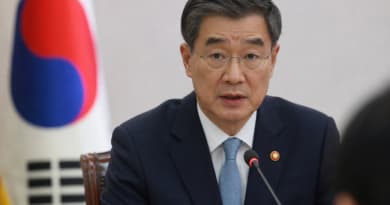
The NIS, South Korea’s primary spy agency, briefed members of the National Assembly’s intelligence committee on the current state of U.S.–North Korea relations. While much of the discussion remains classified, lawmakers confirmed the agency’s central message: a Trump–Kim summit is feasible at any moment.
“A summit between the United States and North Korea is possible ‘at any time,’” the NIS told legislators, according to officials present.
The phrasing points to a deliberate intelligence judgment rather than a confirmed diplomatic calendar. It reflects a view in Seoul that back-channel contacts or preparatory signals are active enough to elevate engagement from theoretical to imminent — even if the exact timing is not yet fixed.
Trump, Kim, and the Summit That Could Be
Another direct meeting between Trump and Kim would be a consequential event for regional security. The two leaders have met three times before — in Singapore, Hanoi, and at the Korean Demilitarized Zone — but the last such encounter yielded no lasting agreement on denuclearization. Since then, North Korea has continued to advance its missile and nuclear programs, while sanctions remain in place.
The NIS assessment arrives amid a broader reevaluation of North Korea policy by key capitals. South Korean officials have long championed diplomacy as the only viable path to curb Pyongyang’s weapons ambitions, and the intelligence community’s optimism may be intended to nudge Washington and Pyongyang back to the negotiating table.
Distinguishing Possibility From Certainty
It is critical to note that the NIS language stops short of confirming an agreed summit date. The agency was offering an intelligence-based forecast, not announcing a diplomatic breakthrough. Still, the fact that such an assessment was shared with lawmakers — and subsequently made public — underscores the weight Seoul places on the potential for near-term talks.
Any Trump–Kim summit would be scrutinized for what it means for denuclearization efforts, sanctions relief, and the role of China and Russia in Northeast Asian security. For now, the signal from Seoul is clear: the chance of dialogue is real, and the world should be ready.