UAE Intercepts Iranian Drone Over Territorial Waters in Major Security Incident
The United Arab Emirates intercepted an Iranian drone early Monday over its territorial waters, the UAE Defense Ministry confirmed, in what marks a significant security incident amid a widening arc of tensions across the Middle East.
The interception occurred in the early hours of the morning, according to the ministry, which stated that the unmanned aerial vehicle was engaged and brought down after entering UAE airspace. There were no immediate reports of casualties, damage to infrastructure, or disruption to maritime traffic.
The event did not happen in isolation. According to official channels, the drone interception followed an exchange involving Iran and other regional actors—hinting at a broader pattern of moves and countermoves that have kept Gulf states on high alert. Details of that exchange were not disclosed, and it remains unclear whether the downed drone was part of a coordinated operation or a single-act provocation.
The UAE Defense Ministry invoked national sovereignty and reaffirmed its readiness to protect the country’s airspace and territorial waters. A ministry statement, carried by local media, emphasized that “any aggression or violation of the nation’s borders will be met with a decisive response.” No further operational specifics were shared, including the type of drone or the air-defense system used to neutralize it.
Iran has yet to issue any official comment on the allegation. Tehran’s silence adds to the uncertainty, as both sides have historically engaged in denials and counter-claims when confronted with such incidents. Regional and international authorities are expected to seek corroboration through diplomatic and military channels in the coming days.
The drone interception underscores a worrying trajectory for Gulf security. In recent years, the waters and skies around the Arabian Peninsula have become a flashpoint for drone and missile activity, with Houthi rebels in Yemen launching repeated attacks on Saudi and Emirati targets, and shadowy exchanges near strategic chokepoints like the Strait of Hormuz. Monday’s incident, attributed directly to Iran, raises the stakes, testing the upgraded air-defense systems that Gulf nations have invested in heavily and the crisis-management protocols linking them to Western allies.
Analysts note that while such engagements are rarely publicly acknowledged in real time, they reveal the hair-trigger nature of regional geopolitics. The UAE, a key U.S. partner and a hub for international commerce, has strengthened its defensive posture without seeking open confrontation. Still, the interception is likely to ripple through diplomatic circles already strained by nuclear negotiations and proxy conflicts.
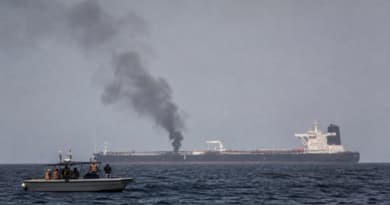
Maritime security in the Gulf has also come under renewed focus, with commercial ships facing risks from mines, drones, and fast-attack craft. The drone’s presence over UAE territorial waters—close to critical shipping lanes—may be interpreted as a deliberate signal. Shipping and aviation authorities have not issued any new warnings, but operators are being urged to exercise heightened vigilance.
As investigators piece together the drone’s origin, flight path, and payload, the incident serves as a stark reminder that the Middle East’s security architecture remains fragile. Both Tehran and Abu Dhabi will be under pressure to clarify their positions, while the international community watches closely for any sign of further escalation that could destabilize energy markets and global trade.