Desperate Families Await Word on Pilgrims Missing in Nepal-China Border Floods
Four days after catastrophic floods and landslides tore through remote villages along the Nepal-China border, thousands remain unaccounted for, and families across India and Nepal are clinging to a desperate hope that word will come about missing relatives. For many, the anxiety is compounded by the knowledge that Hindu pilgrims traversing one of the world’s most sacred routes may have been directly in the path of the disaster.
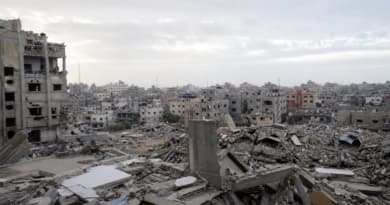
The destruction struck without warning, as monsoon-swollen rivers burst their banks and sent walls of water, mud, and debris crashing down steep Himalayan slopes. Early reports indicate that entire settlements were flattened, roads washed away, and communication lines severed, leaving a vast, inaccessible swath of devastation.
The Scale of the Disaster
While official figures remain fluid, authorities have confirmed that thousands of people are still missing across the affected districts. The exact number of those caught in the flooding or buried under landslides is difficult to ascertain, as many of the villages lie in high-altitude terrain that is unreachable even in the best of conditions. The Nepal government’s disaster management authority has described the situation as one of the worst natural calamities to hit the region in recent years.
Compounding the tragedy is the area’s significance as a pilgrimage corridor. For centuries, devout Hindus have journeyed through these borderlands en route to Mount Kailash in Tibet, a revered peak considered the earthly abode of Lord Shiva. Trekking routes and small transit towns in Nepal’s northwestern frontier serve as crucial rest stops for pilgrims, many of whom travel in groups during the summer monsoon months, believing the season spiritually auspicious despite its known weather risks.
Families Plead for Information
In India’s northern states and in the Nepali capital, Kathmandu, frantic relatives are gathering at temples, community centers, and government offices, clutching photographs and last-known itineraries. Phone calls go unanswered. Messages remain undelivered. “We only know that their trek was supposed to pass through the valley that is now underwater. Nobody can tell us if they were ahead of the floods or if they were right there when it happened,” said one distraught family member, summing up the agony of the wait.
Nepalese authorities have set up helplines and emergency contact points, but with limited connectivity in the disaster zone, even the most basic confirmation—a name on a survivor list, a report of a body found—has been agonizingly slow to emerge. The priority, officials stress, remains rescue and relief, not identification. However, as day gives way to day, the gap between the disaster and verified information is taking a profound emotional toll.
Search and Rescue Challenges
Rescue and emergency response teams, including Nepali army units, police, and local volunteers, are battling treacherous conditions to reach cut-off communities. Helicopter surveys have been hampered by lingering cloud cover, and ground teams are contending with mud that is metres deep, unstable slopes, and the constant threat of further landslides. In many cases, rescuers are trekking for hours just to reach the starting point of a search operation.
Authorities have deliberately avoided releasing unverified tallies of who may have been lost, emphasizing that speculation could deepen the anguish of families. “We are focused on saving lives and providing medical aid. Once we stabilize the immediate emergency, we will turn to a systematic process of accounting for the missing,” a disaster response coordinator said. No comprehensive death toll has yet been confirmed, though local reports from some accessible villages suggest the number of casualties could be in the hundreds.
Many of the villages lie in high-altitude terrain that is unreachable even in the best of conditions.
Among the most urgent tasks is restoring basic communication links. Mobile towers were destroyed, and satellite phones are in short supply. Relief agencies are rushing in portable generators and emergency communication kits, but the sheer remoteness means that many hamlets will remain isolated for days, if not weeks.
Pilgrimage Route Under Scrutiny
The disaster has also cast a spotlight on the safety of pilgrimage routes in the Himalayas during the monsoon. Travel operators say that while many groups are experienced and travel with guides, the region’s topography makes even routine itineraries vulnerable to sudden weather events. Religious tourism remains a vital economic lifeline for border communities, and any prolonged disruption will have lasting consequences beyond the immediate tragedy.
For now, all attention remains on the missing. Red Cross and other humanitarian organizations are coordinating with Nepali authorities to provide psychological support to families crowded into information centers. As the hours pass, the hope of finding more survivors dims, but for those waiting, every unconfirmed name remains a stubborn reason to believe.