Oncology Decoded Examines AI’s Real-World Role in Genitourinary Cancer Care
A new episode of Oncology Decoded has spotlighted one of the most pressing questions in modern cancer care: how artificial intelligence can move from research labs into real-world genitourinary oncology practice. Hosted by Manojkumar Bupathi, MD, MS, and Benjamin Garmezy, MD, the CancerNetwork program delves into the practical implementation of AI tools—from diagnostics and risk stratification to treatment selection and clinic workflow—while also confronting head-on what the technology cannot yet do.
From Theory to Clinical Touchpoints
The discussion deliberately avoids abstract futurism, focusing instead on AI’s near-term integration into daily oncologic care. In genitourinary cancers—prostate, bladder, kidney, and testicular malignancies—data-rich decision-making is routine, creating fertile ground for algorithmic support. The hosts break down likely entry points:
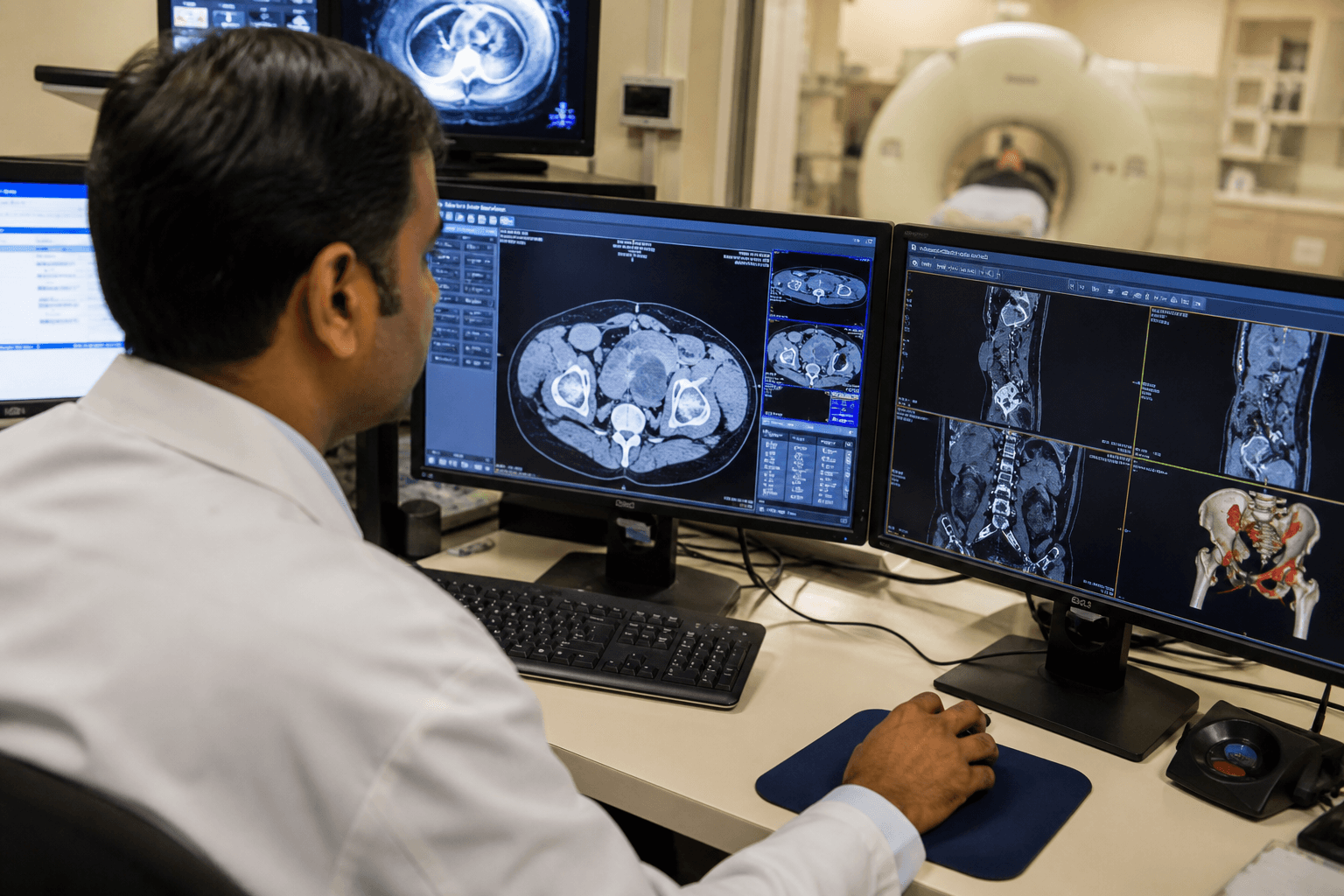
- Diagnostics and imaging: AI-assisted interpretation of MRI, CT, and pathology slides to flag suspicious lesions or quantify tumor burden.
- Risk stratification: Machine learning models that combine genomic, pathological, and clinical variables to refine prognosis and guide therapy intensity.
- Treatment selection: Decision-support systems that can suggest personalized regimens based on molecular profiles and real-world evidence.
- Practice efficiency: Automating documentation, follow-up triage, and clinical note summarization to reduce physician burnout.
By anchoring the conversation in these concrete use cases, the episode presents AI not as a replacement for oncologists but as a cognitive assistant that must earn its place in the clinic through rigorous validation.
The Promise-and-Pitfalls Balance
Perhaps the most critical takeaway from the podcast is the tempered optimism around AI’s capabilities. Drs. Bupathi and Garmezy emphasize that algorithms are only as good as the data they are trained on, and genitourinary oncology datasets often suffer from bias, incomplete follow-up, or a lack of diversity. Generalizability—ensuring a model developed at one academic center works in a community hospital with different patient demographics—remains a stubborn barrier.
The episode also stresses the need for prospective clinical validation and ongoing physician oversight. Regulatory frameworks, such as the FDA’s guidance on AI/ML-enabled medical devices, are rapidly evolving, but the hosts note that oncologists must retain ultimate responsibility for treatment decisions. The “black box” problem—where an AI’s reasoning is opaque—is particularly acute in oncology, where a flawed prediction can have life-or-death consequences.
Workflow, Data, and the Human Factor
Beyond technical performance, the conversation highlights practical obstacles that often stall AI adoption: integration with legacy electronic health records, the need for clean and interoperable data streams, and physician skepticism. “If an algorithm adds five clicks to a busy clinic visit, it will be abandoned,” the episode cautions, underscoring that successful implementation must design around human workflows, not against them.
The hosts also point to the growing body of research supported by organizations like the National Cancer Institute and the American Society of Clinical Oncology, which are funding trials that embed AI tools into routine care to measure utility, cost-effectiveness, and patient outcomes.
Broader Oncology Trends
The Oncology Decoded discussion arrives as artificial intelligence surges across cancer disciplines—from pathology and radiology to early-phase drug discovery. In genitourinary oncology, where genomic testing and imaging are already integral to care, AI’s potential to synthesize multimodal data is particularly compelling. Yet the episode cautions against the hype cycle, reminding clinicians that meaningful adoption will require incremental steps, transparent evidence, and a culture of shared responsibility between man and machine.
For oncologists and healthcare leaders tracking the intersection of technology and patient care, the episode serves as a balanced field guide—neither dismissing AI as overblown nor accepting its promises without scrutiny.