When AI Makes Students Think for Themselves, Real Learning Happens. The Real Test: What They Retain After the Tool Disappears.
Across the globe, artificial intelligence has moved from experimental labs to the front of the classroom. But as schools adopt AI-powered tutors, writing assistants and grading systems, a quieter question is gaining urgency: what happens to learning when you switch the technology off?
For education commentator Irfan, the answer is clear. He argues that the real measure of success in educational AI is not what students accomplish while using the tool, but what stays with them after it is taken away. That proposition is now reshaping how teachers, policy makers and technologists think about AI’s role in schools.
The real measure of success must be what students retain after the tool disappears.
It is a simple but profound test. Many schools are proudly showcasing how AI helps students write essays faster, solve math problems more accurately or generate projects with professional polish. Yet the danger, Irfan and a growing chorus of educators warn, is that the tool becomes a crutch rather than a scaffold—making tasks easier in the short term while leaving students unable to perform without it.
The concern lands in the middle of a global debate over whether AI is a breakthrough or a bubble in education. From UNESCO to the OECD, international bodies have been mapping out frameworks that emphasize human-centred approaches. UNESCO’s policy guidance on AI in education, for example, urges that technology should supplement, not replace, human teaching and independent thought. Similarly, OECD education research suggests that digital tools are most effective when they are tightly integrated with pedagogy that expects students to explain their reasoning, not just deliver answers.
Citing the rapid rollout of generative AI tools in schools, Irfan stresses that adoption alone is not an educational strategy. “Just because a tool can produce A-grade work doesn’t mean the student can,” he says. “The gap between what a machine can do and what a learner understands is where real teaching needs to happen.” The warning goes beyond philosophical musings: in classrooms where AI is simply used to complete assignments faster, students often bypass the struggle that builds genuine understanding.
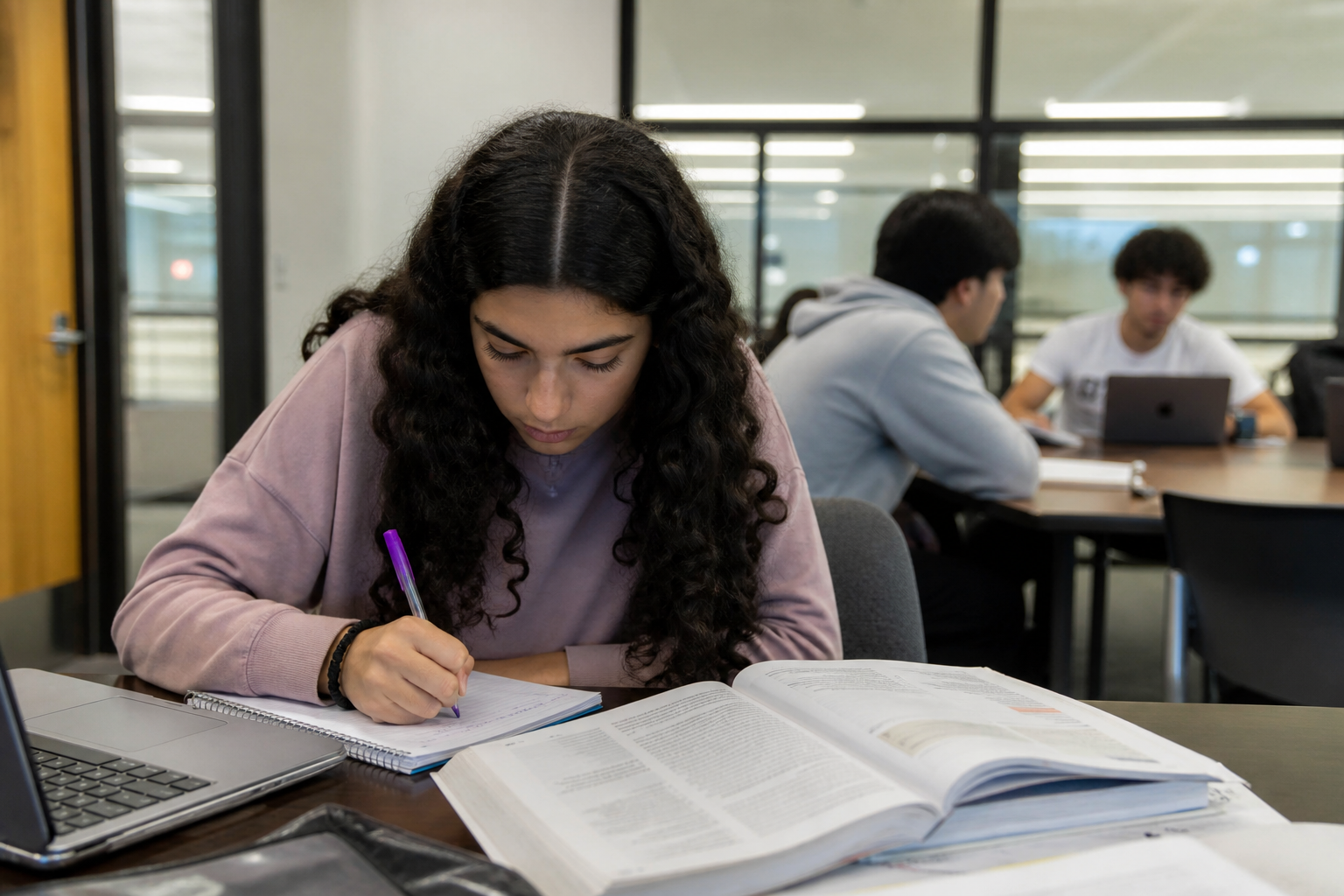
That subtle shift has dramatic consequences for how teachers design assignments. Rather than asking students to produce a final piece of writing or a solved equation, educators are increasingly crafting tasks that demand visible thinking: oral defenses of AI-assisted work, reflective journals that document the human editing process, or open-ended problems where the tool can only be a starting point. The goal is to make sure the student, not the algorithm, owns the learning.
Some innovative teachers are flipping the script entirely: they ask students to critique AI-generated answers, identify errors, or improve upon them. That way, the AI becomes a thought partner, not a shortcut. Such approaches, advocates argue, can turn potential cheating vectors into powerful learning tools that actually raise the bar for critical analysis.
At its core, the argument is pragmatic. AI is here to stay, and well-designed tools can personalize instruction, provide instant feedback and free teachers from drudgery. But if the tool does too much, the student learns to lean, not to stand. The real achievement is not what a piece of software generates; it is what a young person can later do, alone, with their own critical thinking.
This perspective is starting to find its way into official guidance as well. The U.S. Department of Education’s Office of Educational Technology has highlighted that AI should be “designed with the learner at the center” and that its effectiveness should be measured by learning gains, not just task completion. That aligns closely with the retention-first test that voices like Irfan are championing.
For schools, the message is clear: progress with AI in education is not measured by the sophistication of the software or the speed of the output. It is measured by the quiet moment when a student turns off the screen and still knows what to do. That is the real revolution—and it is one that no algorithm can replace.