Trump Orders Pentagon to Slash Joint Military Drills with South Korea
Trump Orders Pentagon to Slash Joint Military Drills with South Korea
U.S. President Donald Trump announced on Sunday that he had directed the Pentagon to substantially scale back joint military exercises with South Korea, a decision that could reshape the security landscape on the Korean Peninsula and alter the trajectory of the longstanding U.S.-ROK alliance.
According to a report by Reuters on August 16, Trump stated he had instructed the Department of Defense to reduce the scope and frequency of the combined drills. The statement immediately raised questions about the future readiness of allied forces, the deterrence posture against North Korea, and the delicate diplomacy surrounding Pyongyang’s nuclear program.
Rationale Behind the Decision
While Trump did not offer an exhaustive justification in his Sunday remarks, the decision aligns with his repeated criticisms of the cost of maintaining U.S. troops abroad and his administration’s on-again, off-again engagement with North Korean leader Kim Jong Un. Trump has long described the large-scale war games as “provocative” and excessively expensive, echoing a frequent talking point from Pyongyang.
“We’ve spent billions and billions of dollars on these exercises,” Trump has said in past statements regarding military drills in the region, pointing to a rationale rooted in financial burden-sharing and diplomatic flexibility.
Impact on the U.S.-ROK Alliance
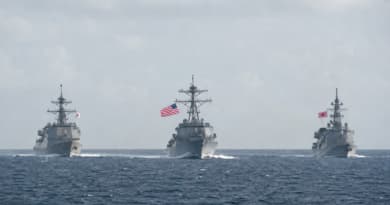
Joint military exercises have been a cornerstone of the alliance between the United States and the Republic of Korea for decades. The drills are designed to maintain readiness, test interoperability between the two militaries, and serve as a visible deterrent against North Korean aggression. A substantial reduction could force South Korean defense planners to adjust their training cycles and revisit key assumptions in their force coordination with U.S. Forces Korea.
Analysts note that the immediate effects may fall heaviest on combined command post exercises and large-scale field training maneuvers. A prolonged scaling back, they warn, could degrade the alliance’s ability to respond to a sudden crisis, even as diplomatic talks with North Korea remain in a state of flux. The U.S. Department of Defense has not yet issued a full operational guidance, but Pentagon spokespeople are expected to provide details on how Trump’s directive will be implemented in the coming weeks.
Diplomatic and Regional Reactions
South Korean officials have so far reacted cautiously. Seoul’s Ministry of National Defense has historically stressed the defensive nature of the exercises and their importance for combined defense. Any formal response from the Blue House will be closely watched for indications of whether South Korea was consulted in advance or was caught off guard by the presidential directive.
From Pyongyang’s perspective, the decision will likely be framed as a diplomatic victory. North Korean state media frequently denounces the joint drills as rehearsals for invasion, and a reduction in their scale has been a long-standing demand. The move could be interpreted as a goodwill gesture intended to keep the door open for future negotiations on denuclearization, though skepticism remains high among U.S. lawmakers and regional allies regarding North Korea’s intentions.
Looking Ahead
The announcement comes amid a broader U.S. defense posture review and renewed debates over shared defense costs. With thousands of American troops stationed on the peninsula, any shift in exercise policy could also influence ongoing Special Measures Agreement negotiations, where Washington has pressed Seoul to increase its financial contributions.
As the Pentagon works to translate Trump’s directive into concrete changes, the key unknowns include the timeline for implementation, the types of exercises affected, and whether certain high-priority drills will be exempted. Regional stability will likely depend on how carefully the drawdown is calibrated and how clearly the U.S. communicates its continuing commitment to South Korea’s security.
Reuters contributed to the factual basis of this report.